
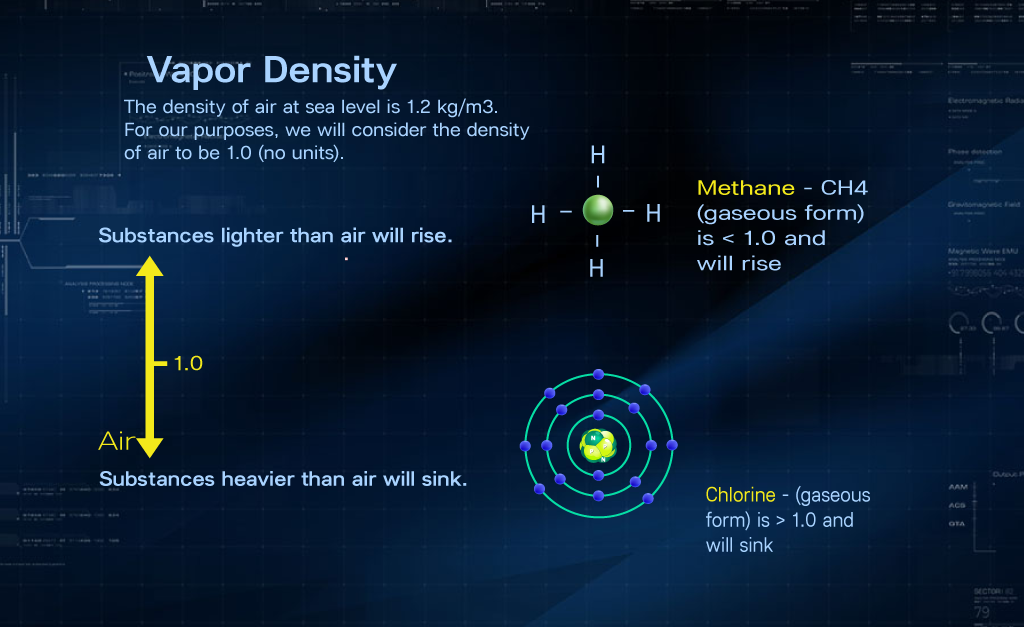
In the context of HAZWOPER (Hazardous Waste Operations and Emergency Response), vapor density plays a critical role in ensuring the safety of workers handling hazardous materials. Let’s break it down in greater detail:
What is Vapor Density?
Vapor density is defined as the ratio of the molar mass of a gas or vapor to the molar mass of air. Air is used as the standard for comparison and is assigned a vapor density of 1. Vapor density can be calculated using this formula:
- Vapor density > 1: The substance is heavier than air and will tend to sink and accumulate in low-lying areas.
- Vapor density < 1: The substance is lighter than air and will tend to rise and accumulate in higher areas, such as near ceilings or upper floors.
Significance of Vapor Density in HAZWOPER:
1. Understanding the Behavior of Hazardous Vapors
- Vapor density helps workers and emergency responders understand how chemicals behave when released into the atmosphere. This is vital for assessing risk in situations involving chemical spills, leaks, or other hazardous conditions.
- For example, flammable gases with a vapor density greater than 1 (like propane and butane) will settle near the ground and could create an explosive mixture when exposed to an ignition source. This type of knowledge helps in anticipating where to focus air monitoring or evacuation efforts.
2. Risk Assessment and Toxicity
- The toxicity and concentration of hazardous vapors can significantly affect safety. Chemicals with high vapor densities tend to accumulate in confined spaces, where ventilation is limited. This increases the risk of inhalation exposure.
- For example, carbon dioxide (vapor density = 1.5) is heavier than air and will pool in low-lying areas, displacing oxygen and creating a suffocation hazard.
- Workers and emergency responders must be trained to identify and avoid areas with dangerous vapor buildup, particularly if those areas are confined, like trenches, basements, or manholes.
3. Ventilation and Environmental Control
- Proper ventilation is a critical control measure in environments where hazardous chemicals are handled.
- For heavier-than-air chemicals, mechanical ventilation might be needed to keep low areas clear of vapors. Exhaust fans placed near the floor could help move dense vapors outside.
- For lighter-than-air chemicals, ventilation systems may need to be designed to ensure that vapors do not accumulate in the upper regions of a workspace or building.
4. Personal Protective Equipment (PPE) and Air Monitoring
- PPE and air monitoring protocols must be adapted depending on the vapor density of the chemicals in question.
- If the vapor density is high, workers may need to focus on respirators with specific filtration or demand valves, depending on the concentration of vapors expected in lower areas.
- In spaces where hazardous chemicals are present, continuous air monitoring for toxic gases is essential to ensure that levels do not exceed permissible exposure limits (PELs) or immediately dangerous to life or health (IDLH) concentrations.
- Gas detectors are typically calibrated to detect chemicals based on their vapor density, and responders may need to perform additional tests to measure the density and concentration of hazardous vapors.
5. Fire and Explosion Hazards
- Many hazardous substances are also flammable or explosive, and vapor density is crucial when assessing the fireor explosion risk.
- Heavy vapors that settle near the ground can accumulate around ignition sources, such as sparks, open flames, or electrical equipment, creating a fire or explosion hazard.
- On the other hand, light vapors may disperse quickly but can still create risks if the substance is flammable(e.g., methane or hydrogen).
- Flammable zones need to be carefully identified based on the vapor densities of the chemicals present. For example, a chemical with a vapor density of 2.5 (like chlorine) can accumulate near the ground and create hazardous situations in confined spaces if not properly ventilated.
6. Dealing with Chemical Spills or Leaks
- Spill response teams rely on vapor density to determine evacuation routes, establish safe distances from the spill, and predict where vapor clouds will travel.
- For example, if a chemical with a vapor density greater than 1 (e.g., chlorine, ammonia) is spilled, the vapors will likely accumulate in low-lying areas or drainage systems.
- Teams need to use sheltering in place or evacuation procedures to direct personnel away from these areas, and vapor density helps identify where those areas are.
7. Toxic and Non-Toxic Vapors
- Understanding vapor density helps assess whether non-toxic vapors (e.g., water vapor) could cause asphyxiation in confined spaces.
- If toxic vapors with high vapor densities settle in a space, they can quickly displace oxygen, creating an immediate hazard for workers.
- In some cases, toxic vapors from chemicals with vapor densities greater than 1 may concentrate in confined spaces, leading to a risk of asphyxiation or chemical exposure.
Examples of Chemicals and Their Vapor Densities in HAZWOPER Context:
| Chemical | Vapor Density | Behavior | HAZWOPER Implication |
|---|---|---|---|
| Propane | 1.5 | Heavier than air, settles low | Risk of pooling near ground, creating fire/explosion hazard |
| Ammonia | 0.6 | Lighter than air, rises | Ventilation needs to prevent buildup in upper areas (e.g., ceilings) |
| Chlorine | 2.5 | Heavier than air, sinks to low-lying areas | Hazardous in confined spaces, requires special protective equipment |
| Hydrogen | 0.07 | Lighter than air, rises rapidly | Rapid dispersal, poses fire/explosion risk if accumulated in air |
| Carbon Monoxide | 0.97 | Slightly lighter than air, can accumulate in low areas | Asphyxiation hazard, air monitoring needed in enclosed spaces |
| Sulfur Dioxide | 2.26 | Heavier than air, sinks to low-lying areas | Risk in confined spaces, ventilation essential |
Conclusion
In HAZWOPER work, understanding vapor density is crucial for protecting workers and the environment. It affects hazard assessments, emergency response plans, PPE selection, and air quality monitoring. Knowing how vapors will behave when released can prevent accidents, reduce exposure to toxic substances, and mitigate the risk of fires or explosions. Proper training on vapor density is essential for safety during hazardous waste operations, emergency response, and chemical spill management.
U.S. Occupational Safety and Health Administration
Emergency Response and Preparedness
OSHA HAZWOPER Hands-on Training Requirement
Medical Surveillance Requirements
https://www.osha.gov/laws-regs/standardinterpretations/1992-08-27-1
U.S. Environmental Protection Agency
https://www.epa.gov/laws-regulations/summary-resource-conservation-and-recovery-act
Related Articles
Building a HAZWOPER Safety Culture
HAZWOPER Hands-on Training Discussions with U.S. OSHA