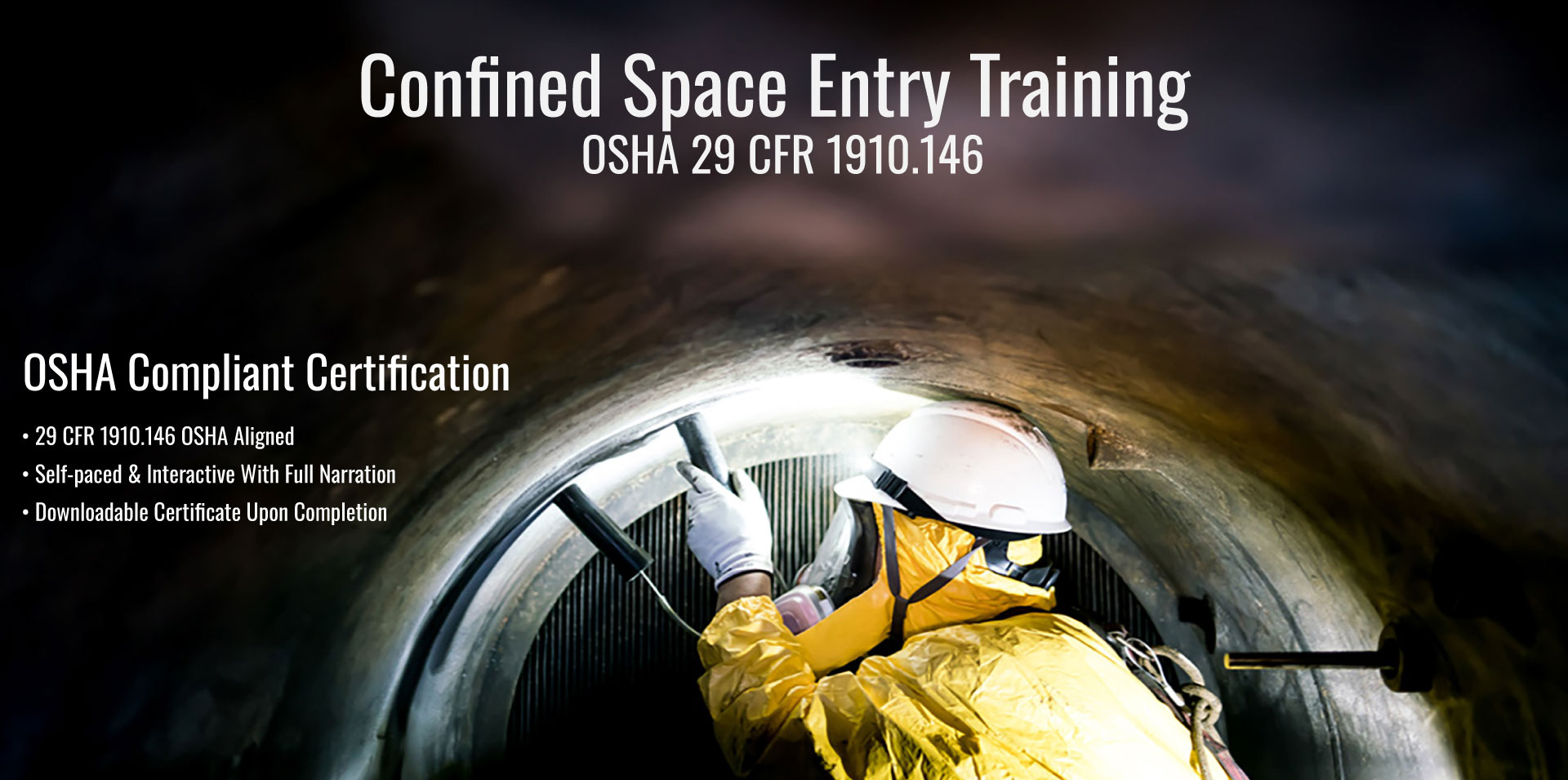
Confined Space Entry Training Online — OSHA 29 CFR 1910.146
The Confined Space Entry Training course provides OSHA-focused online training covering permit-required confined spaces under 29 CFR 1910.146. This self-paced course teaches workers how to identify confined space hazards, conduct atmospheric monitoring, understand entry permits, use personal protective equipment (PPE), and follow safe entry and rescue procedures.
OSHACode’s Online Confined Space Entry Training prepares authorized entrants, attendants, and entry supervisors to recognize, evaluate, and control the hazards associated with permit-required confined spaces. Developed by Clay Bednarz, MS, RPIH — a seasoned veteran with over 34 years of hazardous waste field experience — this course delivers technically sound, quality instruction that meets the requirements of OSHA 29 CFR 1910.146 (Permit-Required Confined Spaces, General Industry).
Refund Policy: If for any reason you are unhappy or not satisfied with our courses or service, we will provide a full refund up to 30 days after purchase.
$170.00
Who Needs This Training
Who Is Required to Take Confined Space Entry Training?
Under 29 CFR 1910.146(g), employers must train any employee whose work is regulated by the confined space standard. This includes anyone who enters a confined space, monitors entry from outside as an attendant, or serves as an entry supervisor — before they perform those duties.
This course is designed for workers across industries where confined spaces are part of the job, including:
- Maintenance and facilities workers
- Utility and pipeline workers
- Wastewater and water treatment plant operators
- Tank cleaners and industrial services workers
- HVAC technicians
- Welders and metalworkers
- Construction workers entering vaults, manholes, or pits
- Emergency responders and rescue team members
- Entry supervisors and permit-required space attendants
- Environmental and hazardous waste site workers
If your job requires you to enter, monitor, or supervise work in tanks, silos, vaults, manholes, pipelines, tunnels, pits, or similar spaces — this training applies to you
General Industry or Construction
General Industry or Construction — Which Standard Applies to You?
There are two OSHA confined space standards, and knowing which one governs your work is essential before you enroll.
This course covers: 29 CFR 1910.146 — General Industry Applies to workers maintaining, inspecting, or operating within existing confined spaces such as storage tanks, process vessels, utility vaults, manholes, and wastewater infrastructure. If your work involves operating or maintaining existing equipment and structures — not building new ones — this is your standard.
The other standard: 29 CFR 1926 Subpart AA — Construction Applies to workers performing construction activities in confined spaces — such as building new structures, reconfiguring existing spaces, or performing excavation work. The construction standard also introduces specific requirements for a “competent person” that do not appear in the General Industry standard.
Not sure which applies to you? Check with your employer or site safety officer. When in doubt, the construction standard applies if the work involves altering the structure of the space itself; the general industry standard applies if the work is operational or maintenance in nature.
Course Topics Covered
Modules include the following topics:
- atmospheric testing
- oxygen deficiency
- combustible gases
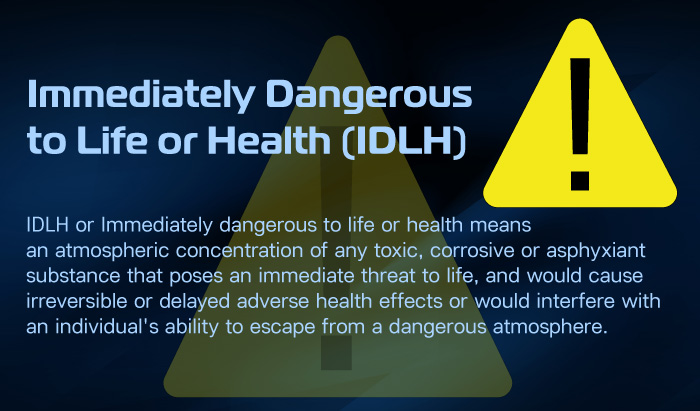
- toxic atmospheres
- lockout/tagout
- ventilation
- confined space permits
- rescue procedures
- attendant duties
- entry supervisor responsibilities
- communication systems
- retrieval equipment
OSHA Regulatory Basis for Confined Space Entry Training
OSHA Confined Space Entry requirements are primarily governed by 29 CFR 1910.146, the Permit-Required Confined Spaces Standard. This regulation was established to protect workers who enter confined spaces that may contain hazardous atmospheres, engulfment hazards, mechanical dangers, or other serious safety risks. Common confined spaces may include tanks, vaults, pits, manholes, silos, and storage vessels.
Under OSHA regulations, employers are responsible for identifying confined spaces, evaluating workplace hazards, and determining whether a space qualifies as a Permit-Required Confined Space (PRCS). Employers must assess hazards such as oxygen deficiency, toxic gases, flammable atmospheres, electrical hazards, and engulfment risks before allowing worker entry.
OSHA also requires atmospheric testing using calibrated air monitoring equipment to evaluate oxygen levels, combustible gases, and toxic contaminants before and during entry operations when necessary. In addition, employers must establish written permit systems outlining entry procedures, hazard controls, PPE requirements, communication methods, and authorized personnel.
Rescue planning is another critical component of the OSHA confined space standard. Employers must ensure rescue procedures are in place and that rescue personnel are properly trained and equipped to respond to confined space emergencies safely and effectively.


Frequently Asked Questions
What is confined space entry training?
OSHA Definition of a Confined Space
Under OSHA 29 CFR 1910.146, a confined space is defined as a space that:
- Is large enough and configured so an employee can bodily enter and perform assigned work
- Has limited or restricted means for entry or exit
- Is not designed for continuous employee occupancy
Examples of confined spaces may include tanks, pits, vaults, silos, pipelines, boilers, manholes, tunnels, storage bins, and sewer systems.
Some confined spaces may also qualify as Permit-Required Confined Spaces (PRCS) if they contain serious hazards such as hazardous atmospheres, engulfment hazards, inwardly converging walls, or other recognized safety and health dangers capable of causing serious injury or death.
What is the difference between a confined space and a permit-required confined space?
Who is required to take confined space entry training?
Does this confined space entry training cover construction?
How often does confined space entry training need to be renewed?
How long is this course and how long do I have to complete it?
What do I receive when I complete the course?
Is this course accepted by employers?

Course Info
Accreditation
Also, for the following organizations, our courses may be eligible for technical contact hours or re-certification points:
• Board for Global EHS Credentialing (Formerly The American Board of Industrial Hygiene)
• American Council for Accredited Certification (ACAC)
Duration
Course Description
The course covers the full scope of 29 CFR 1910.146 requirements: identifying and classifying confined spaces, understanding atmospheric hazards including oxygen deficiency, toxic gases, and flammable vapors, conducting pre-entry air monitoring, selecting and using PPE, executing the entry permit process, and responding to emergencies.
Critically, the course addresses all three occupational roles that OSHA requires to be trained separately — the authorized entrant, the attendant, and the entry supervisor — ensuring each worker understands not just their own responsibilities, but how the roles interlock to create a safe entry system.
Course Outline
Employer responsibilities under 29 CFR 1910.146 — What constitutes a confined space and a permit-required confined space — Confined space fatality statistics and case studies — Types of confined spaces found across industries — Roles and responsibilities: Authorized Entrant, Attendant, Entry Supervisor, and Rescue Team
Module 2: Physical and Chemical Properties
Understanding the physical properties of hazardous substances encountered in confined spaces — Water, boiling point, flash point, vapor pressure, density, solubility, flammability — pH scale — Radiation types — Fire triangle — Phase behavior of chemicals in enclosed environments
Module 3: Air Monitoring
Types of air monitoring equipment and their applications — Pre-entry atmospheric testing procedures — Testing for oxygen content, flammable gases, and toxic contaminants — Entry permit documentation and atmospheric monitoring recordkeeping
Module 4: Confined Space Entry and Work Conditions — Part 1
Confined space entry sequence — Key occupational role responsibilities during active entry — Fire suppression equipment — Hazard recognition: hot work, inert atmospheres, electrical equipment, corrosives — Equipment used in emergency response
Module 5: Confined Space Entry and Work Conditions — Part 2
Protective devices and controls — Lockout/Tagout (LOTO) procedures in confined space operations — Safety barriers and isolation methods — Top entry procedures — Communication protocols between entrant and attendant — Rescue operations planning and execution
Certificate
What Is a Permit-Required Confined Space?
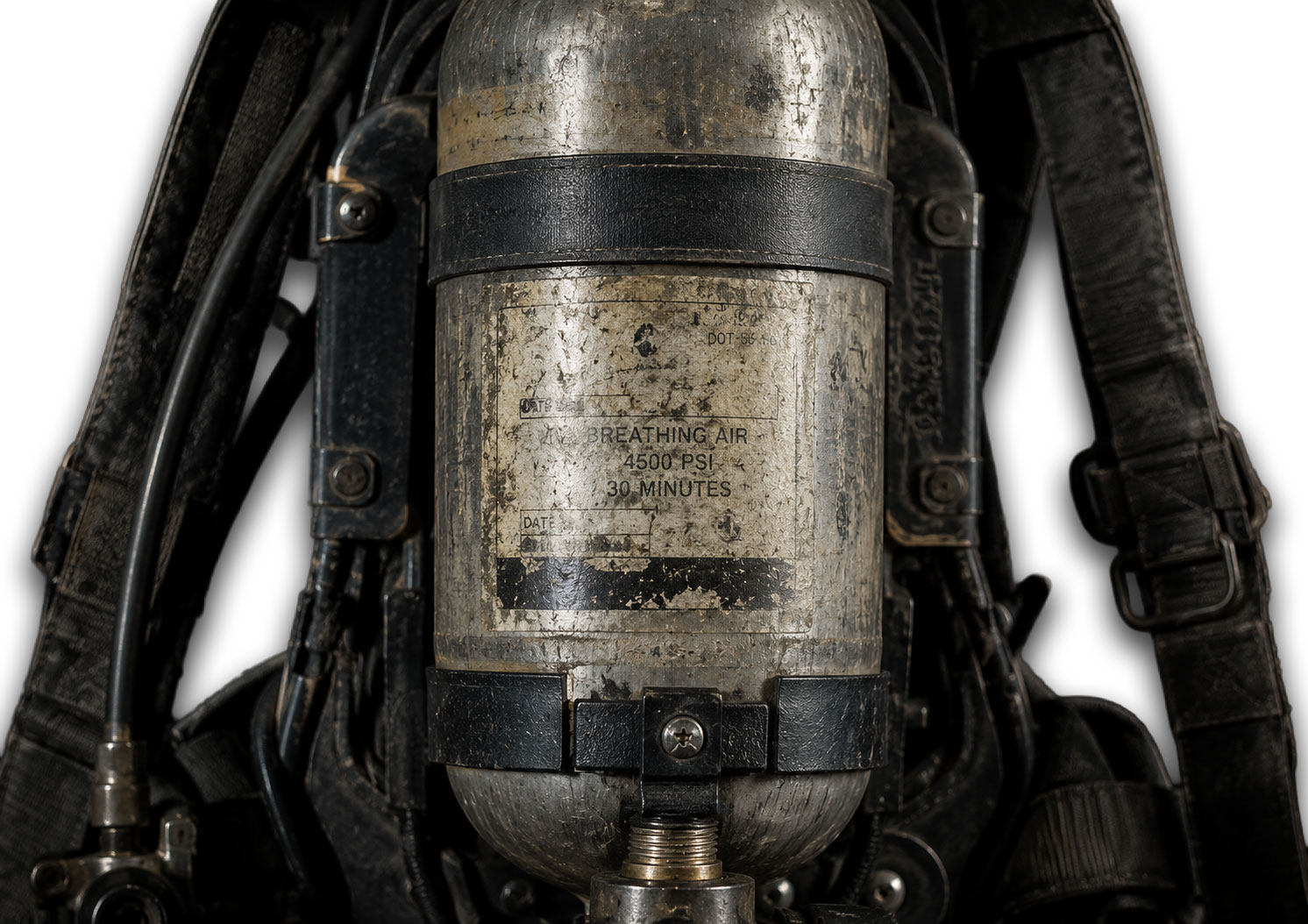
A permit-required confined space is:
- limited means of entry/exit
- not designed for continuous occupancy
- hazardous atmospheres
- engulfment risks
- inwardly converging walls
- mechanical/electrical hazards
Examples:
-
- tanks
- silos
- vaults
- pits
- manholes
- sewers