

Summary
OSHA 40 is the industry term for 40 Hour HAZWOPER training required under OSHA 29 CFR 1910.120(e). The course is designed for workers involved in hazardous waste operations, environmental remediation, hazardous materials management, and other activities where exposure to hazardous substances may occur.
Quick Answers
| Question | Answer |
|---|---|
| What is OSHA 40? | 40 Hour HAZWOPER training |
| OSHA Regulation | 29 CFR 1910.120(e) |
| Required For | General site workers exposed to hazardous substances |
| Online Available? | Yes |
| Field Experience Required? | Yes, 3 days supervised |
| Annual Refresher? | 8-Hour HAZWOPER Refresher |
Do You Need OSHA 40? A Quick Decision Guide
You likely need 40-Hour HAZWOPER training if you will:
- Perform regular work at an uncontrolled hazardous waste site.
- Handle, move, sample, excavate, treat, or clean up hazardous substances.
- Enter exclusion zones or areas where contamination is known, suspected, or not fully characterized.
- Work where exposure could exceed permissible exposure limits (PELs) or where respiratory protection may be required.
- Perform remediation, waste consolidation, drum handling, contaminated-soil work, or intrusive environmental investigation.
You may need 24-Hour HAZWOPER instead if you perform occasional, limited tasks at a fully characterized site where exposures are below applicable limits.
You may need a different training program if you are assigned to emergency response, routine operations at a permitted TSDF, DOT transportation, or another activity outside 29 CFR 1910.120(e).
Comparisons
| Feature | OSHA 40 | OSHA 30 |
|---|---|---|
| Regulation | 29 CFR 1910.120(e) | Outreach Program |
| Focus | Hazardous Waste Operations | General Safety |
| Exposure Based | Yes | No |
| Annual Refresher | Yes | No |
| Hands-On Requirements | Yes | No |
OSHA 40 HAZWOPER Now!
Looking for OSHA 40 training? Explore OSHACode’s online 40 Hour HAZWOPER course and begin training today.
OSHA 40 HAZWOPER Training Images
How to Get OSHA 40 Certification
Obtaining Occupational Safety and Health Administration (OSHA) 40 certification begins with completing a 40-Hour HAZWOPER training course that meets the requirements of OSHA’s Hazardous Waste Operations and Emergency Response (HAZWOPER) standard found in 29 CFR 1910.120(e) and in-line with many OSHA interpretation letters. OSHA 40 is generally associated with general site workers at uncontrolled hazardous waste sites, including cleanup operations, corrective-action projects, and other covered hazardous waste operations under 29 CFR 1910.120(e). Workers at permitted treatment, storage, and disposal facilities may instead be subject to the separate training provisions in 29 CFR 1910.120(p).
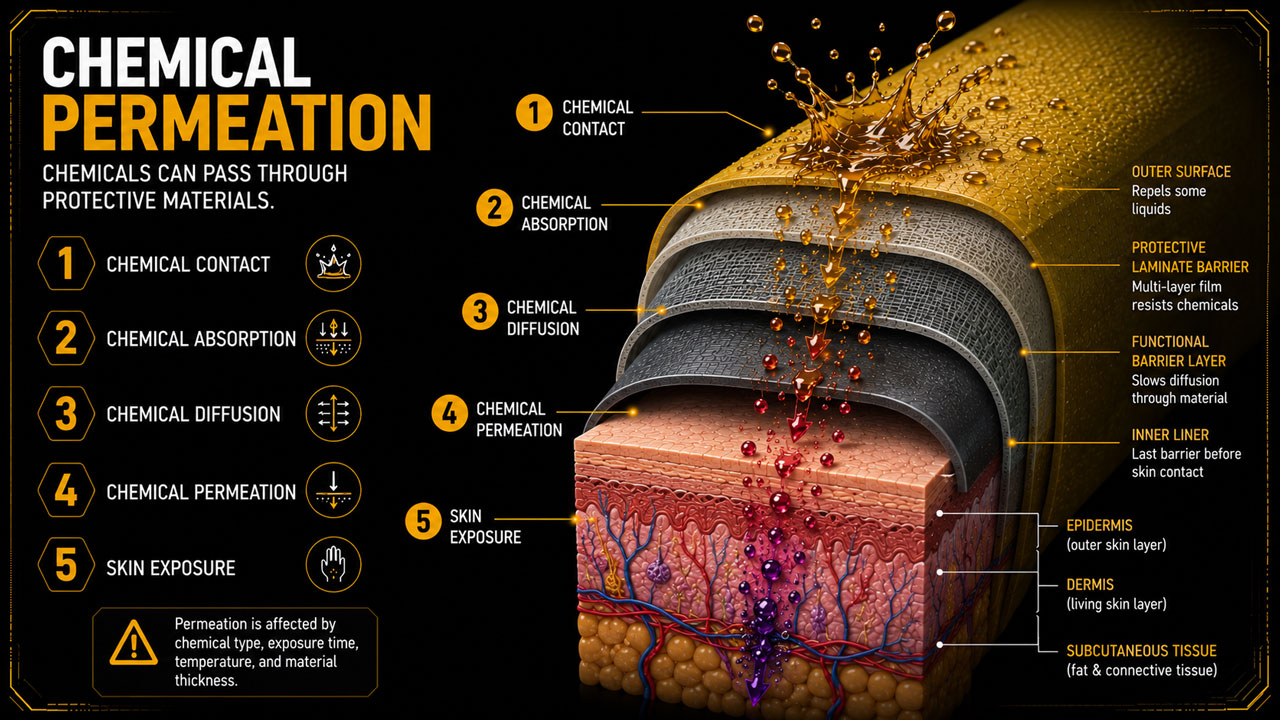
The first step is completing a comprehensive 40-hour training program covering topics such as hazard recognition, toxicology, personal protective equipment (PPE), air monitoring, site characterization, decontamination procedures, medical surveillance, emergency response, and safe work practices. Many employers and workers choose online HAZWOPER training because it offers flexibility and allows participants to complete the required classroom instruction at their own pace.
However, completing the 40-hour course alone does not satisfy all OSHA requirements. OSHA also requires workers to receive a minimum of three days of supervised field experience under the direct supervision of a trained and experienced supervisor. This field experience allows employees to apply classroom concepts in real-world conditions while demonstrating competency in hazard recognition, PPE use, site controls, decontamination procedures, and other critical safety practices.
In addition to formal HAZWOPER training and supervised field experience, employers are responsible for providing site-specific training. Every hazardous waste site presents unique hazards, equipment, procedures, and emergency response requirements that cannot be fully addressed through generic classroom instruction. Site-specific training may include hands-on use of air monitoring instruments, respirators, chemical protective clothing, communication systems, spill response procedures, confined space entry requirements, and emergency evacuation protocols. Employers must ensure workers understand the hazards and operating procedures associated with their particular job assignment and work location.
Upon successful completion of the 40-hour training program, students typically receive a certificate of course completion from the training provider. OSHA does not “approve” individual HAZWOPER training providers or issue OSHA 40 cards. A training provider issues a course-completion certificate, while the employer remains responsible for ensuring workers receive the required supervised field experience, site-specific instruction, and any additional training needed for their assigned work.
Maintaining OSHA 40 certification also requires ongoing training. Workers who have completed 40-Hour HAZWOPER training must generally complete an 8-Hour HAZWOPER Refresher course annually to maintain competency and remain current with regulatory requirements, hazard recognition techniques, and industry best practices. Employers should track refresher training deadlines and maintain accurate training records to demonstrate compliance during inspections, audits, or client reviews.
By combining a 40-hour HAZWOPER course, supervised field experience, employer-provided site-specific training, and annual refresher training, workers can develop the knowledge and practical skills necessary to safely perform hazardous waste operations while meeting OSHA compliance requirements.

24 Hour vs 40 Hour HAZWOPER – Which Do You Need?
The difference between 24 Hour and 40 Hour HAZWOPER training is based on exposure risk and job responsibilities. Workers who are unlikely to be exposed above PELs and who perform limited, well-defined tasks under controlled conditions may qualify for 24 Hour training. However, workers operating in environments where exposure is likely, unknown, or potentially hazardous are required to complete the full 40 Hour training.
In practical terms, workers entering exclusion zones, performing site remediation, handling hazardous substances directly, or working in areas with airborne or surface contamination typically require 40 Hour HAZWOPER training. OSHA places the responsibility on the employer to evaluate site conditions and determine the appropriate level of training based on hazard potential and exposure risk.
Training Requirements (Beyond the 40 Hours)
Completing a 40-hour course is only one part of OSHA’s training requirements. Under 29 CFR 1910.120(e), workers must also complete a minimum of three days of supervised field experience under the direct supervision of a trained and experienced supervisor. This requirement ensures that workers can apply their knowledge in real-world conditions and demonstrate competency in the use of equipment and procedures.
In addition, OSHA requires an 8-hour annual refresher training to maintain qualification. Employers are also responsible for providing site-specific training that addresses the actual hazards, equipment, and procedures present at the job site. This includes hands-on instruction with personal protective equipment, air monitoring instruments, and decontamination processes.
Can OSHA 40 Training Be Completed Online?
Online training is widely used to deliver the knowledge-based portion of OSHA 40 training. OSHA allows computer-based training as long as it meets the intent of the regulation and is supplemented with hands-on, site-specific instruction provided by the employer.
A high-quality online course should provide comprehensive coverage of OSHA requirements, realistic scenarios, and clear guidance on how training integrates with field operations. However, it is important to understand that online training alone does not satisfy all OSHA requirements—practical, hands-on training is still required to achieve full compliance.
What Jobs Require HAZWOPER Training?
OSHA 40 training applies to a wide range of job roles where hazardous substance exposure is likely or not fully characterized. These include environmental remediation workers, hazardous materials technicians, equipment operators, construction personnel working on contaminated sites, and workers at hazardous waste treatment, storage, and disposal facilities.
It is also required for employees involved in government-mandated cleanup operations, corrective action projects, and emergency response activities involving hazardous substance releases. Any worker entering a hazardous waste site where exposure risk exists should be evaluated by their employer to determine whether 40 Hour HAZWOPER training is required.
Why OSHA HAZWOPER Training Is Critical for Worker Safety
OSHA 40 training is essential because it prepares workers to operate safely in environments where hazards may be complex, dynamic, and potentially life-threatening. Workers at hazardous waste sites may encounter toxic chemicals, flammable materials, oxygen-deficient atmospheres, and other dangerous conditions that require specialized knowledge and preparation.
Without proper training, workers may fail to recognize hazards, improperly use protective equipment, or respond incorrectly during emergencies. OSHA 40 training provides the foundation needed to identify risks, apply control measures, and protect both the worker and others on the site. It also ensures that employers meet regulatory requirements and maintain a safe working environment.
What Does OSHA 40 Actually Mean?
The term “OSHA 40” is commonly used in the industry as shorthand for the 40 Hour HAZWOPER training required under OSHA’s (HAZWOPER) standard, codified at 29 CFR 1910.120. While OSHA does not formally use the phrase “OSHA 40,” it is widely understood to refer to the requirement for forty hours of formal instruction for workers who are exposed or potentially exposed to hazardous substances at or above PELs or in environments where hazards are not fully characterized.
This training requirement is established under 29 CFR 1910.120(e)(3) and applies to general site workers engaged in hazardous waste operations, including cleanup activities at uncontrolled hazardous waste sites and corrective action operations. The “40-hour” designation reflects the minimum amount of initial instruction required before a worker can participate in these operations.
OSHA 40 vs OSHA 30 – Understanding the Difference
One of the most common misconceptions is confusing OSHA 40 with OSHA 30. OSHA 30 is part of the OSHA Outreach Training Program and focuses on general workplace safety awareness across industries such as construction and general industry. It is not exposure-based and does not address the specific hazards associated with hazardous waste operations.
OSHA 40, by contrast, is a specialized training requirement under the HAZWOPER standard. It is designed specifically for workers who may encounter hazardous substances and must understand complex safety concepts such as industrial toxicology, air monitoring, PPE and decontamination procedures. OSHA 30 training cannot be used as a substitute for OSHA 40 where HAZWOPER applies.
OSHA 40 vs HAZWOPER 40 — Are They the Same Thing?
Yes. OSHA 40 and HAZWOPER 40 refer to the same training requirement. “OSHA 40” is informal shorthand used widely in the environmental remediation and hazardous waste industries, while “HAZWOPER 40” or “40 Hour HAZWOPER” is the more technically precise term. Neither OSHA publications nor 29 CFR 1910.120 use the phrase “OSHA 40” — it emerged as field shorthand in the same way workers refer to “OSHA 10” and “OSHA 30” outreach courses by their hour count.
The confusion is understandable. OSHA governs both the HAZWOPER standard and the Outreach Training Program, so workers sometimes assume “OSHA 40” follows the same naming convention as OSHA 10 and OSHA 30. It does not. OSHA 10 and OSHA 30 are general industry or construction awareness courses with no exposure-based requirement. OSHA 40 — or HAZWOPER 40 — is a federally mandated minimum training hour requirement for workers in hazardous waste operations under 29 CFR 1910.120(e)(3).
If your employer, contracting officer, or job posting requires “OSHA 40,” “HAZWOPER 40,” or “40-hour HAZWOPER,” they are all asking for the same certification.
Is OSHA 40 a Certification or a Training Course?
Upon successful completion, students receive a certificate of course completion from the training provider. Employers are responsible for determining whether workers have met all OSHA training requirements, including supervised field experience and site-specific training

Frequently Asked Questions About OSHA 40
Is OSHA 40 the same as HAZWOPER 40?
Yes. OSHA 40 and HAZWOPER 40 refer to the same training requirement under 29 CFR 1910.120. “OSHA 40” is informal industry shorthand for the 40 Hour HAZWOPER course. If a job posting, employer, or contracting officer asks for either term, they are asking for the same certification.
Can I take OSHA 40 training online?
Yes, the knowledge-based portion can be completed online. OSHA permits computer-based instruction provided it meets the intent of the regulation. However, online training alone does not satisfy all OSHA requirements — employers must also provide hands-on, site-specific training and a minimum of three days of supervised field experience under 29 CFR 1910.120(e)(3)(i).
How long is OSHA 40 training valid?
Workers must complete an 8-hour annual refresher training to maintain their HAZWOPER qualification. If the refresher lapses beyond 12 months, the employer is responsible for determining whether the worker must repeat the full 40-hour initial training or may complete the refresher course to reinstate qualification.
Who determines if I need OSHA 40 training?
The employer is responsible for evaluating job duties, exposure risk, and site conditions to determine the appropriate level of training. Workers who may be exposed to hazardous substances at or above permissible exposure limits, or in environments where hazards are not fully characterized, generally require 40 Hour HAZWOPER training.
How much does OSHA 40 training cost?
Online OSHA 40 / HAZWOPER 40 training varies by provider. OSHACode® offers self-paced 40 Hour HAZWOPER training developed by seasoned EHS professionals. The current pricing is $245.00 per person with group discounts starting with 3 or more people.
Is there a difference between OSHA 40 and OSHA 30?
Yes — they are completely different programs. OSHA 30 is a general industry or construction safety awareness course under the OSHA Outreach Training Program. OSHA 40 (HAZWOPER 40) is a federally mandated minimum training requirement for workers in hazardous waste operations. OSHA 30 cannot substitute for OSHA 40 where HAZWOPER applies.
What Your Employer Must Still Provide
Completing an online OSHA 40 course is an important first step, but employers must also provide:
- Three days of supervised field experience.
- Site-specific hazard and work-procedure training.
- Hands-on instruction using the actual PPE, respirators, monitoring instruments, and decontamination equipment used at the site.
- Medical surveillance and respirator fit testing when required.
- Training on the site safety and health plan, emergency procedures, and communication methods.
Start Your 40 Hour HAZWOPER Training
OSHACode®’s 40 Hour HAZWOPER course is developed and maintained by in-house EHS professionals and is built to meet the requirements of 29 CFR 1910.120. The course is self-paced, 100% online for the knowledge portion, and includes clear guidance on employer responsibilities for hands-on and site-specific training.
About the Author
This article was written by Clay A. Bednarz, MS, RPIH, founder of National Environmental Trainers® and OSHACode®. Bednarz pioneered the first commercial online HAZWOPER training programs in 1998 and has supported major hazardous waste operations, environmental remediation projects, and emergency response training initiatives nationwide.
Sources
Emergency Response and Preparedness
OSHA HAZWOPER Hands-on Training Requirement
Medical Surveillance Requirements
U.S. Occupational Safety and Health Administration
https://www.osha.gov/laws-regs/standardinterpretations/1992-08-27-1
U.S. Environmental Protection Agency
https://www.epa.gov/laws-regulations/summary-resource-conservation-and-recovery-act
Related Articles
Building a HAZWOPER Safety Culture
Hands-on Training Discussions with U.S. OSHA