
What Employers Need to Know in 2026
Heat stress is rapidly becoming one of the most serious occupational hazards across the United States. With rising temperatures and increasing regulatory attention, the OSHA Heat Stress Regulation—formally known as the proposed Heat Injury and Illness Prevention Standard (HIIPP)—is set to reshape how employers manage heat exposure in the workplace. This article explains the rule, its requirements, and what it means for industries like construction, manufacturing, and hazardous waste operations (HAZWOPER).
What Is OSHA’s Heat Stress Regulation?
OSHA’s proposed rule, introduced in 2024, is the first comprehensive federal standard specifically targeting heat-related hazards in both indoor and outdoor work environments. Historically, OSHA enforced heat safety under the General Duty Clause, but this new rule establishes clear, enforceable requirements for employers.
The regulation is designed to:
-
Prevent heat-related illnesses and fatalities
-
Require proactive planning and monitoring
-
Standardize heat safety practices across industries
Key Elements of the OSHA Heat Rule
1. Heat Triggers (80°F and 90°F Thresholds)
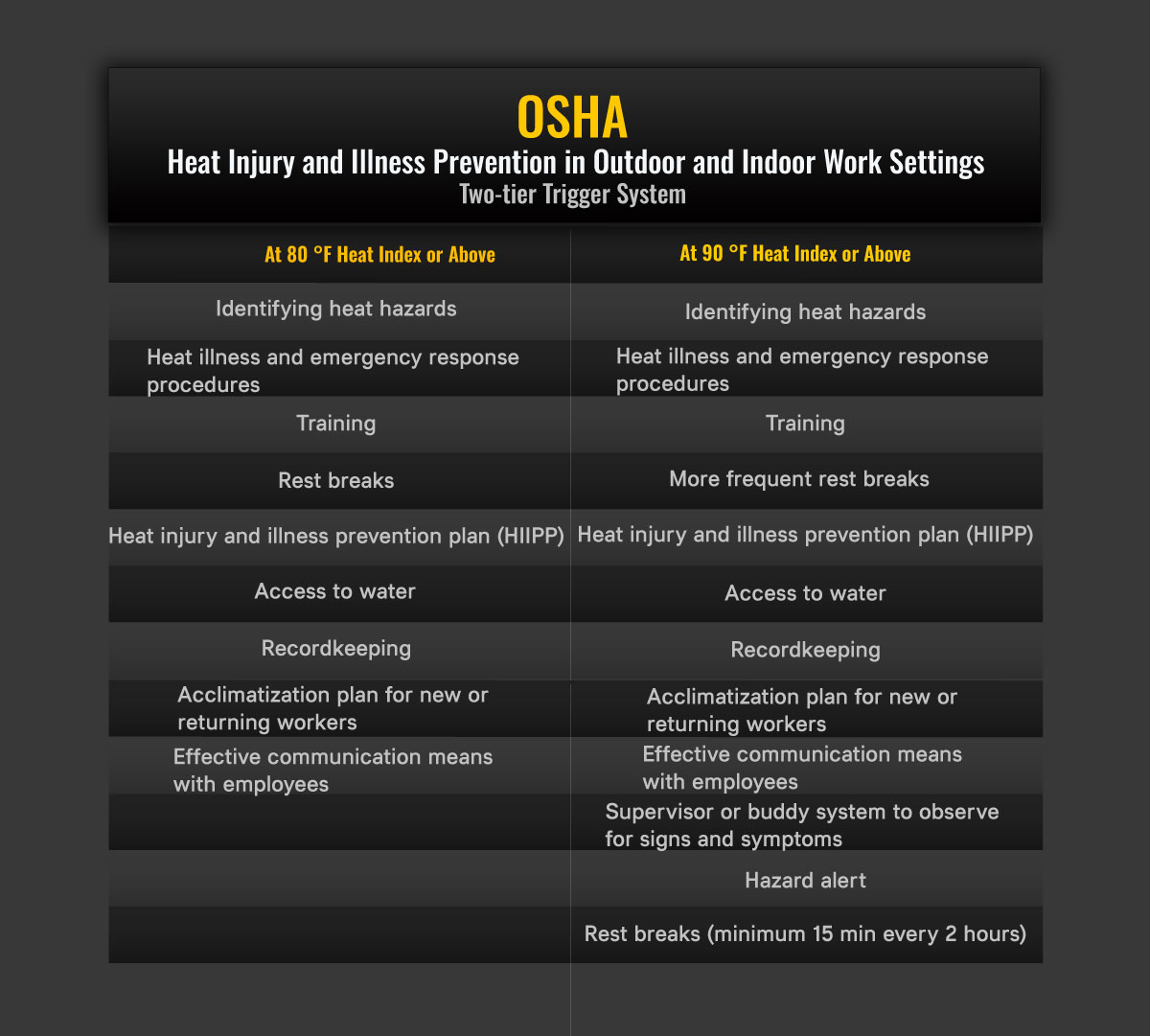
The proposed rule uses a two-level trigger system based on heat index:
-
80°F Heat Index (Initial Trigger):
-
Provide drinking water
-
Allow rest breaks
-
Implement training programs
-
-
90°F Heat Index (High Heat Trigger):
-
Increase rest break frequency
-
Implement active worker monitoring
-
Enforce stricter controls
-
This approach ensures that protections scale with increasing environmental risk.
2. Heat Injury and Illness Prevention Plan (HIIPP)
Employers must develop a written, site-specific plan that includes:
-
Hazard identification and assessment
-
Procedures for controlling heat exposure
-
Emergency response protocols
-
Roles and responsibilities
For HAZWOPER sites, this plan should be integrated into the Health and Safety Plan (HASP).
3. Hydration, Rest, and Shade Requirements
Employers must provide:
-
Accessible drinking water (encouraging frequent intake)
-
Rest breaks based on workload and temperature
-
Shaded or cooled areas for recovery
These are fundamental controls to prevent heat-related illnesses.
4. Acclimatization Programs
New and returning workers must be gradually introduced to heat exposure through:
-
Phased work schedules
-
Increased supervision
-
Monitoring during initial workdays
Acclimatization is critical, as most heat-related fatalities occur within the first few days of exposure.
5. Training Requirements
Workers and supervisors must be trained to recognize:
-
Signs and symptoms of heat illness
-
Emergency response procedures
-
Importance of hydration and rest
Training ensures early recognition and intervention.
6. Monitoring and Response
Employers are expected to:
-
Monitor temperature and heat index
-
Observe workers for signs of heat stress
-
Take immediate action when symptoms appear
This shifts the focus from reactive to preventive safety management.
7. Emergency Planning
The rule requires clear procedures for:
-
Responding to heat-related illness
-
Contacting emergency services
-
Providing first aid
Rapid response is essential to prevent heat stroke fatalities.
Industries Most Affected
The OSHA heat stress rule impacts a wide range of industries, including:
-
Construction
-
Agriculture
-
Manufacturing
-
Warehousing
-
Waste management and remediation (HAZWOPER)
Workers in PPE-heavy environments—such as hazardous waste cleanup—are at particularly high risk due to limited heat dissipation.
Why This Regulation Matters
Heat stress can lead to:
-
Heat cramps
-
Heat exhaustion
-
Heat stroke (fatal if untreated)
According to OSHA, heat-related illnesses are largely preventable, making this regulation a critical step toward reducing workplace injuries and deaths.
HAZWOPER-Specific Considerations
At hazardous waste sites, heat stress is amplified by:
-
Impermeable PPE (Level A/B suits)
-
Physically demanding work
-
Chemical hazard interactions
Employers must incorporate heat stress controls into:
-
Work/rest cycles
-
Air monitoring plans
-
PPE selection
How Employers Can Prepare Now
To stay ahead of compliance requirements, employers should:
-
Develop a Heat Injury and Illness Prevention Plan (HIIPP)
-
Implement work/rest schedules
-
Provide hydration stations and shaded areas
-
Train workers on heat illness recognition
-
Use real-time environmental monitoring tools
Proactive preparation reduces liability and improves worker safety.
Final Thoughts
The OSHA Heat Stress Regulation marks a major evolution in workplace safety standards. By requiring structured planning, monitoring, and worker protections, OSHA is addressing a growing hazard that affects millions of workers nationwide. For employers, especially those operating in high-risk environments like HAZWOPER sites, understanding and implementing these requirements is essential for compliance, safety, and operational success.
Become HAZWOPER Certified Today!
Looking for OSHA-compliant HAZWOPER training that integrates seamlessly with site-specific hands-on field experience? OSHACode’s online HAZWOPER courses are designed to support employer-provided, site-specific training under 29 CFR 1910.120.
Sources
Emergency Response and Preparedness
OSHA HAZWOPER Hands-on Training Requirement
Medical Surveillance Requirements
U.S. Occupational Safety and Health Administration
https://www.osha.gov/laws-regs/standardinterpretations/1992-08-27-1
U.S. Environmental Protection Agency
https://www.epa.gov/laws-regulations/summary-resource-conservation-and-recovery-act
Related Articles
Building a HAZWOPER Safety Culture
Hands-on Training Discussions with U.S. OSHA