
Summary
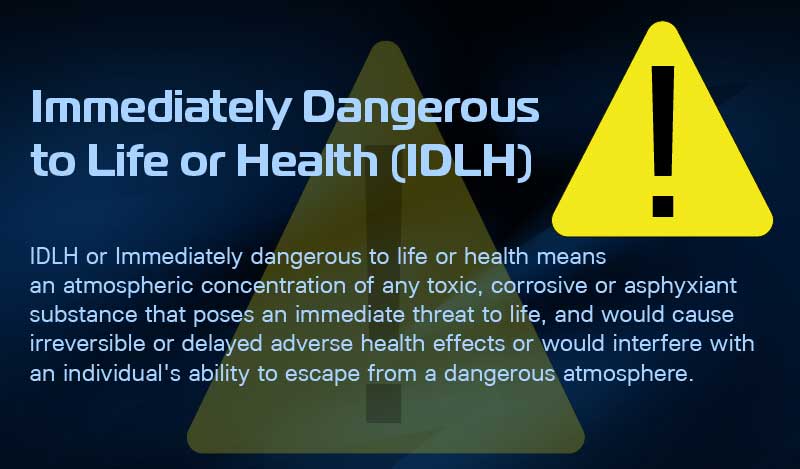
IDLH (Immediately Dangerous to Life and Health) is a safety standard used in hazardous environments to define conditions where exposure to toxic substances can cause immediate harm, serious health effects, or death. This concept is critical in HAZWOPER work, where workers handle hazardous chemicals, toxic gases, and contaminated environments. IDLH refers to atmospheric conditions that pose an immediate threat to life, cause irreversible or delayed serious health effects, or impair a worker’s ability to escape safely. IDLH environments may result from toxic gases, oxygen-deficient atmospheres, corrosive vapors, or other hazardous airborne contaminants encountered during hazardous waste operations, confined space entry, and emergency response activities. Because these conditions present an extreme risk, workers must use the highest level of respiratory protection, follow established entry procedures, and receive appropriate training before entering an IDLH atmosphere. Understanding IDLH conditions is essential for selecting the proper personal protective equipment (PPE), protecting worker health, and complying with OSHA respiratory protection and HAZWOPER requirements.
Key Takeaways
- IDLH stands for Immediately Dangerous to Life and Health and describes atmospheric conditions that pose an immediate threat to life or could cause irreversible health effects or impair a worker’s ability to escape safely.
- IDLH conditions may result from toxic gases, oxygen-deficient atmospheres, oxygen-enriched atmospheres, corrosive vapors, or other hazardous airborne contaminants.
- NIOSH develops IDLH values to help determine appropriate respiratory protection and ensure workers can escape safely if respiratory equipment fails.
- Workers entering IDLH atmospheres should use pressure-demand self-contained breathing apparatus (SCBA) or a supplied-air respirator (SAR) equipped with an emergency escape cylinder, as required by OSHA respiratory protection requirements.
- Air monitoring is essential for identifying IDLH conditions before entry and continuously evaluating changing atmospheric hazards.
- IDLH environments are commonly encountered during hazardous waste operations, confined space entry, chemical spill response, tank cleaning, and emergency response incidents.
- Employers should establish written entry procedures, emergency rescue plans, communication systems, and continuous atmospheric monitoring before authorizing entry into an IDLH atmosphere.
- Workers should never enter an IDLH environment without appropriate respiratory protection, proper training, and a trained standby rescue capability.
- Proper hazard assessments, PPE selection, and emergency planning significantly reduce the risks associated with IDLH environments.
- Understanding IDLH conditions is a critical component of HAZWOPER, respiratory protection, confined space entry, and overall workplace safety.
IDLH Decision Matrix
| Condition | IDLH? | Acceptable Respiratory Protection | Typical PPE Level |
|---|---|---|---|
| Unknown atmosphere | Yes | Pressure-demand SCBA or pressure-demand SAR with escape SCBA | Level A or Level B |
| Oxygen below 19.5% | Yes | SCBA or SAR with escape SCBA | Level A or Level B |
| Known contaminant above IDLH concentration | Yes | SCBA or SAR with escape SCBA | Level A or Level B |
| Known contaminant below IDLH | No | APR or PAPR (when approved for the hazard) | Level C |
Common IDLH Chemicals
| Chemical | NIOSH IDLH | Primary Hazard |
|---|---|---|
| Hydrogen Sulfide | 100 ppm | Respiratory paralysis |
| Carbon Monoxide | 1,200 ppm | Hypoxia |
| Chlorine | 10 ppm | Pulmonary injury |
| Ammonia | 300 ppm | Eye and respiratory burns |
IDLH vs Exposure Limits
| Exposure Limit | Purpose | Typical Time Period | Example Use |
|---|---|---|---|
| PEL | Regulatory employee exposure limit | 8-hour TWA | Routine workplace exposure |
| REL | NIOSH recommended limit | Usually 8-hour TWA | Best-practice occupational health |
| STEL | Short-term exposure limit | 15 minutes | Brief high-exposure work |
| IDLH | Escape-survival threshold | Immediate | Respirator selection and emergency response |
IDLH Air Monitoring Decision Tree

1. Definition of IDLH
IDLH conditions refer to environments where:
- A single exposure can cause severe injury, irreversible health effects, or death.
- Oxygen levels are too low (<19.5%) or too high (>23.5%), leading to suffocation or fire hazards.
- Toxic chemicals are present at concentrations that immediately impair workers’ ability to escape.
🔹 Established by: NIOSH (National Institute for Occupational Safety and Health) under the Occupational Safety and Health Administration (OSHA) Hazardous Waste Operations and Emergency Response (HAZWOPER) standard (29 CFR 1910.120).
2. Key Dangers in IDLH Environments
Hazards in IDLH conditions include:
- Toxic gases or chemicals (e.g., chlorine gas, hydrogen sulfide, ammonia).
- Lack of oxygen (confined spaces, storage tanks, underground areas).
- High concentrations of flammable gases (risk of explosion).
- Corrosive chemicals that cause rapid skin, eye, or lung damage.
Example IDLH Limits (by NIOSH)
| Chemical | NIOSH IDLH Concentration (ppm) | Primary Health Effects |
|---|---|---|
| Hydrogen Sulfide (H₂S) | 100 ppm | Loss of smell (olfactory fatigue), severe respiratory irritation, pulmonary edema, collapse, and death. |
| Ammonia (NH₃) | 300 ppm | Severe eye irritation, respiratory tract burns, coughing, breathing difficulty, and possible lung injury. |
| Carbon Monoxide (CO) | 1,200 ppm | Headache, dizziness, confusion, unconsciousness, and death due to oxygen deprivation. |
| Chlorine (Cl₂) | 10 ppm | Severe respiratory distress, eye irritation, chemical burns, pulmonary edema, and potentially fatal lung damage. |
Important: NIOSH IDLH values identify airborne concentrations that pose an immediate threat to life, would cause irreversible or delayed adverse health effects, or would impair a worker's ability to escape from a hazardous atmosphere. IDLH values are used to help determine appropriate respiratory protection and emergency response procedures.
3. Importance of IDLH in HAZWOPER Work
- HAZWOPER workers must recognize IDLH conditions before entering hazardous areas.
- PPE and Respirators are required in IDLH environments.
- Proper ventilation and emergency rescue procedures must be in place.
4. How to Work Safely in IDLH Environments
A. Required Equipment
✅ SARs or SCBAs
✅ Chemical-resistant suits
✅ Gas detectors and oxygen monitors
✅ Buddy system and emergency standby team
B. Escape Procedures
- Workers in IDLH conditions must be able to escape quickly if conditions worsen.
- Two-way communication with an outside team is essential.
- Rescue teams must be equipped and trained for emergency retrieval.
C. OSHA Regulations for IDLH (29 CFR 1910.134)
- Workers must not enter an IDLH environment alone.
- At least one standby worker must be available outside for rescue.
- Workers inside must have access to an SCBA (air supply) for escape.
5. Conclusion: Why IDLH Matters
| Concept | Key Points |
|---|---|
| Definition | Exposure that can cause immediate harm or death. |
| Common IDLH Hazards | Toxic gases, oxygen deficiency, fire/explosion risks. |
| HAZWOPER Safety Measures | Respirators, PPE, buddy system, monitoring. |
| Regulations | OSHA 29 CFR 1910.120 & NIOSH IDLH guidelines. |
IDLH conditions are deadly and require strict safety protocols to protect HAZWOPER workers.
Never Guess When Respiratory Protection Is Required
Frequently Asked Questions
What does IDLH mean?
IDLH stands for Immediately Dangerous to Life and Health. It describes an atmosphere that poses an immediate threat to life, could cause irreversible or delayed serious health effects, or would impair a worker’s ability to escape from a dangerous environment.
What causes an IDLH atmosphere?
IDLH conditions may be caused by toxic gases, oxygen-deficient atmospheres, oxygen-enriched environments, corrosive vapors, high concentrations of hazardous chemicals, or other airborne contaminants that create an immediate danger to workers.
Who establishes IDLH values?
NIOSH develops IDLH values to assist with respirator selection and worker protection. OSHA references the IDLH concept in its respiratory protection requirements. The latest guidance is – Current Intelligence Bulletin 66: Derivation of Immediately Dangerous to Life or Health (IDLH) Values.
What type of respiratory protection is required in an IDLH atmosphere?
Workers entering an IDLH atmosphere should use a pressure-demand self-contained breathing apparatus (SCBA) or a pressure-demand supplied-air respirator (SAR) equipped with an auxiliary escape cylinder. Air-purifying respirators (APRs) are not appropriate for IDLH environments.
Are oxygen-deficient atmospheres considered IDLH?
Yes. Oxygen-deficient atmospheres can rapidly impair judgment, reduce physical performance, and lead to unconsciousness or death. OSHA generally considers atmospheres containing less than 19.5% oxygen to require atmosphere-supplying respiratory protection.
How are IDLH conditions identified?
IDLH conditions are identified through hazard assessments, atmospheric testing, continuous air monitoring, review of Safety Data Sheets (SDSs), and evaluation of the chemicals or processes present before employees enter the work area.
Where are IDLH atmospheres commonly encountered?
IDLH conditions may occur during hazardous waste cleanup, confined space entry, chemical spill response, tank cleaning, sewer work, industrial process failures, and emergency response to hazardous substance releases.
Why is air monitoring important in IDLH environments?
Air monitoring helps determine oxygen concentration, detect flammable gases, identify toxic contaminants, and evaluate changing atmospheric conditions so employers can select the proper PPE and respiratory protection before workers enter hazardous areas.
Can employees enter an IDLH atmosphere without respiratory protection?
No. Employees should never enter an IDLH atmosphere without the appropriate atmosphere-supplying respiratory protection, proper training, established entry procedures, and rescue capabilities.
How does IDLH relate to HAZWOPER?
IDLH conditions are frequently encountered during hazardous waste operations and emergency response activities covered by OSHA’s HAZWOPER standard. Workers must understand IDLH hazards, respiratory protection requirements, PPE selection, and emergency procedures to safely perform these operations.
Does confined space entry involve IDLH hazards?
It can. Many permit-required confined spaces have the potential to develop oxygen-deficient or toxic atmospheres that meet the definition of an IDLH environment. Atmospheric testing and continuous monitoring are essential before and during confined space entry.
Why is understanding IDLH important?
Understanding IDLH conditions helps employers and employees recognize life-threatening atmospheric hazards, select appropriate respiratory protection, develop effective emergency response procedures, and protect workers from potentially fatal exposures while maintaining OSHA compliance.
Sources
Emergency Response and Preparedness
OSHA HAZWOPER Hands-on Training Requirement
Medical Surveillance Requirements
U.S. Occupational Safety and Health Administration
https://www.osha.gov/laws-regs/standardinterpretations/1992-08-27-1
U.S. Environmental Protection Agency
https://www.epa.gov/laws-regulations/summary-resource-conservation-and-recovery-act
Related Articles
Building a HAZWOPER Safety Culture
Hands-on Training Discussions with U.S. OSHA
About the Author
This article was written by Clay A. Bednarz, MS, RPIH, founder of National Environmental Trainers® and OSHACode®. Bednarz pioneered the first commercial online HAZWOPER training programs in 1998 and has supported major hazardous waste operations, environmental remediation projects, and emergency response training initiatives nationwide.