
Summary
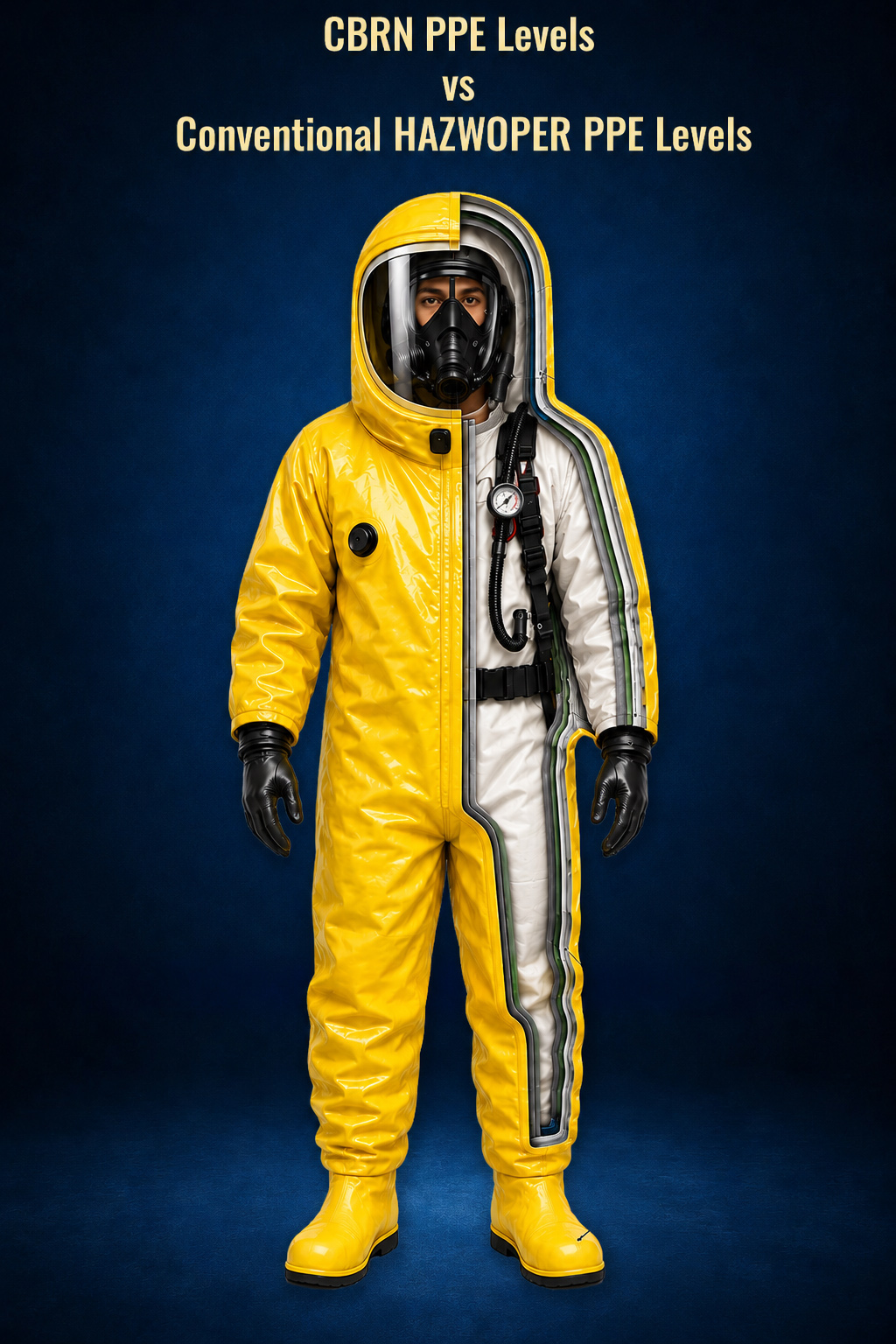
Chemical, Biological, Radiological, and Nuclear (CBRN) Personal Protective Equipment (PPE) ensembles are specialized protective systems used by emergency responders operating in hazardous environments involving chemical warfare agents, toxic industrial chemicals, biological hazards, radioactive contamination, and nuclear incidents. Although CBRN responders use the familiar Occupational Safety and Health Administration (OSHA) Levels A, B, C, and D framework established under HAZWOPER, CBRN ensembles often incorporate enhanced protective materials, CBRN-certified respiratory protection, integrated communications, and equipment specifically designed for homeland security and emergency-response operations. Selecting the proper ensemble requires a comprehensive hazard assessment that considers contaminant identity, atmospheric concentration, oxygen availability, skin hazards, weather conditions, mission objectives, and responder safety. Understanding both conventional Hazardous Waste Operations and Emergency Response (HAZWOPER) PPE and CBRN-specific enhancements allows emergency responders to select the appropriate level of protection for each incident.
Key Takeaways
- OSHA Levels A, B, C, and D remain the foundation for CBRN PPE selection.
- CBRN ensembles frequently incorporate specialized materials and equipment designed for chemical warfare agents, biological hazards, radiological contamination, and nuclear response.
- Respiratory protection is often the most important factor in determining the appropriate PPE level.
- Level A provides the highest respiratory and skin protection.
- Level B provides maximum respiratory protection with reduced vapor skin protection.
- Level C uses CBRN-approved air-purifying respirators only when atmospheric conditions permit.
- Level D is appropriate only in uncontaminated support areas.
- Continuous atmospheric monitoring is essential because PPE selection may change throughout an incident.
- Proper decontamination is as important as PPE selection.
- PPE should always be selected through a documented hazard assessment rather than by defaulting to the highest level of protection.

What Are CBRN PPE Ensembles?
A CBRN PPE ensemble is a coordinated system of respiratory protection, chemical protective clothing, gloves, footwear, communications equipment, and personal safety devices designed to protect emergency responders during incidents involving hazardous chemical, biological, radiological, or nuclear materials.
Unlike individual pieces of PPE, an ensemble functions as a complete protective system. Every component must work together to provide effective protection while allowing responders to safely perform their assigned tasks.
Typical CBRN ensembles may include:
- Respiratory protection
- Chemical-resistant suits
- Inner and outer gloves
- Chemical-resistant boots
- Helmet
- Communication equipment
- Personal Alert Safety System (PASS)
- Radiation dosimeters
- Air-monitoring instruments
- Cooling garments when required
The specific equipment selected depends on the hazards identified during the incident.
Conventional HAZWOPER PPE Levels
OSHA established four levels of personal protective equipment within the HAZWOPER standard (29 CFR 1910.120).
These levels are based on the degree of respiratory protection and skin protection required during hazardous waste operations and emergency response.
The four conventional levels include:
- Level A – Maximum respiratory and skin protection.
- Level B – Maximum respiratory protection with lower skin protection.
- Level C – Air-purifying respiratory protection with chemical-resistant clothing.
- Level D – Standard work clothing for uncontaminated environments.
These protection levels continue to serve as the basis for PPE selection during modern CBRN emergency response operations.
What Makes CBRN PPE Different?
Although CBRN responders still use OSHA Levels A through D, the equipment itself often differs from conventional industrial PPE.
CBRN operations involve hazards that may include:
- Chemical warfare agents
- Toxic industrial chemicals
- Biological aerosols
- Radioactive particulates
- Unknown hazardous substances
- Terrorism-related incidents
To address these threats, CBRN equipment often incorporates enhanced protective features beyond those typically found in conventional HAZWOPER ensembles.
Examples include:
- Enhanced chemical-resistant suit materials
- CBRN-certified respirators
- Specialized filter canisters
- Improved visor coatings
- Chemical-resistant communications systems
- Integrated hydration systems
- Advanced heads-up displays
- Improved glove interfaces
- Better contamination-resistant hardware
These enhancements improve survivability while allowing responders to perform extended emergency operations.
Conventional HAZWOPER vs. CBRN PPE
| Feature | Conventional HAZWOPER PPE | CBRN PPE Ensemble |
|---|---|---|
| Primary Purpose | Industrial hazardous waste operations | Chemical, biological, radiological and nuclear emergency response |
| Respirators | Industrial SCBA, APR, SAR, PAPR | CBRN-certified SCBA or CBRN APR/PAPR depending on the hazard assessment |
| Protective Clothing | Industrial chemical protective clothing selected for the hazard | Chemical protective clothing with enhanced performance characteristics for CBRN response |
| Typical Users | Environmental contractors, hazardous waste workers | HAZMAT teams, fire departments, military units, law enforcement, homeland security personnel |
| Operational Focus | Environmental cleanup and industrial response | Emergency response, life safety, national security, and consequence management |
CBRN SCBA vs Conventional SCBA
| Feature | Industrial SCBA | CBRN SCBA |
|---|---|---|
| Primary Use | Industrial emergencies | Chemical, biological, radiological and nuclear incidents |
| Facepiece Materials | Standard industrial materials | Enhanced chemical-resistant materials |
| CBRN Certification | Not necessarily | Designed and evaluated for CBRN response applications |
| Typical Users | Industrial workers | First responders and HAZMAT teams |
PPE Selection Philosophy
One of the most common misconceptions is that responders should always choose the highest level of protection available.
In reality, the objective is to select the lowest level of PPE that still provides adequate protection.
Excessive PPE can:
- Reduce mobility
- Increase fatigue
- Increase heat stress
- Limit visibility
- Reduce communication
- Shorten work duration
- Increase physiological stress
Proper hazard assessment balances protection with operational effectiveness.
The CBRN PPE Selection Process
Every CBRN response should begin with a structured hazard assessment.
Responders should evaluate:
- Chemical identity
- Biological hazards
- Radiological hazards
- Nuclear hazards
- Atmospheric oxygen
- IDLH conditions
- Skin hazards
- Vapor hazards
- Temperature
- Mission duration
- Decontamination requirements
Only after these factors have been evaluated should PPE be selected.
Conventional HAZWOPER Level A Ensemble

The OSHA HAZWOPER Level A ensemble provides the highest level of respiratory, skin, eye, and mucous membrane protection available for hazardous waste operations and emergency response. It is selected whenever responders face unknown atmospheres, highly toxic vapors, or contaminants capable of causing injury through both inhalation and skin absorption. OSHA identifies Level A as the appropriate choice when the highest degree of respiratory and skin protection is required.
A conventional Level A ensemble consists of a fully encapsulating vapor-protective suit worn with a pressure-demand Self-Contained Breathing Apparatus (SCBA). The SCBA is typically worn inside the suit to prevent contamination of the breathing apparatus during entry into hazardous environments. The suit completely encloses the responder and incorporates a vapor-tight zipper, integrated gloves and boots, sealed seams, and a large impact-resistant visor.
Level A is commonly selected during:
- Initial site entry
- Unknown hazardous materials incidents
- Hazardous waste site characterization
- Unknown chemical releases
- Highly toxic vapor exposures
- IDLH atmospheres
- Severe skin absorption hazards
While Level A provides maximum protection, it also imposes the greatest physical burden. Heat stress, reduced mobility, decreased dexterity, limited visibility, and restricted work duration are common operational concerns. Continuous atmospheric monitoring and hazard assessment allow responders to downgrade to lower protection levels when conditions permit.
How a CBRN Level A Ensemble Differs
Although both ensembles provide the highest level of protection, a CBRN Level A ensemble incorporates additional features intended for terrorism response and incidents involving chemical warfare agents, biological hazards, radiological contamination, and nuclear emergencies.
Compared with a conventional HAZWOPER Level A ensemble, a CBRN Level A ensemble may include:
- Enhanced chemical-resistant barrier materials
- CBRN-certified SCBA components
- Improved visor coatings for chemical resistance
- Enhanced glove and boot interfaces
- Integrated communications systems
- Heads-up displays (HUDs)
- PASS devices
- Radiation dosimeters
- Equipment designed for repeated decontamination
The underlying OSHA protection philosophy remains the same—select the PPE level based on the hazard assessment—but the equipment is optimized for the unique demands of CBRN response.
CBRN Level A Ensemble
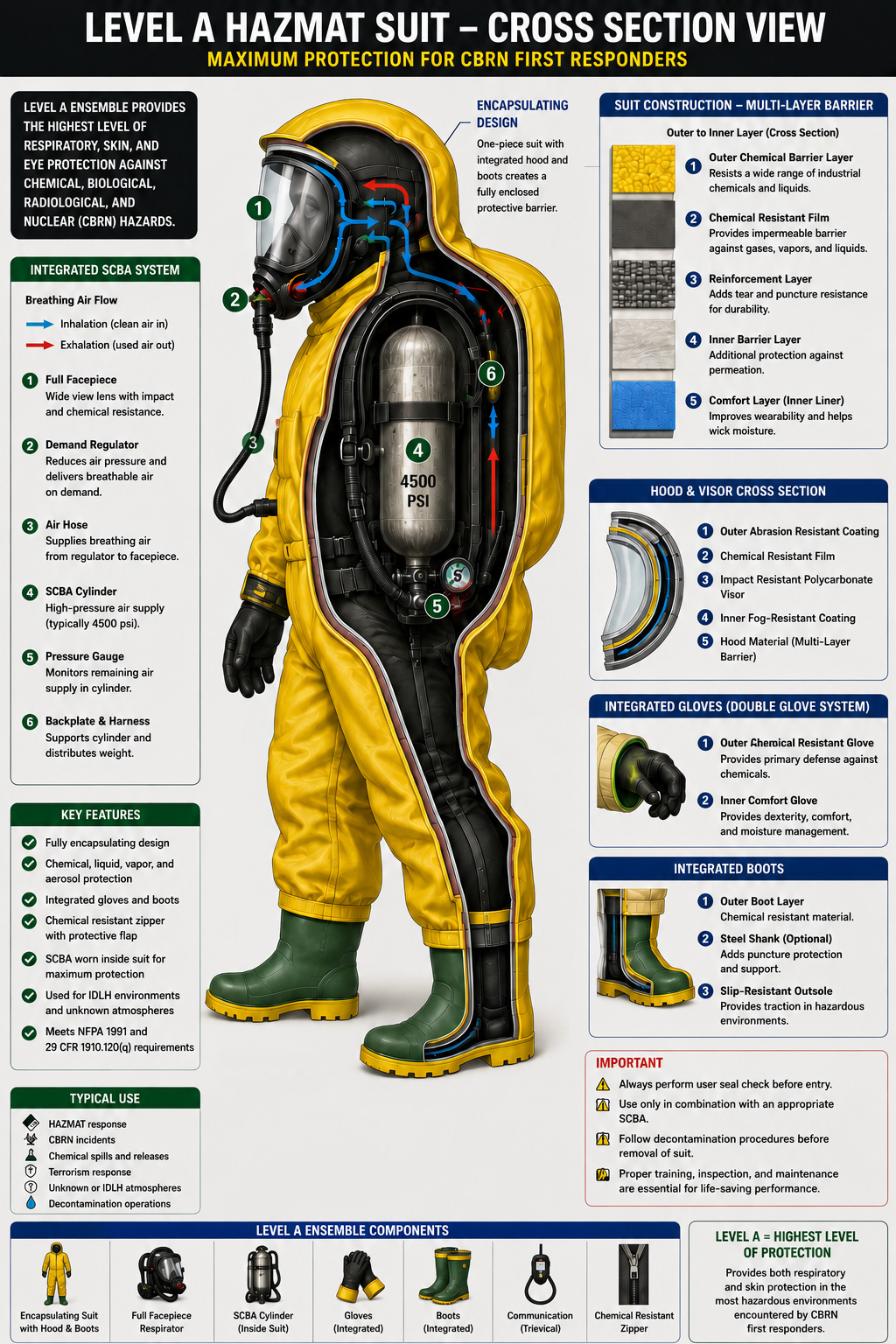
The CBRN Level A ensemble provides the highest level of respiratory and skin protection available to emergency responders. It is selected whenever responders face unknown airborne hazards, highly toxic vapors, chemical warfare agents, or contaminants capable of causing injury through both inhalation and skin absorption. Because responders may have little or no information about the atmosphere during the initial stages of an incident, Level A protection is often the safest and most conservative choice until additional air monitoring and hazard assessment can be completed.
Unlike a conventional industrial Level A ensemble, a CBRN Level A ensemble frequently incorporates enhanced barrier materials designed to resist permeation from chemical warfare agents, persistent toxic industrial chemicals, biological contamination, and radioactive particulates. These suits are manufactured with multiple protective layers, sealed seams, chemical-resistant visor assemblies, and glove interfaces specifically intended for extended emergency-response operations.
Respiratory protection is provided by a pressure-demand SCBA worn inside the fully encapsulating suit. Because the SCBA supplies breathable air independent of the surrounding atmosphere, responders remain protected in unknown, oxygen-deficient, and Immediately Dangerous to Life or Health (IDLH) environments. The entire breathing apparatus—including the cylinder, regulator, and facepiece—is enclosed within the suit, preventing contamination of the SCBA components during entry operations.
A complete CBRN Level A ensemble typically includes:
- Fully encapsulating vapor-protective suit
- Pressure-demand SCBA
- Full-face positive-pressure facepiece
- Chemical-resistant inner gloves
- Chemical-resistant outer gloves
- Integrated chemical-resistant boots
- Communication equipment
- PASS device
- Intrinsically safe lighting
- Radiation dosimeter when appropriate
Typical CBRN applications include:
- Unknown chemical releases
- Suspected nerve agent incidents
- Chemical warfare agent response
- Terrorism incidents
- Unknown laboratory chemicals
- Initial hazardous materials entry
- IDLH atmospheres
- Severe vapor hazards
Although Level A provides maximum protection, it also imposes the greatest operational burden. Mobility decreases, dexterity is reduced, heat stress increases, and work duration is limited by both physiological factors and SCBA air supply. Consequently, responders continuously monitor atmospheric conditions so they can safely transition to a lower level of protection whenever appropriate.
Conventional HAZWOPER Level B Ensemble

The OSHA HAZWOPER Level B ensemble provides the highest level of respiratory protection while offering a lower level of skin protection than a fully encapsulating Level A ensemble. OSHA recommends Level B protection when responders require an independent source of breathing air because of airborne hazards or oxygen-deficient conditions, but the potential for skin exposure to hazardous vapors has been determined to be significantly lower than that requiring Level A protection.
The defining characteristic of a Level B ensemble is the use of a pressure-demand SCBA worn outside a chemical-resistant splash suit. Unlike the vapor-tight encapsulating suit used in Level A protection, the splash suit is designed to protect against liquid chemical splashes and contaminated particulates rather than prolonged exposure to hazardous vapors. This configuration allows responders to maintain maximum respiratory protection while improving mobility, reducing heat stress, and increasing work efficiency.
A conventional HAZWOPER Level B ensemble typically consists of:
- Pressure-demand SCBA
- Full-face positive-pressure facepiece
- Chemical-resistant splash-protective suit
- Chemical-resistant hood
- Inner chemical-resistant gloves
- Outer chemical-resistant gloves
- Chemical-resistant boots
- Hard hat when required
- Communication equipment
- Personal Alert Safety System (PASS) when appropriate
Level B protection is commonly selected during:
- Hazardous waste drum handling
- Chemical spill response
- Site characterization
- Tank cleaning
- Unknown confined-space entry
- Hazardous waste remediation
- Initial decontamination operations
- Emergency response where respiratory hazards exceed skin hazards
Although Level B offers the same respiratory protection as Level A, responders remain more susceptible to hazardous vapors contacting exposed suit materials. Therefore, Level B should not be selected when hazardous vapors present significant skin absorption risks. Atmospheric monitoring, hazard assessment, and contaminant identification remain essential throughout the operation to determine whether protection should be upgraded or downgraded.
CBRN Level B Ensemble
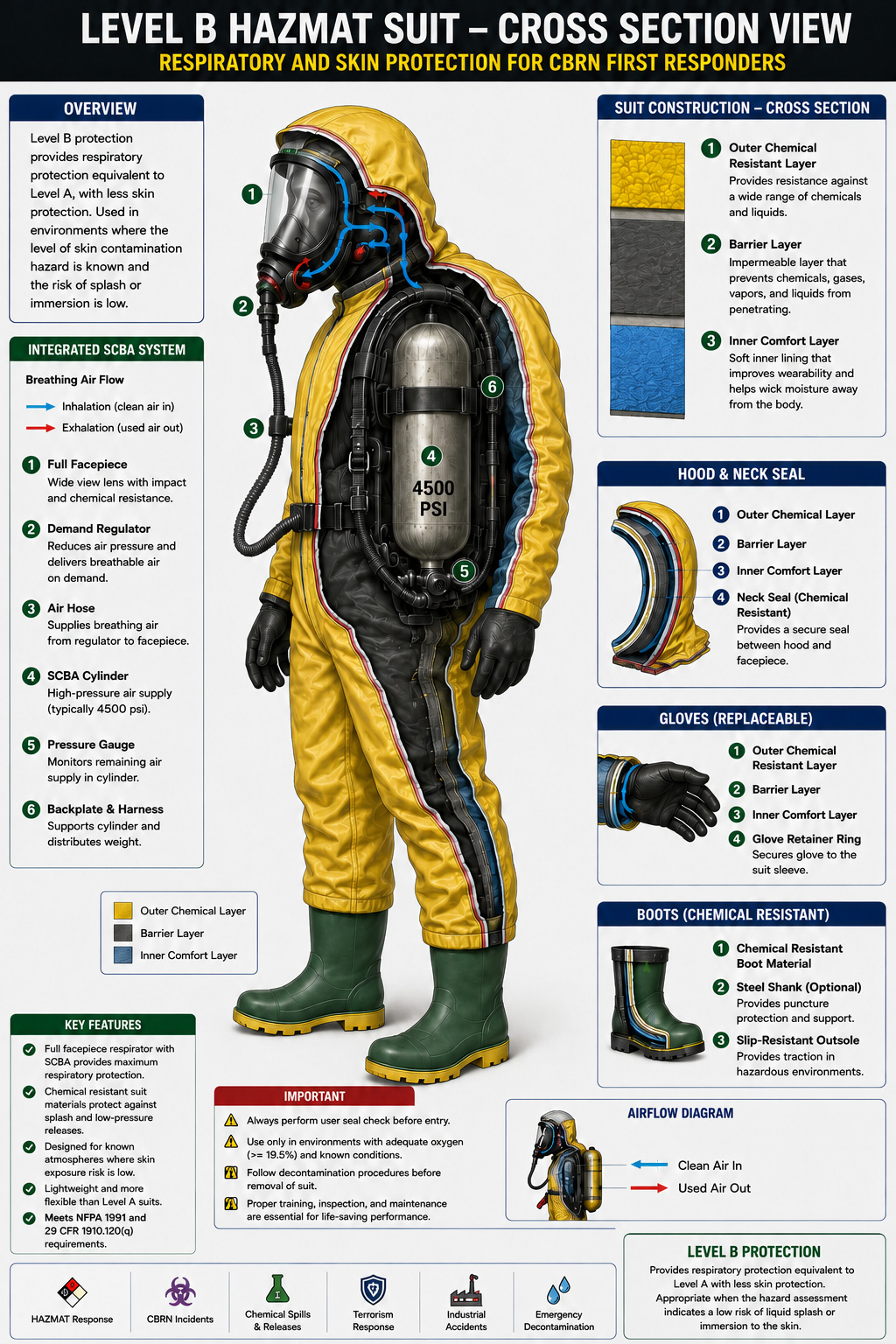
A CBRN Level B ensemble provides the highest level of respiratory protection while reducing the level of skin protection compared with a fully encapsulating Level A suit. It is selected when airborne hazards remain severe enough to require an SCBA but monitoring indicates that vapor skin absorption hazards are either absent or significantly reduced.
The most noticeable difference between Levels A and B is the location of the SCBA. In a Level B ensemble, the breathing apparatus is worn outside the protective suit. The responder typically wears a splash-protective chemical suit rather than a vapor-tight encapsulating garment. This design improves mobility, reduces heat stress, and allows responders to work longer while maintaining complete respiratory protection.
CBRN Level B ensembles often incorporate enhanced chemical-resistant fabrics, communications equipment, and durable outer materials designed to withstand decontamination operations and extended emergency-response activities.
Typical operations include:
- Chlorine releases
- Ammonia releases
- Industrial chemical spills
- Decontamination corridor operations
- Victim rescue
- Drum overpacking
- Hazardous waste characterization
- Radiological contamination control
Level B remains appropriate whenever respiratory hazards dictate the use of an SCBA but skin exposure risks do not justify the additional burden of a fully encapsulating suit.
Conventional HAZWOPER Level C Ensemble
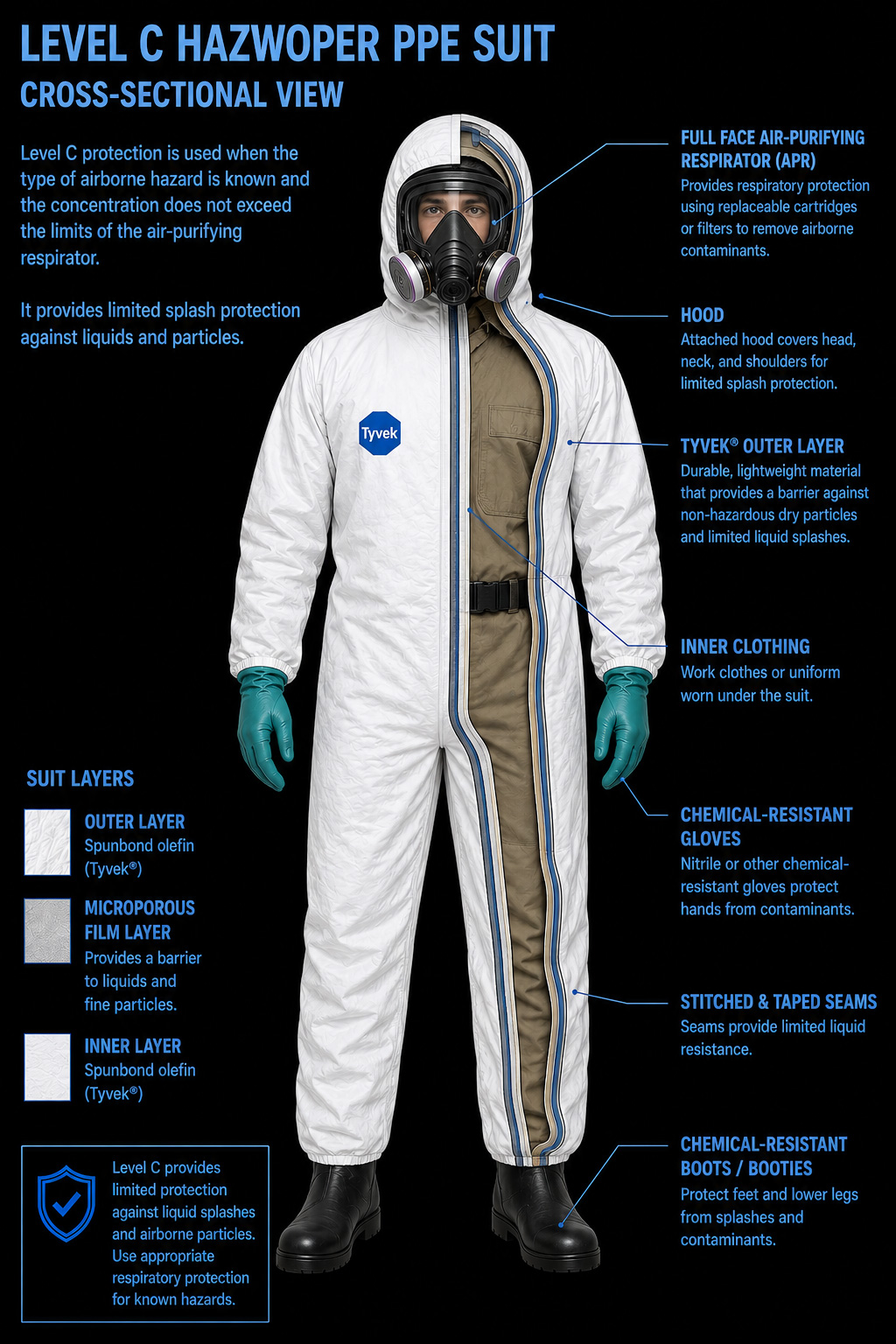
The OSHA HAZWOPER Level C ensemble is selected when atmospheric contaminants have been identified, contaminant concentrations are known, oxygen levels are adequate, and air-purifying respirators provide sufficient protection for the hazards present. Unlike Levels A and B, which rely on atmosphere-supplying SCBAs, Level C protection uses an Air-Purifying Respirator (APR) or Powered Air-Purifying Respirator (PAPR) equipped with cartridges or filters specifically selected for the contaminants encountered.
Because Level C respirators filter ambient air rather than supplying breathable air, they should never be used in unknown atmospheres, oxygen-deficient environments, or IDLH conditions. Before selecting Level C, employers must verify that:
- Oxygen concentration is at least 19.5 percent.
- Contaminants have been positively identified.
- Airborne concentrations are below respirator limitations.
- Appropriate cartridges or filters have been selected.
- Employees have successfully completed fit testing and medical evaluations.
A conventional Level C ensemble typically consists of:
- Full-face or half-face APR or PAPR
- Chemical-resistant coveralls or splash suit
- Chemical-resistant hood
- Chemical-resistant gloves
- Chemical-resistant boots
- Eye protection if required
- Hard hat when appropriate
- Hearing protection when necessary
Level C is commonly used during:
- Hazardous waste cleanup
- Soil remediation
- Environmental sampling
- Waste container inspections
- Lead abatement
- Asbestos operations
- Pesticide application
- Post-spill cleanup
- Long-term remediation projects
Compared with Levels A and B, Level C significantly reduces responder fatigue because workers do not carry compressed-air cylinders. Improved mobility, greater visibility, longer work duration, and reduced physiological stress make Level C the preferred protection level whenever hazard assessment indicates that air-purifying respirators are appropriate. Continuous atmospheric monitoring remains essential because changing site conditions may require immediate evacuation or upgrading to SCBA protection.
CBRN Level C Ensemble
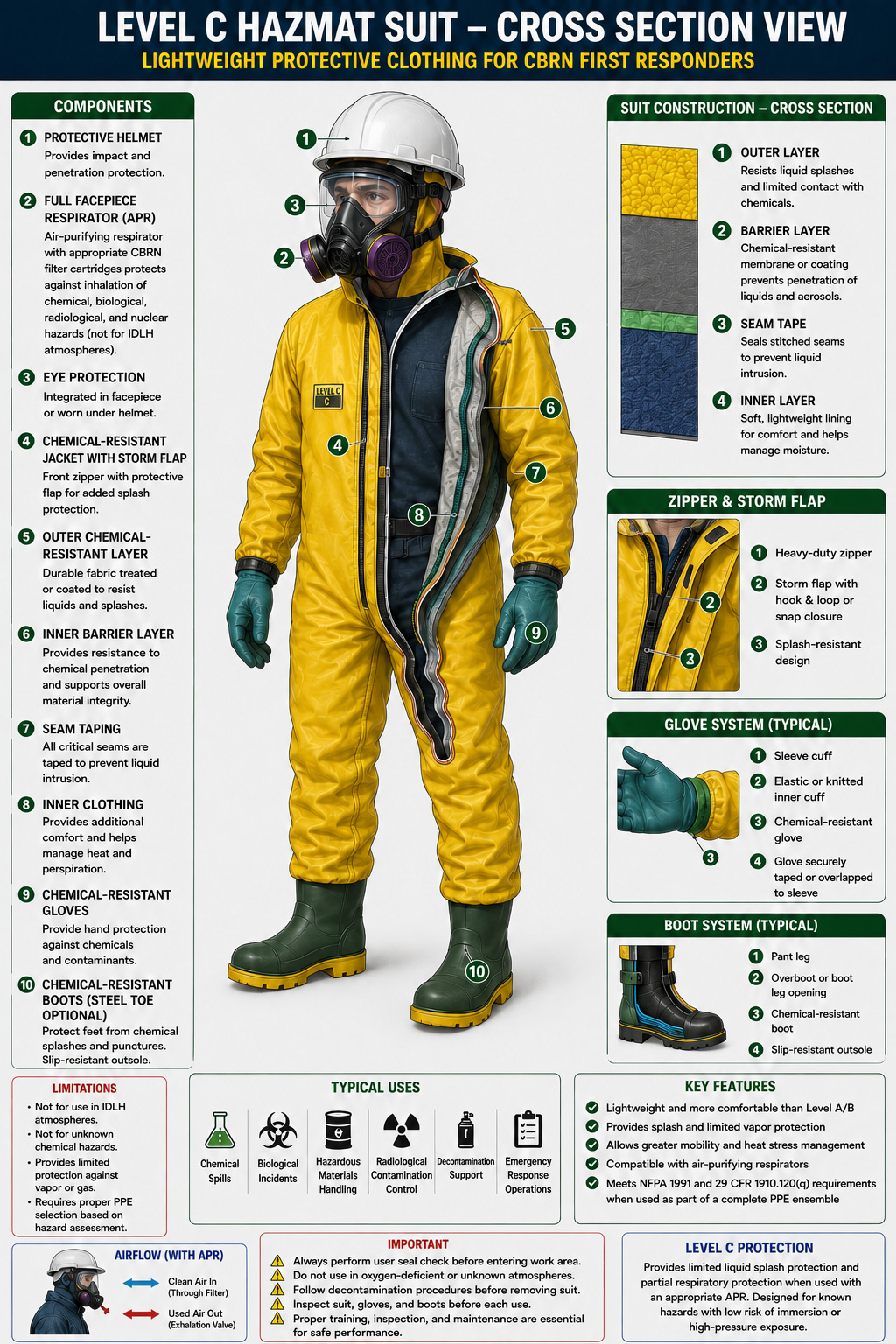
A CBRN Level C ensemble is selected only after atmospheric monitoring confirms that contaminants have been identified, oxygen concentrations are adequate, and air-purifying respiratory protection is suitable for the hazards present. Unlike Levels A and B, Level C relies on a CBRN-approved APR or PAPR rather than an atmosphere-supplying SCBA.
Because Level C respirators filter ambient air, they should never be used in oxygen-deficient, unknown, or IDLH atmospheres. Before responders enter wearing Level C protection, the Safety Officer should verify:
- Oxygen concentration of at least 19.5%
- Known contaminant identity
- Known contaminant concentration
- Proper respirator selection
- Appropriate CBRN filter canister
- Successful fit testing
- User seal check
Protective clothing generally consists of a chemical-resistant splash suit, hood, gloves, boots, and other protective equipment appropriate for the contaminants encountered.
Typical Level C operations include:
- Environmental sampling
- Evidence collection
- Radiological cleanup
- Biological investigation
- Post-release monitoring
- Recovery operations
- Secondary contamination surveys
- Long-duration remediation
Compared with Levels A and B, Level C significantly improves mobility, visibility, communication, and responder endurance while still providing effective protection when atmospheric conditions remain within established safety limits.
Conventional HAZWOPER Level D Ensemble
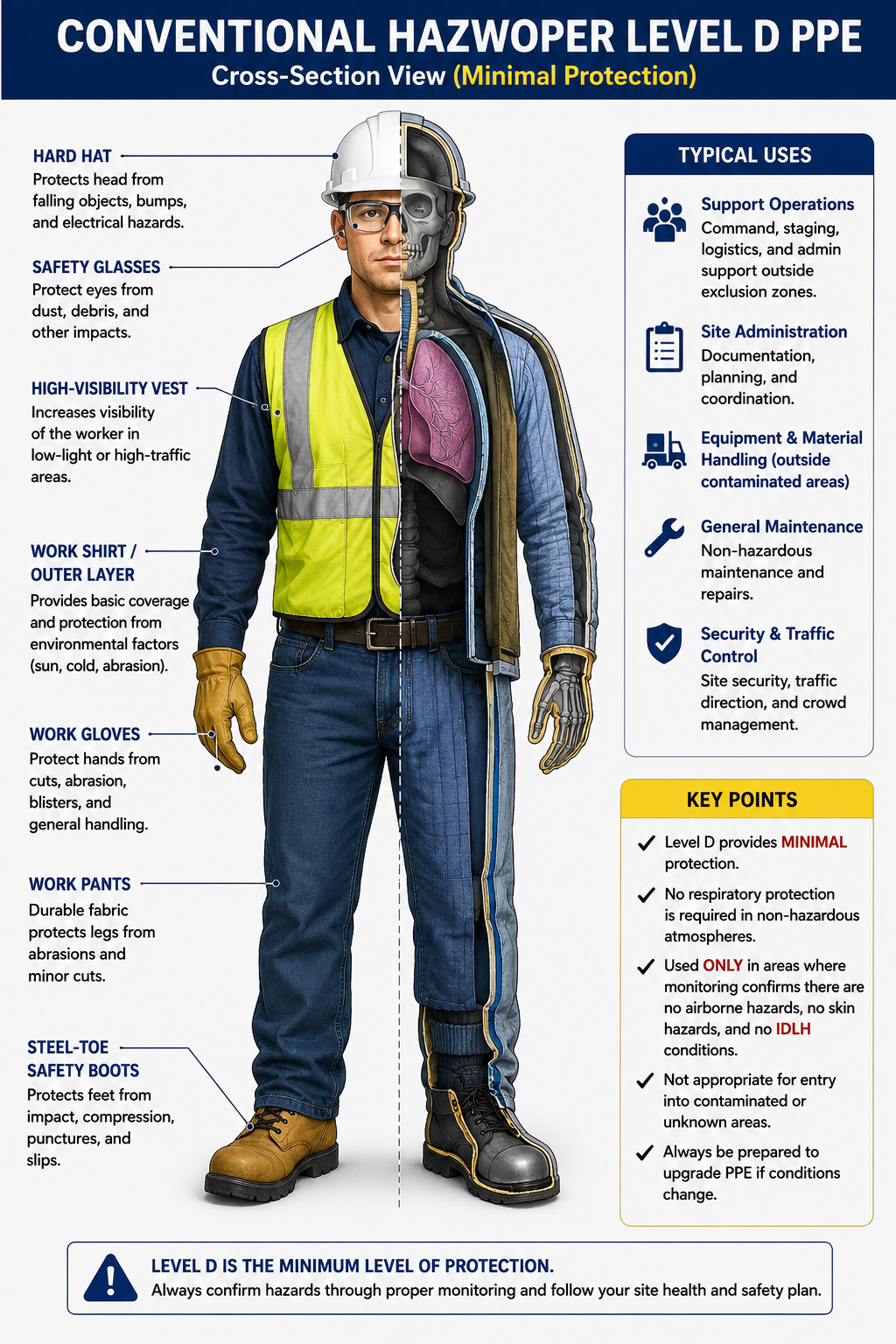
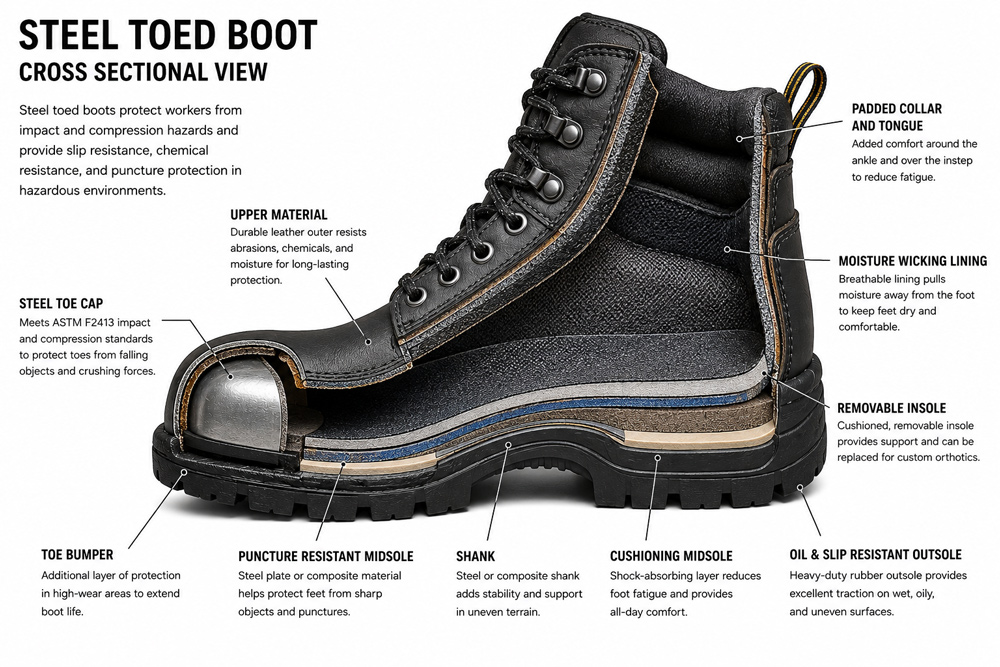
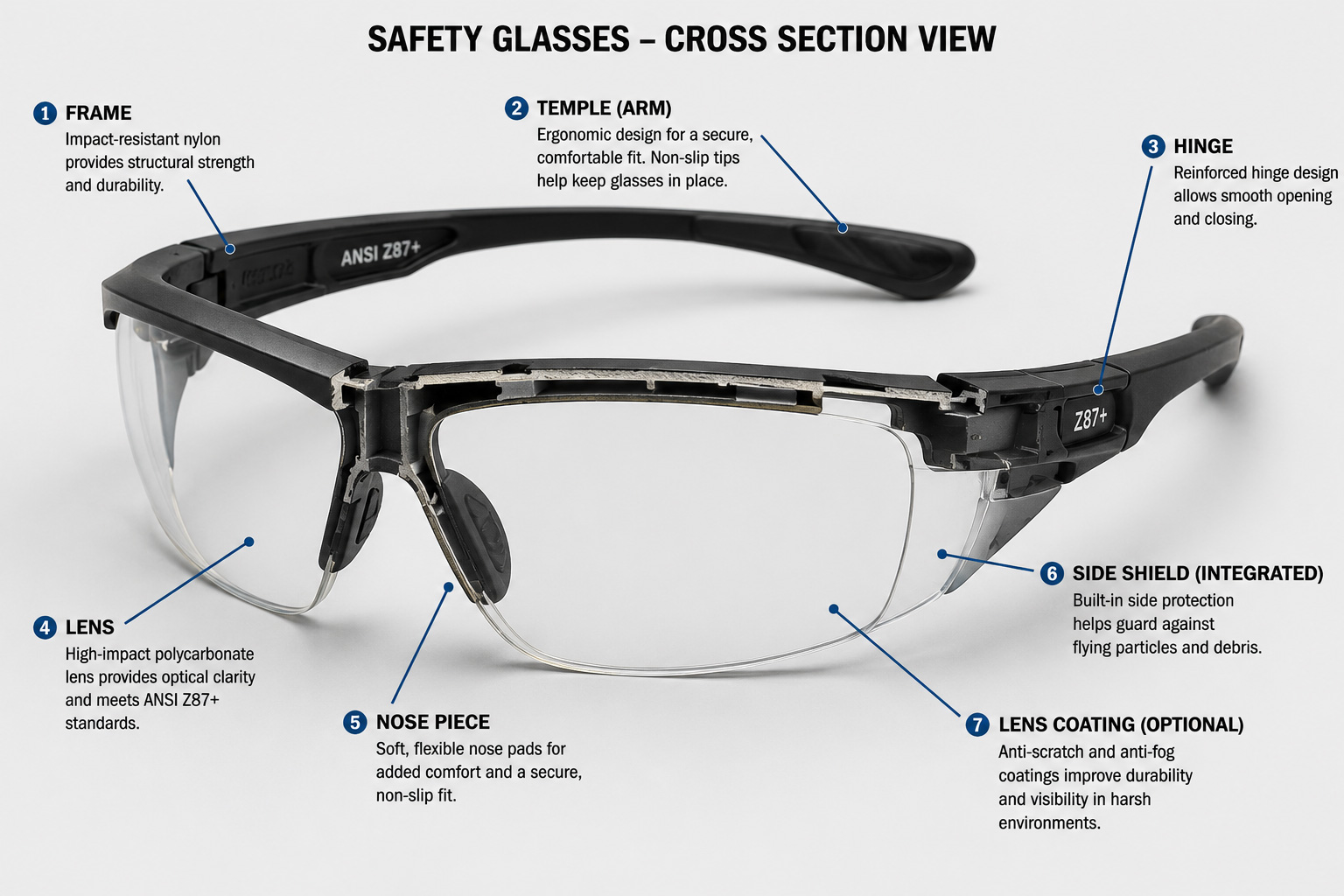
The OSHA HAZWOPER Level D ensemble provides the minimum level of personal protective equipment and is intended only for work environments where atmospheric monitoring and hazard assessment confirm that no respiratory hazards, skin hazards, or significant chemical exposure risks are present. Level D does not include respiratory protection and should never be used in areas where hazardous airborne contaminants, oxygen-deficient atmospheres, or chemical splash hazards exist.
Rather than protecting against hazardous substances, Level D PPE protects workers from routine occupational hazards encountered during construction, maintenance, transportation, environmental support activities, and general industrial operations.
A conventional Level D ensemble typically includes:
- Hard hat
- Safety glasses or goggles
- Steel-toe safety boots
- Work gloves
- Hearing protection when required
- High-visibility vest
- Appropriate work clothing
- Weather protection
Typical Level D activities include:
- Site administration
- Equipment staging
- Vehicle operations
- Material handling
- Surveying
- Site security
- Traffic control
- Office support
- General maintenance
- Operations outside exclusion and contamination reduction zones
Although Level D provides minimal protection against hazardous substances, it remains an essential component of every HAZWOPER operation because many workers perform support functions outside contaminated areas. Personnel assigned to Level D activities should remain aware of changing site conditions and understand evacuation procedures should atmospheric monitoring indicate contaminant migration beyond established control zones.
One of the most important principles of HAZWOPER is that PPE selection is not permanent. Workers may begin an operation wearing Level D PPE but transition to Level C, B, or even Level A if changing work assignments or deteriorating site conditions require additional protection. Likewise, responders leaving contaminated areas may downgrade to Level D only after successful decontamination and confirmation that they have entered a safe support zone.
CBRN Level D Ensemble
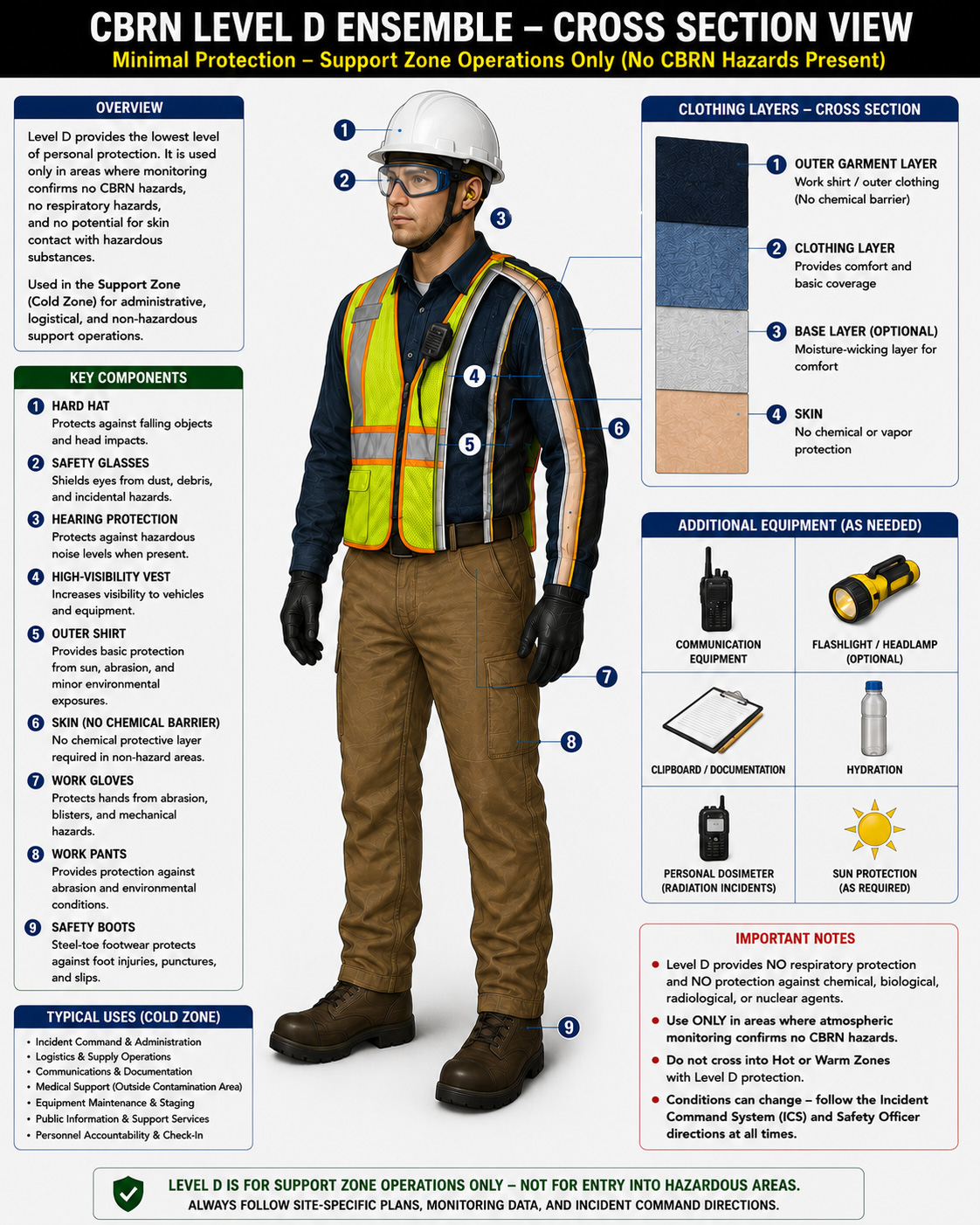
A CBRN Level D ensemble provides the minimum level of personal protective equipment and is used only when atmospheric monitoring confirms that no respiratory hazards or chemical contamination are present. Personnel wearing Level D protection typically operate within the Cold Zone where routine occupational hazards remain but specialized CBRN hazards have been eliminated or adequately controlled.
Unlike the higher protection levels, Level D does not include respiratory protection.
Typical components include:
- Hard hat
- Safety glasses
- High-visibility vest
- Safety footwear
- Work gloves
- Hearing protection
- Weather-appropriate clothing
- Communication equipment
Personnel wearing Level D frequently support:
- Incident Command
- Logistics
- Equipment staging
- Medical support
- Documentation
- Communications
- Resource management
Although contamination hazards have been minimized, Level D personnel should remain prepared to upgrade their protection if changing conditions indicate contaminant migration beyond established control zones.

Transitioning Between PPE Levels
One of the defining characteristics of CBRN emergency response is that PPE selection is dynamic. As responders collect additional information through atmospheric monitoring and hazard assessment, the Incident Commander and Safety Officer may determine that protection levels should change.
A typical progression might include:
- Initial entry: Level A
- Known respiratory hazard with limited skin hazard: Level B
- Known contaminant below IDLH with adequate oxygen: Level C
- Support operations outside contamination: Level D
Downgrading PPE should never occur without documented air-monitoring results and a comprehensive hazard assessment. Likewise, responders should immediately upgrade protection if atmospheric conditions deteriorate or unknown hazards are encountered.
Conventional HAZWOPER vs. CBRN PPE
While OSHA’s Levels A–D remain the foundation for both industrial HAZWOPER operations and CBRN emergency response, CBRN ensembles often include enhancements that improve performance during high-consequence incidents.
Examples include:
- CBRN-certified SCBAs
- CBRN-approved APRs and PAPRs
- Enhanced chemical-resistant barrier materials
- Integrated communication systems
- Heads-up display (HUD) technology
- PASS devices
- Radiation detection equipment
- Improved glove and boot interfaces
- Enhanced contamination-resistant hardware
The philosophy, however, remains unchanged.
The objective is not to wear the highest level of PPE possible.
The objective is to wear the lowest level of PPE that provides adequate protection while allowing responders to safely accomplish the mission.
Common Mistakes During CBRN PPE Selection
The most common errors include:
- Assuming higher PPE is always better.
- Wearing an APR in an unknown atmosphere.
- Entering an IDLH environment without an SCBA.
- Failing to continuously monitor atmospheric conditions.
- Ignoring heat stress and physiological limitations.
- Downgrading PPE before hazards have been fully characterized.
- Failing to properly decontaminate responders and equipment.
Why CBRN PPE Requires Continuous Air Monitoring
Unlike fixed industrial environments, CBRN incidents are dynamic. Wind direction, weather, containment failures, secondary releases, and responder activities can rapidly change atmospheric conditions.
For this reason, direct-reading instruments—including PIDs, FIDs, combustible gas indicators, multi-gas meters, radiation survey instruments, and biological detection equipment—remain essential throughout the response. PPE decisions should always be supported by real-time monitoring rather than assumptions.
Conventional vs. CBRN Equipment
| Equipment | Conventional HAZWOPER | CBRN Ensemble |
|---|---|---|
| SCBA | Industrial SCBA | CBRN-certified SCBA with enhanced chemical resistance |
| APR | Industrial cartridges | CBRN-approved canisters |
| Protective Suit | Chemical-resistant materials | Enhanced barrier materials designed for CBRN response |
| Communications | Portable radios | Integrated communication systems compatible with protective suits |
| Heads-Up Display | Sometimes available | Common on modern CBRN SCBAs |
| PASS Device | Optional depending on organization | Commonly integrated into CBRN SCBAs |
| Radiation Monitoring | Generally not included | Often incorporates dosimeters and radiation survey equipment |
Common Misconceptions About CBRN PPE
One of the biggest misconceptions surrounding CBRN emergency response is that wearing the highest level of PPE is always the safest option. In reality, excessive protection can reduce mobility, increase heat stress, shorten work duration, and introduce additional operational risks.
Other common misconceptions include:
- Higher PPE is always better. PPE should match the hazard assessment, not simply default to the highest level.
- Level C can be used anywhere. Level C is only appropriate when contaminants are identified, oxygen is adequate, and air-purifying respirators are approved for the hazard.
- CBRN PPE replaces OSHA Levels A–D. CBRN response continues to use OSHA’s PPE framework while incorporating specialized equipment designed for CBRN operations.
- Air monitoring is optional once PPE is selected. Continuous atmospheric monitoring remains essential because hazards frequently change during emergency response operations.
- Once PPE is selected, it never changes. PPE selection should be continuously reevaluated as additional monitoring data becomes available.
Understanding these principles helps emergency responders select the lowest level of PPE that still provides adequate protection, improving both safety and operational effectiveness.
Continue Learning
After understanding CBRN PPE levels, continue exploring these related topics to strengthen your knowledge of hazardous materials response, respiratory protection, and emergency operations.
- CBRN SCBA Respirators
- CBRN Air-Purifying Respirators (APR)
- HAZWOPER PPE Levels A, B, C & D
- SCBA vs. APR vs. PAPR vs. SAR
- Assigned Protection Factors (APFs)
- Immediately Dangerous to Life or Health (IDLH)
- Air Monitoring During HAZWOPER Operations
- Personal Air Monitoring
- Perimeter Air Monitoring
- CBRN Decontamination Procedures
- Respirator Cartridge Color Coding
- CBRN Respirator Filter Technology
Select the Right Level of Protection Before Entering the Hazard Zone
Frequently Asked Questions
What are the four CBRN PPE levels?
The four CBRN PPE levels—Level A, Level B, Level C, and Level D—follow the same protection framework established by OSHA’s HAZWOPER standard. Level A provides the highest level of respiratory and skin protection, while Level D provides the lowest level of protection and is intended only for uncontaminated support areas.
Are CBRN PPE levels different from conventional HAZWOPER PPE levels?
The protection philosophy is the same, but CBRN ensembles often incorporate specialized equipment designed for chemical, biological, radiological, and nuclear response. Examples include CBRN-certified SCBAs, CBRN-approved respirators, enhanced chemical-resistant materials, integrated communications systems, and mission-specific protective components.
When should a CBRN Level A ensemble be used?
Level A should be selected when responders face unknown hazardous substances, highly toxic vapors, significant skin absorption hazards, or IDLH atmospheres where maximum respiratory and skin protection is required.
When is a CBRN Level B ensemble appropriate?
Level B is appropriate when maximum respiratory protection is still required but atmospheric monitoring indicates that vapor skin hazards are reduced. Responders wear a pressure-demand SCBA with a splash-protective chemical suit rather than a fully encapsulating vapor-tight suit.
Can a CBRN Level C ensemble be used in an IDLH atmosphere?
No. Level C relies on an air-purifying respirator and should only be used when contaminants are identified, oxygen concentrations are at least 19.5%, atmospheric concentrations are below IDLH levels, and the selected CBRN respirator is approved for the specific hazard.
Does a CBRN Level D ensemble provide respiratory protection?
No. Level D provides no respiratory protection and should only be used in areas where atmospheric monitoring confirms there are no respiratory hazards, skin hazards, or hazardous chemical exposures. It is typically worn in the Cold Zone during support operations.
How do responders decide which PPE level to wear?
PPE selection is based on a documented hazard assessment that considers contaminant identity, concentration, oxygen levels, skin exposure hazards, atmospheric monitoring results, mission objectives, work duration, and environmental conditions. Continuous monitoring allows PPE to be upgraded or downgraded as conditions change.
Why is continuous air monitoring important during CBRN incidents?
Atmospheric conditions can change rapidly during chemical releases, hazardous materials incidents, and emergency response operations. Continuous monitoring helps identify changing hazards, determine whether existing PPE remains appropriate, and protect responders from unexpected exposures.
What respiratory protection is used with each PPE level?
Level A and Level B typically require a pressure-demand Self-Contained Breathing Apparatus (SCBA). Level C uses a CBRN-approved Air-Purifying Respirator (APR) or Powered Air-Purifying Respirator (PAPR) when atmospheric conditions permit. Level D does not include respiratory protection.
Can responders transition between PPE levels during an incident?
Yes. PPE selection is dynamic. As atmospheric monitoring and hazard assessments provide additional information, responders may transition from Level A to Level B, C, or D, or upgrade protection if conditions deteriorate. Any change in PPE should be based on documented monitoring data and approval by the Incident Commander or Safety Officer.
Train Smarter with OSHACode
OSHACode provides online 24-Hour HAZWOPER, 40-Hour HAZWOPER, and 8-Hour Refresher training designed to help employers meet OSHA training requirements. Our courses support employer-provided site-specific and hands-on training programs while delivering flexible, self-paced instruction for today’s workforce.
OSHACode® — We Know HAZMAT™
Sources
Emergency Response and Preparedness
OSHA HAZWOPER Hands-on Training Requirement
Medical Surveillance Requirements
U.S. Occupational Safety and Health Administration
https://www.osha.gov/laws-regs/standardinterpretations/1992-08-27-1
U.S. Environmental Protection Agency
https://www.epa.gov/laws-regulations/summary-resource-conservation-and-recovery-act
Related Articles
Building a HAZWOPER Safety Culture
Hands-on Training Discussions with U.S. OSHA
About the Author
This article was written by Clay A. Bednarz, MS, RPIH, founder of National Environmental Trainers® and OSHACode®. Bednarz pioneered the first commercial online HAZWOPER training programs in 1998 and has supported major hazardous waste operations, environmental remediation projects, and emergency response training initiatives nationwide.