
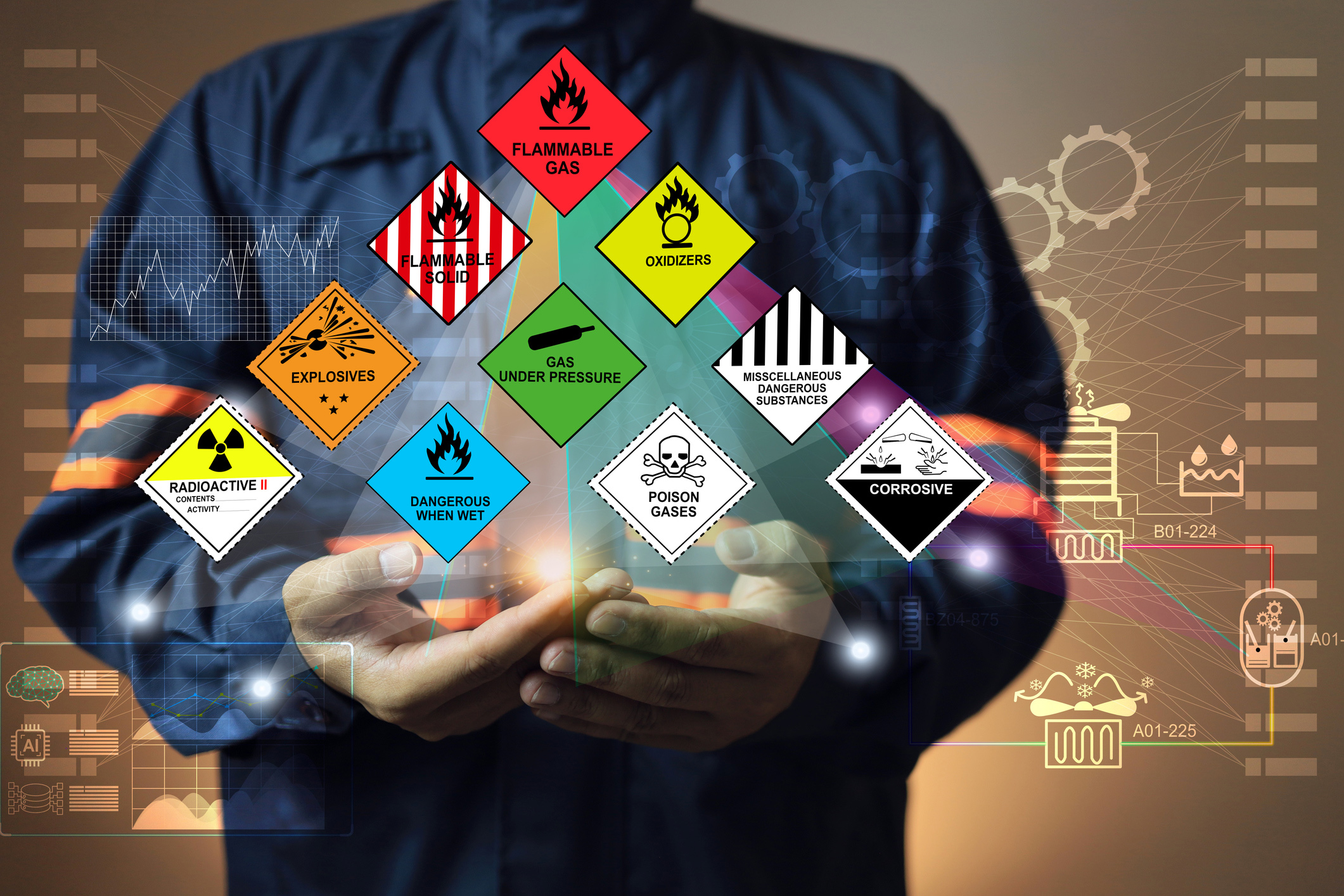
HAZMAT Chemistry: The Science of Danger
Hazardous Materials (HAZMAT) chemistry isn’t just about knowing which chemicals are hazardous—it’s about understanding why they are dangerous, how they interact, and what happens when things go wrong. It’s the science that stands between us and chemical disasters, explosions, poisonings, and environmental catastrophes.
1. The Core of HAZMAT Chemistry: Why Some Chemicals Are a Threat
Some materials are hazardous because of their reactivity, toxicity, or physical properties. Here’s what makes them dangerous:
Flammability & Combustibility
- Some substances catch fire easily because their flash point (the temperature at which they ignite) is low.
- Example: Gasoline evaporates at room temperature, creating an explosive vapor-air mixture.
- Why It Matters: Gasoline fires cannot be put out with water—water spreads the fire by making the gas float.
Toxicity & Poisoning
- Some chemicals are deadly even in tiny amounts by inhalation, ingestion, or skin contact.
- Example: Hydrogen cyanide (HCN) blocks oxygen uptake in the body, leading to suffocation at the cellular level.
- Why It Matters: Even if you survive cyanide exposure, long-term nerve damage is possible.
Radiation & Radioactive Decay
- Radioactive materials don’t just poison you—they mutate DNA and cause long-term cancer.
- Example: Plutonium-239, used in nuclear weapons, emits deadly alpha radiation.
- Why It Matters: Alpha radiation can’t penetrate skin but is lethal if inhaled.
Corrosiveness & Chemical Burns
- Acids and bases don’t just dissolve metals—they melt flesh by breaking down proteins.
- Example: Hydrofluoric acid (HF) doesn’t just burn skin; it seeps into the bloodstream and disrupts calcium levels, causing cardiac arrest.
- Why It Matters: HF burns don’t feel painful at first—which makes exposure more dangerous.
Explosivity & Instability
- Some compounds are so unstable they can detonate without warning.
- Example: Azidoazide azide (C2N14) is one of the world’s most explosive compounds. It can explode from nothing—heat, light, movement, even air pressure changes.
- Why It Matters: Handling explosive chemicals isn’t just about preventing ignition—it’s about controlling vibration, static electricity, and pressure.
2. The Science of HAZMAT Reactions: What Happens When It Goes Wrong?
Chemical disasters usually happen due to unexpected reactions. Here’s how:
Combustion Reactions: Fires & Explosions
- Oxygen + Fuel + Heat = Fire
- Some chemicals release oxygen when they decompose, making fires self-sustaining.
- Example: Ammonium nitrate (used in fertilizer) was responsible for the Beirut explosion (2020) because it rapidly decomposed, releasing oxygen and fueling an explosion.
Toxic Gas Formation
- Some chemicals react to produce gases that kill on contact.
- Example: Mixing bleach and ammonia creates chloramine gas, which destroys lung tissue.
- Example: Phosgene gas (COCl₂), used as a WWI chemical weapon, forms when carbon tetrachloride (an old fire extinguisher ingredient) is exposed to flames.
Violent Polymerization
- Some chemicals self-react, growing explosively if not stabilized.
- Example: Acrylonitrile (used in plastic manufacturing) can polymerize spontaneously, overheating and exploding.
3. HAZMAT Storage & Transport: Containing the Danger
Not all chemicals can be stored together. Some react violently if mixed. That’s why hazmat storage follows strict compatibility charts.
Incompatible Chemical Pairings:
- Acids + Bases = Violent reactions that release heat and gases.
- Example: Sulfuric acid + Sodium hydroxide = Boiling explosion
- Oxidizers + Organics = Fires and explosions.
- Example: Bleach + Gasoline = Instant fire
- Water-Reactive Chemicals + Water = Fires, explosions, and toxic gases.
- Example: Sodium metal + Water = Explosive hydrogen gas
- Cyanides + Acids = Deadly hydrogen cyanide gas.
- Example: Cleaning silver (using cyanide salts) in an acidic bath = WWI poison gas
- Peroxides (like hydrogen peroxide or organic peroxides) degrade into explosive compounds over time.
- Example: Old bottles of ether can form peroxides that detonate when opened.
Safe Storage Rules:
- Flammables: Store in explosion-proof cabinets.
- Corrosives: Store in acid-resistant containers.
- Oxidizers: Keep away from combustibles.
- Water-reactive chemicals: Store in moisture-free environments.
- Compressed gases: Secure tanks firmly to prevent leaks or explosions.
4. HAZMAT Emergency Response: What to Do When Disaster Strikes
If a HAZMAT incident occurs, seconds count. Emergency response follows strict protocols:
The HAZMAT Response Levels
- Level A – Full-body hazmat suits, air tanks, sealed suits (for deadly gases and unknown hazards).
- Level B – Respirators, chemical-resistant suits (for splash hazards and toxic spills).
- Level C – Standard chemical-resistant gear, no air supply (for non-life-threatening exposures).
- Level D – Basic protective clothing (for low-risk situations).
Containment & Neutralization
- Acid spills → Neutralize with baking soda (sodium bicarbonate).
- Base spills → Neutralize with vinegar or citric acid.
- Oil/Fuel spills → Contain with absorbent pads or sand.
- Toxic gas leaks → Evacuate and ventilate.
Firefighting HAZMAT Situations
- Water is NOT always the answer!
- Water spreads gasoline and oil fires.
- Water reacts violently with sodium, lithium, and potassium.
- Some fires need dry chemical agents (e.g., Class D fire extinguishers for metals)
5. The Laws of HAZMAT: Who Regulates This?
Because HAZMAT materials pose major risks, governments have strict regulations:
- OSHA (Occupational Safety & Health Administration) – Workplace safety rules.
- EPA (Environmental Protection Agency) – Hazardous waste disposal laws.
- DOT (Department of Transportation) – Shipping and transport regulations.
- NFPA (National Fire Protection Association) – Fire safety and hazmat labeling.
Final Thoughts: The Importance of HAZMAT Chemistry
HAZMAT chemistry is more than just chemical safety—it’s about predicting danger before it happens. Every explosion, toxic gas release, or deadly exposure could be prevented with the right chemical knowledge.
Sources
Emergency Response and Preparedness
OSHA HAZWOPER Hands-on Training Requirement
Medical Surveillance Requirements
U.S. Occupational Safety and Health Administration
https://www.osha.gov/laws-regs/standardinterpretations/1992-08-27-1
U.S. Environmental Protection Agency
https://www.epa.gov/laws-regulations/summary-resource-conservation-and-recovery-act
Related Articles
Building a HAZWOPER Safety Culture
Hands-on Training Discussions with U.S. OSHA