
Transforming Safety, Speed, and Situational Awareness in Hazardous Environments
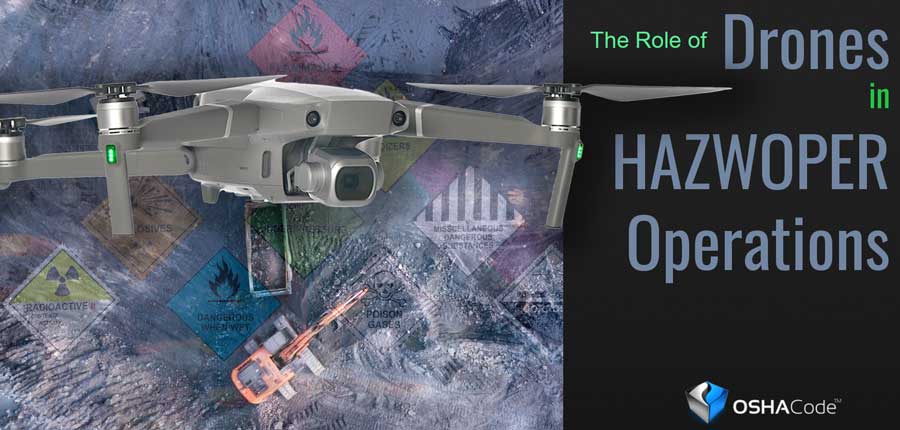
The emergence of drone technology in HAZWOPER operations represents one of the most significant advancements in environmental safety and emergency response in recent decades. Under OSHA’s 29 CFR 1910.120 HAZWOPER standard—which governs Hazardous Waste Operations and Emergency Response—employers must protect workers who investigate, clean up, or respond to hazardous material releases. These environments are often unstable, unpredictable, and dangerous, involving toxic chemicals, radiation, fire, and structural collapse hazards. Traditionally, responders had to enter these zones in full protective gear—often wearing Level A or Level B PPE—to assess risks before remediation could even begin. Now, with the rise of unmanned aerial systems (UAS), or drones, responders can collect vital site data, perform aerial reconnaissance, and map contamination zones without stepping into harm’s way. The use of drones in HAZWOPER work is reshaping how hazardous waste sites are assessed, monitored, and remediated—enhancing safety, efficiency, and compliance at every stage of the operation.
A Safer Approach to Site Assessment and Hazard Characterization
One of the most valuable applications of drones in HAZWOPER operations is in the initial site characterization process, the critical first step outlined in OSHA’s standard before workers enter a contaminated area. In the past, trained personnel had to physically collect soil, water, or air samples in unknown conditions—risking chemical exposure, inhalation hazards, and even explosions. Drones eliminate much of that risk by performing aerial reconnaissance and remote sampling from above or just outside the exclusion zone. Equipped with high-definition cameras, thermal imaging, infrared, and multispectral sensors, drones can detect chemical plumes, heat signatures from exothermic reactions, or leaking containers long before responders enter. This real-time data helps determine the site’s hazard levels, identify safe entry points, and decide what level of PPE (A, B, or C) is required. By replacing “eyes-on” inspections with drone-based aerial surveys, employers dramatically reduce worker exposure while gaining faster and more comprehensive information about the site’s condition.
Real-Time Data and Situational Awareness During Emergency Response
When an emergency occurs—whether it’s a chemical spill, refinery explosion, or transportation accident involving hazardous materials—HAZWOPER emergency response teams must act fast. Every minute counts, and sending personnel into an uncharacterized hazard zone can be deadly. Drones provide an immediate advantage by offering real-time situational awareness from a safe distance. Within minutes of deployment, drones can stream live video feeds, measure vapor clouds, and locate sources of leaks or fires. Thermal sensors can detect hot spots and combustion risks, while specialized payloads can monitor airborne contaminants such as VOCs, chlorine, or ammonia. This aerial intelligence gives the Incident Commander (IC) a clear picture of the scene, allowing for faster, data-driven decisions on evacuation zones, PPE requirements, and tactical response plans. In addition, drones can help establish HAZWOPER site control zones (Exclusion, Contamination Reduction, and Support Areas) by mapping contaminated terrain and identifying boundaries where decontamination stations should be placed.
Mapping, Documentation, and Regulatory Compliance
Beyond emergency response, drones have become indispensable for mapping and documenting HAZWOPER cleanup sites—a requirement under OSHA and EPA hazardous waste regulations. High-resolution aerial imaging allows environmental engineers to create 3D models and GIS-based maps of hazardous waste facilities, spill zones, or Superfund sites. These digital maps provide precise measurements for waste removal planning, excavation tracking, and volume calculations. Moreover, the imagery serves as a verifiable record for regulatory compliance with OSHA, EPA, and DOT standards. When combined with drone-based photogrammetry, site managers can track cleanup progress over time, measure contamination reduction, and verify that soil or water remediation has met federal thresholds. This documentation also supports training, auditing, and legal defense, ensuring that employers can demonstrate adherence to HAZWOPER protocols and environmental laws.
Reducing Risk, Cost, and Response Time
The use of drones directly supports the core mission of HAZWOPER: minimizing worker exposure to hazardous substances. By performing reconnaissance and monitoring tasks remotely, employers can reduce the number of personnel required to enter hazardous zones—lowering both risk and cost. Drone deployments are fast and scalable: in large or remote cleanup areas, multiple drones can operate simultaneously to cover hundreds of acres in minutes, providing wide-area data that would take human teams hours or days to collect. This not only accelerates hazard identification but also speeds up containment and mitigation efforts. For example, after a train derailment involving hazardous cargo, drones can quickly identify which tank cars are leaking, detect flammable vapors, and help responders determine the safest approach route—all without the delay of assembling a full entry team. The result is a safer, more efficient, and more informed response.
Post-Incident Evaluation and Training Applications
Once HAZWOPER cleanup or emergency response operations are complete, drones continue to add value through post-incident analysis and training. Drone footage can be used to review the sequence of events, identify areas for procedural improvement, and refine future emergency response strategies. Many HAZWOPER training programs now integrate drone technology into field simulations, allowing students to learn how aerial reconnaissance supports risk assessment, PPE selection, and site management. By incorporating this technology into HAZWOPER 40-hour, 24-hour, and 8-hour refresher courses, training providers help prepare workers for the future of hazardous waste operations, where drones will increasingly complement human expertise in the field.
The Future of Drone Technology in HAZWOPER Work
As drone technology continues to evolve, its potential applications in HAZWOPER and environmental response are expanding rapidly. Future drones will likely integrate artificial intelligence (AI) for automated hazard recognition—capable of identifying chemical leaks, measuring concentrations, and even suggesting containment strategies in real time. Drones equipped with robotic arms or sampling mechanisms may soon collect soil, air, and liquid samples without human intervention. Additionally, as OSHA and the EPA modernize their policies, drone data may become an officially recognized method for site documentation, risk assessment, and compliance verification. With advancements in sensor accuracy, flight endurance, and 3D mapping, drones will continue to redefine how environmental professionals conduct safe, compliant, and efficient HAZWOPER operations.
Conclusion: Drones and the Future of HAZWOPER Safety
The integration of drones into HAZWOPER operations marks a pivotal shift in how hazardous waste and emergency response activities are conducted. They provide a perfect balance between safety and efficiency—allowing teams to gather critical data, assess risk, and make informed decisions without endangering lives. By keeping workers out of contaminated zones and providing precise, real-time intelligence, drones embody the very spirit of OSHA’s HAZWOPER standard: to protect workers, prevent exposure, and promote safe environmental restoration. As industries continue to embrace technology-driven safety solutions, drones will remain at the forefront of innovation—ensuring that every HAZWOPER operation is not only compliant but also smarter, faster, and safer than ever before.
OSHA Sources
Emergency Response and Preparedness
OSHA HAZWOPER Hands-on Training Requirement
Medical Surveillance Requirements
Related Articles
Building a HAZWOPER Safety Culture
HAZWOPER Hands-on Training Discussions with U.S. OSHA