
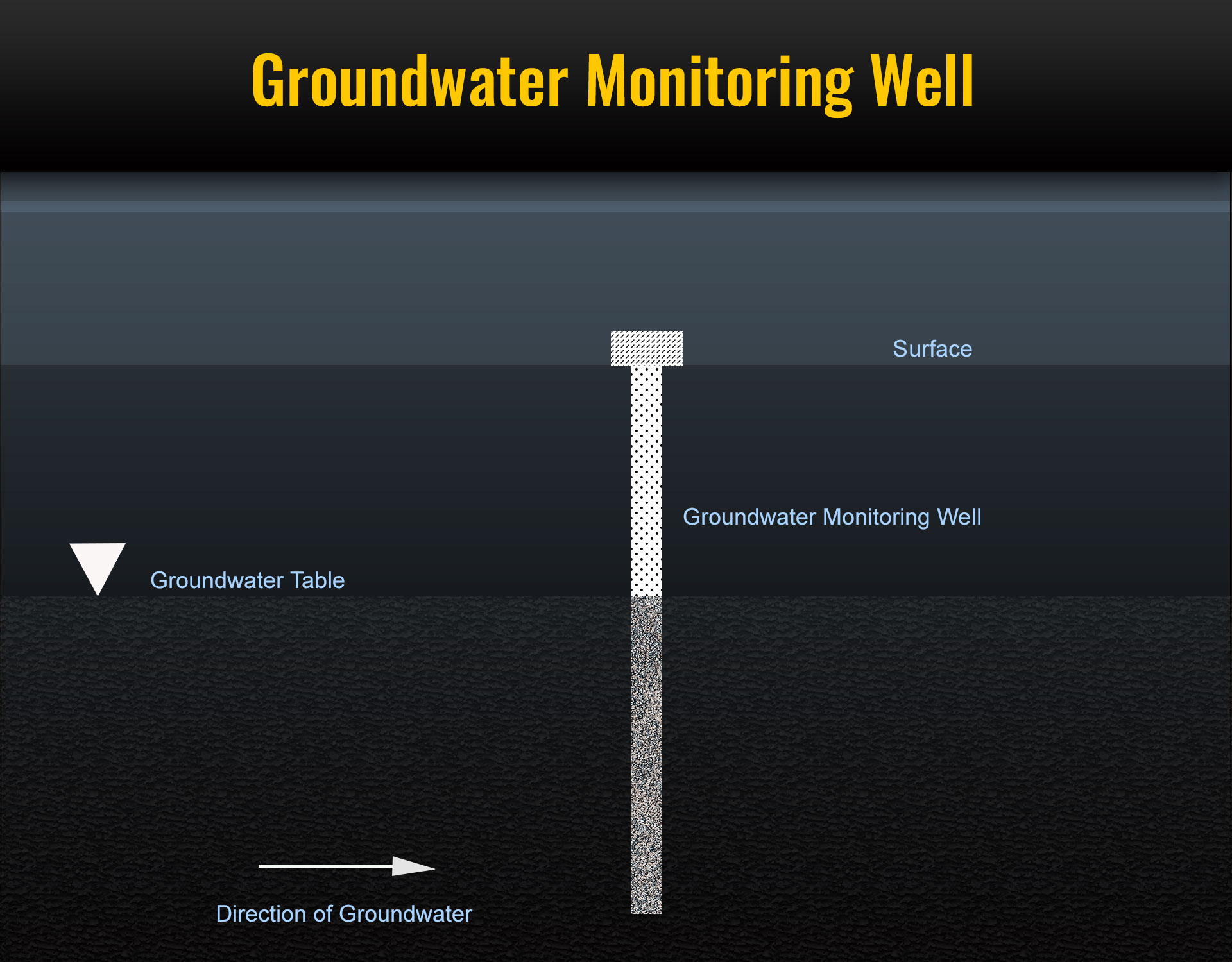
What is a Groundwater Monitoring Well?
A groundwater monitoring well is a specialized well used to sample, observe, and analyze groundwater conditions. These wells help track water quality, contamination levels, and changes in groundwater flow, making them critical tools for environmental protection, remediation projects, and regulatory compliance.
1. Purpose
Groundwater monitoring wells are used for several key functions:
- Detect Contamination: Identify pollutants such as heavy metals, petroleum products, pesticides, or industrial chemicals.
- Assess Groundwater Flow: Determine the direction and speed of groundwater movement.
- Track Remediation Effectiveness: Monitor the success of cleanup efforts at hazardous waste or industrial sites.
- Regulatory Compliance: Ensure industries, landfills, and Superfund sites meet Environmental Protection Agency (EPA) water quality standards.
- Monitor Aquifer Health: Measure changes in groundwater levels due to drought, overuse, or climate change.
2. Structure
A groundwater monitoring well consists of several key components:
| Component | Function |
|---|---|
| Casing (PVC or steel pipe) | Prevents collapse and protects water sample integrity |
| Screened Section | Allows groundwater to flow into the well for sampling |
| Gravel Pack | Filters out sediment and stabilizes the screen |
| Bentonite Seal | Prevents surface contaminants from entering the well |
| Protective Cap | Secures the well and prevents tampering |
- Well depth varies depending on the site’s geology and contamination level.
- Screens are placed in zones where contamination is likely to be present.
3. Types
There are different types of monitoring wells based on depth, purpose, and contamination level:
-
Shallow Monitoring Wells
- Installed near the water table (uppermost saturated zone).
- Used for detecting surface contaminants (e.g., fuel spills, pesticides).
-
Intermediate & Deep Monitoring Wells
- Reach deeper aquifers to assess long-term groundwater changes.
- Used for plume migration tracking and detecting Dense Non-aqueous Phase Liquid (DNAPLs) or Light Non-aqueous Phase Liquid (LNAPLs).
-
Nested or Multi-Level Wells
- Contain multiple screens at different depths.
- Used to track contamination movement in multiple groundwater layers.
-
Sentinel Wells
- Installed downstream of potential contamination sources (e.g., landfills, industrial sites).
- Serve as early warning systems for pollutants moving toward drinking water sources.
4. How a Groundwater Monitoring Well Works
Step 1: Installation
- A drill rig creates a borehole to the required depth.
- The casing and well screen are inserted.
- Seals and filter packs are added to prevent cross-contamination.
- The well is developed by flushing out fine sediments.
Step 2: Sampling and Data Collection
- Groundwater levels are measured with an electronic water level meter.
- A bailer, pump, or dedicated sampling system collects water for laboratory analysis.
- Samples are tested for pH, conductivity, contaminants, and dissolved oxygen.
Step 3: Long-Term Monitoring
- Wells are monitored monthly, quarterly, or annually depending on site requirements.
- Data is used to assess trends, detect new pollution, or guide remediation strategies.
5. Regulatory and Environmental Importance
Groundwater monitoring wells are crucial for meeting environmental laws and regulations, including:
- EPA’s Safe Drinking Water Act (SDWA) – Ensures groundwater sources are not contaminated.
- Resource Conservation and Recovery Act (RCRA) – Requires monitoring at hazardous waste sites.
- Comprehensive Environmental Response, Compensation, and Liability Act (CERCLA/Superfund) – Mandates groundwater assessment at contaminated sites.
- State and Local Regulations – Govern groundwater monitoring at industrial sites, landfills, and remediation projects.
6. Challenges and Limitations
- Cross-Contamination Risk: Improper well construction or maintenance can introduce contaminants.
- High Costs: Drilling, sampling, and laboratory analysis can be expensive.
- False Positives/Negatives: Sampling errors or seasonal variations can impact results.
Conclusion
Groundwater monitoring wells play a vital role in environmental protection, ensuring safe drinking water, early contamination detection, and effective cleanup efforts. These wells provide critical data for managing groundwater resources and protecting ecosystems from pollution.
Sources
Emergency Response and Preparedness
OSHA HAZWOPER Hands-on Training Requirement
Medical Surveillance Requirements
U.S. Occupational Safety and Health Administration
https://www.osha.gov/laws-regs/standardinterpretations/1992-08-27-1
U.S. Environmental Protection Agency
https://www.epa.gov/laws-regulations/summary-resource-conservation-and-recovery-act
Related Articles
Building a HAZWOPER Safety Culture
Hands-on Training Discussions with U.S. OSHA