RCRA Hazardous Waste Generator Training Online
Complete your RCRA Hazardous Waste Generator training online with expert-developed instruction built for environmental professionals, supervisors, facility personnel, and employers who need dependable EPA compliance education. This self-paced course covers hazardous waste generator categories, labeling, container management, storage limits, manifests, inspections, and practical compliance responsibilities for regulated operations.
Refund Policy: If for any reason you are unhappy or not satisfied with our courses or service we will provide a full refund up to 30 days after purchase.
$170.00
What Is RCRA Hazardous Waste Generator Training?
RCRA stands for the Resource Conservation and Recovery Act. Hazardous waste generator training helps employees understand Environmental Protection Agency (EPA) requirements for identifying, managing, labeling, storing, and shipping hazardous waste.
What You Will Learn
The course covers:
- generator categories (LQG, SQG, VSQG)
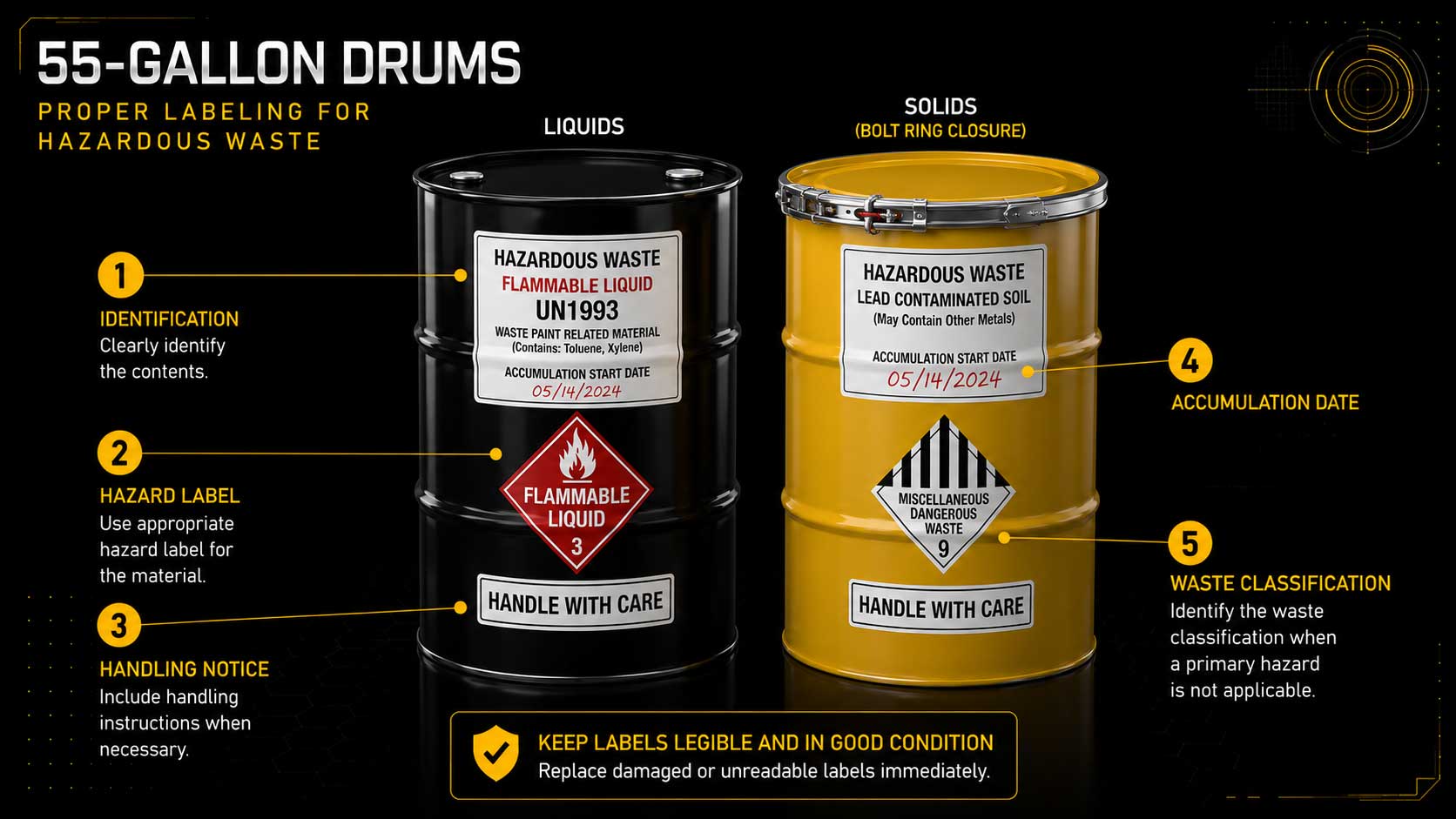
- container labeling
- accumulation time limits
- satellite accumulation areas
- manifest basics
- contingency planning
- employee training responsibilities
- inspections and recordkeeping
Why Choose OSHACode
Professional-grade environmental and compliance training built by experienced industry professionals.
Accreditation
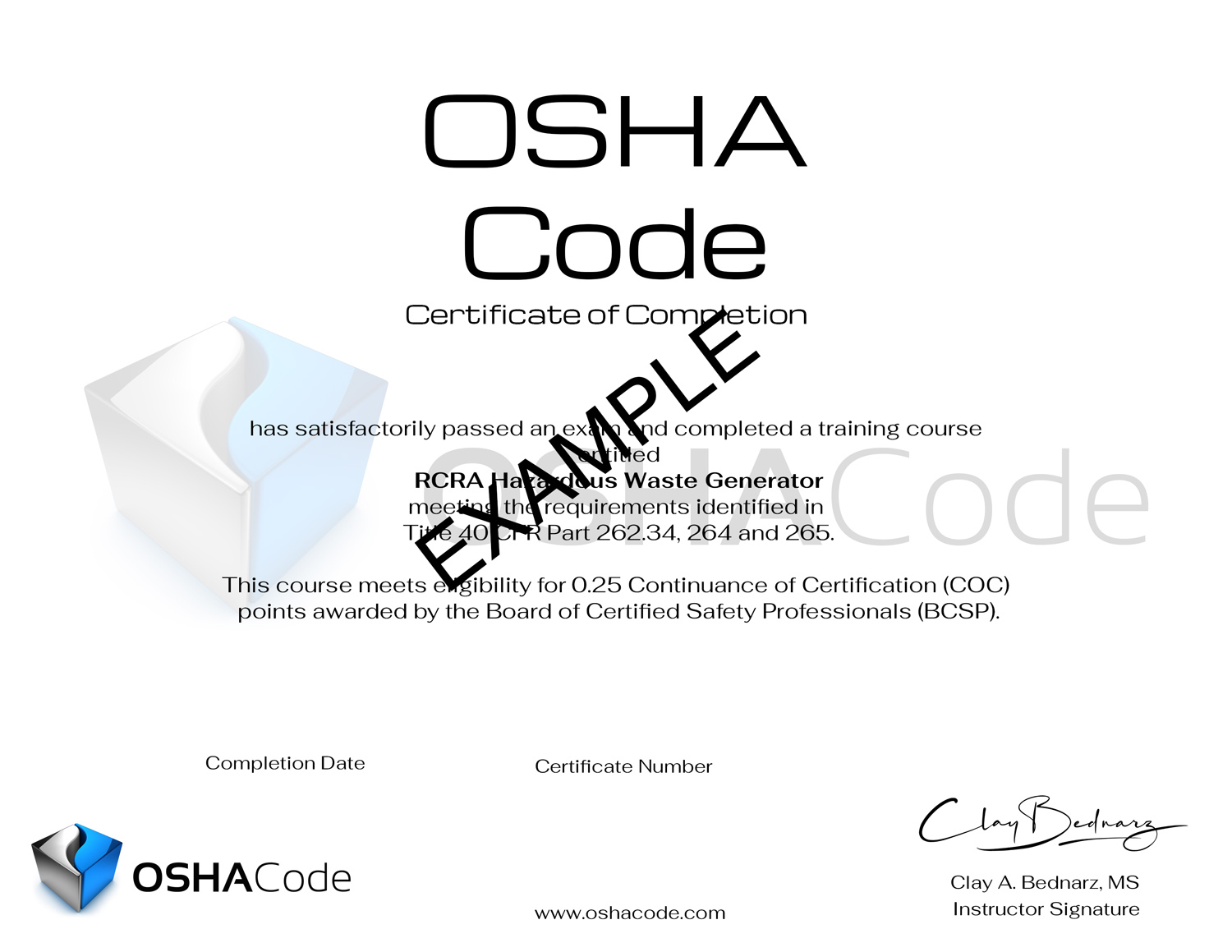
This course meets the eligibility for Continuance of Certification (COC) points awarded by the Board of Certified Safety Professionals (BCSP).
Also, for the following organizations, our courses may be eligible for technical contact hours or re-certification points:
• Board for Global EHS Credentialing (Formerly The American Board of Industrial Hygiene)
• American Council for Accredited Certification (ACAC)
Course Description
Our online RCRA Hazardous Waste Generator Training covers the responsibilities of hazardous waste generators, proper container management, accumulation time limits, contingency planning, and emergency response procedures. This course provides comprehensive instruction on hazardous waste identification, classification, labeling, storage, and disposal, ensuring that participants are equipped to meet federal and state environmental compliance standards. Participants also learn about EPA waste codes, universal waste, used oil requirements, and recordkeeping obligations.
By completing this course, learners will:
-
Gain a clear understanding of EPA and RCRA hazardous waste regulations.
-
Learn how to properly manage hazardous waste to reduce liability and protect worker safety.
-
Meet annual hazardous waste personnel training requirements under 40 CFR Part 262, 264-265.
-
Build confidence in maintaining compliance during inspections and audits.
Course Outline
Module 1: Introduction to RCRA
-
Purpose and history of the Resource Conservation and Recovery Act (RCRA)
-
Key EPA regulations: 40 CFR Parts 260–279
-
Goals of RCRA: cradle-to-grave management of hazardous waste
-
Role of EPA and authorized state programs
Module 2: Hazardous Waste Determination Part 1
-
Definition of solid waste vs. hazardous waste
-
Exclusions and exemptions
-
Waste identification process:
-
Listed wastes (F, K, P, U lists)
-
Characteristic wastes (Ignitability, Corrosivity, Reactivity, Toxicity)
-
-
Generator responsibilities in making waste determinations
-
Case examples of common generator errors
Module 3: Hazardous Waste Determination Part 2
-
-
- Objectives
- Introduction
- Derived-from Rule
- Mixture Rule
- Contained-in Policy
- Case Study
- Rule Comparison
-
Module 4: Generator Categories and Requirements
-
-
-
Very Small Quantity Generators (VSQG) – 40 CFR 262.14
-
Small Quantity Generators (SQG) – 40 CFR 262.16
-
Large Quantity Generators (LQG) – 40 CFR 262.17
-
Key differences in storage limits, accumulation times, and recordkeeping
-
Implications of episodic generation events
-
-
Module 5: Hazardous Waste Accumulation and Storage
-
-
-
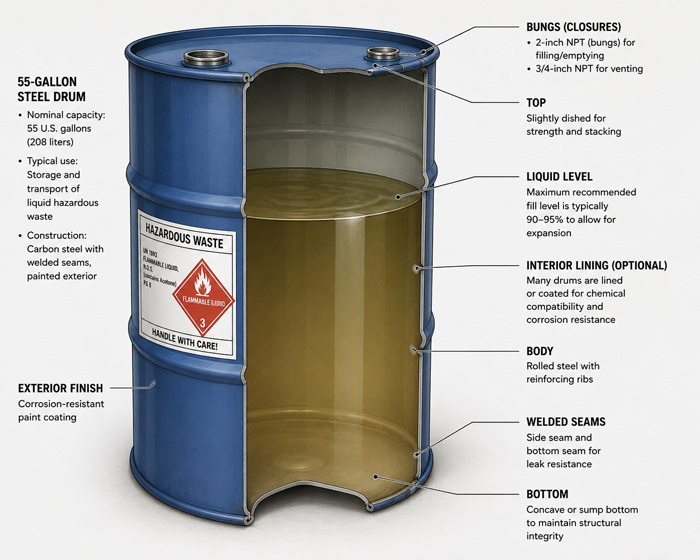
Satellite Accumulation Areas (SAA) – 55-gallon rule, container labeling, closure
-
Central Accumulation Areas (CAA) – requirements for SQGs and LQGs
-
Container management standards (40 CFR 265 Subpart I)
-
Tank management standards (40 CFR 265 Subpart J)
-
Weekly inspections and documentation requirements
-
-
Module 6: Labeling, Marking, and Manifesting
-
-
-
Required labeling elements on containers and tanks
-
Accumulation start dates and hazard indicators
-
Uniform Hazardous Waste Manifest system (EPA Form 8700-22)
-
Land Disposal Restrictions (LDR) notifications
-
DOT compatibility – shipping names, hazard classes, and placards
-
-
Module 7: Preparedness, Prevention, and Emergency Procedures
-
-
-
Contingency plan requirements (40 CFR 262 Subpart M for LQGs)
-
Emergency coordinator duties
-
Emergency equipment (fire extinguishers, alarms, spill kits)
-
Arrangements with local authorities (fire, police, hospitals)
-
Release response procedures
-
-
Module 8: Personnel Training Requirements
-
-
-
RCRA training requirements for SQG and LQG staff
-
Initial training vs. annual review (40 CFR 262.17(a)(7))
-
Documentation and training records
-
Emergency response familiarization
-
Integration with OSHA HAZWOPER where applicable
-
-
Module 9: Recordkeeping and Reporting
-
-
-
Biennial reporting (LQGs only)
-
Manifests and retention requirements
-
Waste determination documentation
-
Land Disposal Restriction notices
-
Exception reporting for generators
-
-
Module 10: Universal Waste and Used Oil
-
-
-
Universal Waste Rule (batteries, pesticides, mercury-containing equipment, lamps)
-
Streamlining requirements for generators
-
Used oil management standards (40 CFR Part 279)
-
Recycling exemptions
-
-
Module 11: Inspections and Common Violations
-
-
-
What to expect during EPA or state inspections
-
Frequent areas of non-compliance: labeling, closed containers, training records
-
Best practices for compliance assurance
-
Corrective action and enforcement penalties
-
-
Module 12: Waste Minimization
-
-
-
Pollution prevention strategies
-
EPA Waste Minimization Program goals
-
Case studies of waste reduction at generator facilities
-
-
Certificate
Duration
7 hours
RCRA Hazardous Waste Identification Rules

Frequently Asked Questions
Who needs RCRA hazardous waste generator training?
Any employee who generates, handles, manages, or signs manifests for hazardous waste must complete training. This includes personnel at large quantity generators (LQGs), small quantity generators (SQGs), and very small quantity generators (VSQGs) when applicable.
What regulations does this course cover?
The course is based on the Resource Conservation and Recovery Act (RCRA) and U.S. Environmental Protection Agency (EPA) regulations found in 40 CFR Parts 262, 264 and 265. Training addresses waste identification, storage, labeling, recordkeeping, and emergency preparedness.
How often is RCRA training required?
What topics are included in the training?
What is the difference between LQG, SQG, and VSQG?
-
LQG (Large Quantity Generator): Generates 1,000 kg or more of hazardous waste per month.
-
SQG (Small Quantity Generator): Generates between 100–1,000 kg per month.
-
VSQG (Very Small Quantity Generator): Generates less than 100 kg per month.
This course explains the obligations of each generator category.
Does this course meet EPA requirements?
Yes. Formal personnel-training provisions under 40 CFR 262.17(a)(7) apply to large quantity generators; responsibilities differ for small and very small quantity generators, and authorized state programs can be more stringent.
Will I receive proof of training?
Is the training fully online?