

Summary
Smart personal protective equipment (PPE), combines traditional protective gear with connected technologies such as sensors, alarms, location systems, communications tools, and data platforms. Examples include smart helmets, connected safety vests, wearable gas monitors, smart glasses, fatigue-monitoring devices, location beacons, and respirators with integrated status indicators.
The purpose of smart PPE is not to replace the protective function of conventional PPE. Instead, it adds real-time awareness by helping workers and supervisors identify hazards, receive alerts, communicate during emergencies, and document conditions that may require action. For example, a connected gas monitor may warn a worker about a hazardous atmosphere, a smart vest may alert the wearer to heat stress or proximity hazards, and a connected helmet may support hands-free access to task instructions or hazard warnings.
Smart PPE can be especially useful in construction, manufacturing, oil and gas, mining, utilities, emergency response, hazardous waste operations, and other high-risk environments. However, employers should treat it as an added layer of protection—not a substitute for hazard elimination, engineering controls, safe work practices, required training, or properly selected conventional PPE. The Occupational Safety and Health Administration (OSHA) defines PPE as equipment worn to minimize exposure to workplace hazards; smart features can improve awareness, but the underlying PPE must still fit properly and provide the required protection.
Key Takeaways
- Smart PPE combines conventional protective equipment with sensors, connectivity, alerts, communication tools, or data collection capabilities.
- Common examples include smart helmets, connected safety vests, wearable gas monitors, smart glasses, smart gloves, location devices, and connected respirators.
- Smart PPE can provide real-time alerts for hazards such as gas exposure, falls, heat stress, fatigue, unsafe posture, restricted-area entry, and equipment impacts.
- It can improve emergency response by helping supervisors locate workers, communicate with teams, and receive alerts when a worker may need assistance.
- Smart PPE does not replace hazard assessments, engineering controls, safe work procedures, training, or properly selected conventional PPE.
- Employers must still ensure that PPE fits properly, is appropriate for the hazard, and is maintained according to applicable requirements.
- Smart helmets and glasses may provide hands-free access to work instructions, inspection information, hazard warnings, or remote technical support.
- Wearable sensors can support ergonomic programs by identifying repetitive motion, lifting posture, fatigue, or heat-stress trends.
- Connected gas detection and environmental monitoring can be especially valuable in confined spaces, hazardous waste operations, industrial maintenance, mining, and chemical-processing environments.
- Battery life, device durability, signal reliability, calibration, cleaning, and maintenance must be addressed before smart PPE is used in the field.
- Employers should establish clear procedures for who receives the data, how alerts are handled, how long information is retained, and what actions supervisors must take when an alarm occurs.
- Biometric, location, and health-related data may create privacy, employment-law, and cybersecurity concerns. Employers should involve appropriate safety, legal, human resources, and data-security personnel before implementing worker-monitoring technologies.
Smart PPE Selection Matrix
| Workplace need | Smart PPE option | Primary benefit | Important limitation |
|---|---|---|---|
| Gas or vapor exposure | Connected gas monitor | Real-time atmospheric alerts | Requires calibration and response procedures |
| Lone or remote work | Location beacon / worker-down device | Faster emergency notification | Signal coverage may be limited |
| Heat stress | Connected vest or wearable sensor | Trend and heat-risk alerts | Does not replace hydration and work-rest controls |
| Complex maintenance | Smart glasses or helmet HUD | Hands-free instructions and remote support | Must not obstruct vision or distract the worker |
| High-noise work | Connected hearing protection | Communication plus exposure management | Must still provide adequate attenuation |
| Respiratory work | Connected respirator | Status, airflow, or filter alerts | Does not replace respirator selection, fit testing, or maintenance |
Smart PPE At A Glance
| Workplace need | Smart PPE option | Primary benefit | Important limitation |
|---|---|---|---|
| Gas or vapor exposure | Connected gas monitor | Real-time atmospheric alerts | Requires calibration and response procedures |
| Lone or remote work | Location beacon / worker-down device | Faster emergency notification | Signal coverage may be limited |
| Heat stress | Connected vest or wearable sensor | Trend and heat-risk alerts | Does not replace hydration and work-rest controls |
| Complex maintenance | Smart glasses or helmet HUD | Hands-free instructions and remote support | Must not obstruct vision or distract the worker |
| High-noise work | Connected hearing protection | Communication plus exposure management | Must still provide adequate attenuation |
| Respiratory work | Connected respirator | Status, airflow, or filter alerts | Does not replace respirator selection, fit testing, or maintenance |
Smart PPE integrates advanced technology into traditional safety gear to enhance worker protection, efficiency, and situational awareness. These devices use sensors, real-time communication, Artificial Intelligence (AI), and IoT (Internet of Things) to detect risks, monitor health, and improve overall workplace safety.
1. Core Technologies in Smart PPE
a) Internet of Things (IoT) & Connectivity
- Smart PPE connects to cloud-based systems via Wi-Fi, Bluetooth, or cellular networks.
- Enables real-time monitoring and remote management of worker safety.
- Data collection and analytics help improve safety protocols over time.
b) Sensors & Biometric Monitoring
- Environmental Sensors: Detect gas leaks, temperature, humidity, radiation, or noise levels.
- Wearable Health Sensors: Measure heart rate, body temperature, hydration levels, and fatigue to prevent exhaustion or heat stroke.
- Motion Sensors: Detect falls, prolonged inactivity, or unsafe postures.
c) Artificial Intelligence & Predictive Analytics
- AI processes collected data to predict accidents before they happen.
- AI-driven alerts notify workers and supervisors about unsafe conditions.
- Machine learning algorithms improve risk detection over time.
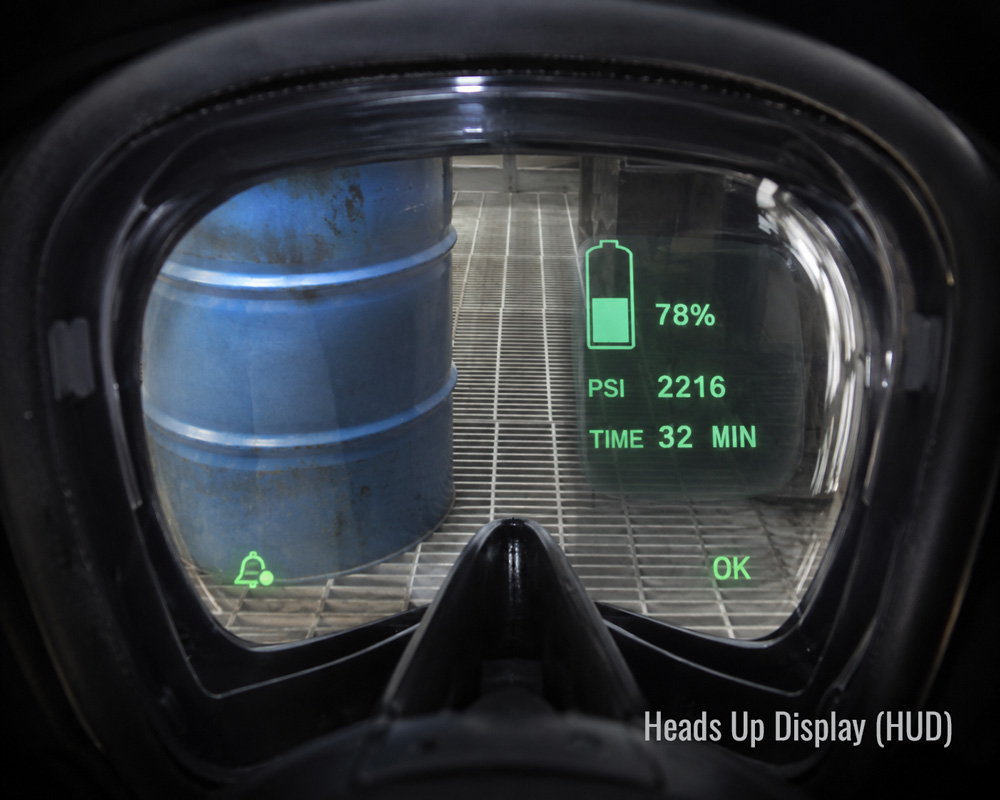
d) Augmented Reality (AR) & Heads-Up Displays (HUDs)
- AR-based smart glasses and helmets provide hands-free access to blueprints, instructions, or hazard warnings.
- Enhances worker efficiency by reducing the need for physical documentation.
2. Types of Smart PPE
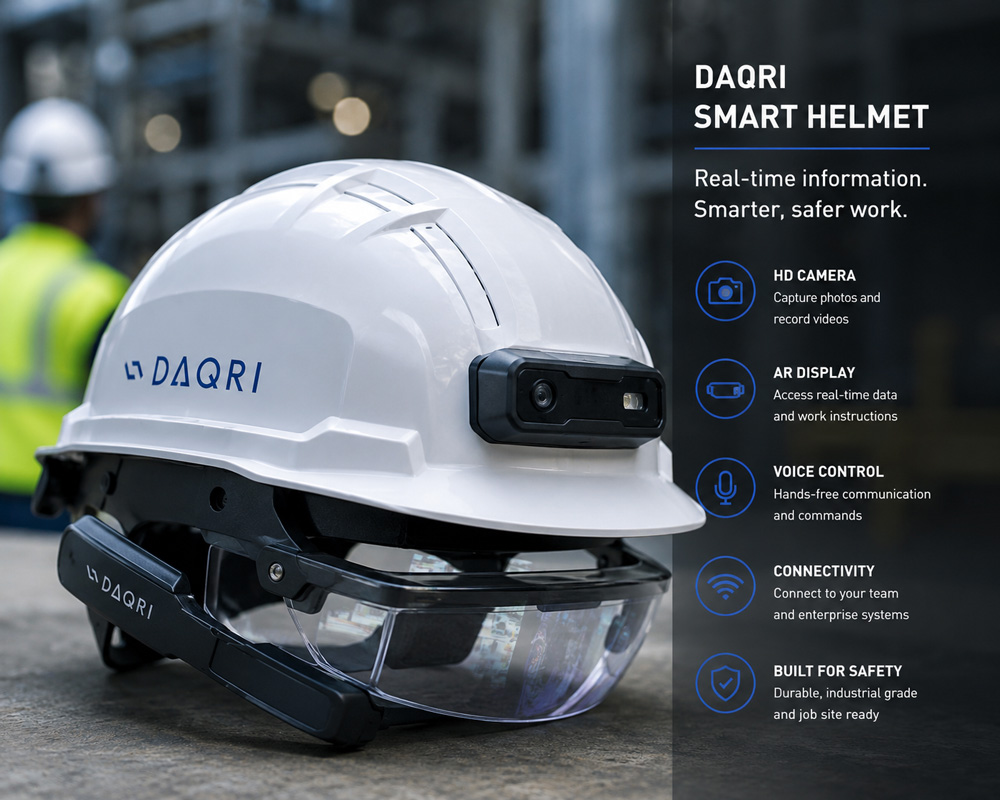
a) Smart Helmets
- Equipped with impact sensors to detect head injuries.
- Some models integrate AR for hands-free instructions.
- Built-in noise-canceling microphones enable communication in loud environments.
- Example: DAQRI Smart Helmet (AR display for industrial workers).
b) Smart Safety Glasses & Goggles
- Display real-time data, hazard alerts, and step-by-step work instructions.
- Can integrate with cameras for live streaming or documentation.
- Example: Google Glass Enterprise Edition 2 (used in manufacturing and field service).
c) Smart Hearing Protection
- Advanced noise-canceling headsets reduce harmful noise exposure.
- Some models allow selective hearing (blocking unwanted noise while enabling communication).
- Example: 3M Peltor ProTac (enhanced communication in noisy environments).
d) Smart Gloves
- Embedded with haptic feedback, motion sensors, and force detection.
- Improve ergonomics by monitoring repetitive stress movements.
- Example: ProGlove MARK Series (wearable barcode scanner for logistics and manufacturing).
e) Smart Safety Vests & Clothing
- Equipped with GPS tracking, fall detection, and environmental sensors.
- Can alert supervisors if a worker is in distress or enters a hazardous zone.
- Example: SolePower Smart Boots (track location and detect fatigue).
f) Respiratory Protection with Smart Monitoring
- Gas masks and respirators equipped with air quality sensors.
- Real-time detection of hazardous gases and automatic airflow adjustment.
- Example: CleanSpace Ultra Respirator (intelligent airflow control).

3. Industries Benefiting from Smart PPE
| Industry | Application of Smart PPE |
|---|---|
| Construction | Fall detection, smart helmets, AR-assisted work instructions. |
| Manufacturing | Smart gloves for ergonomic monitoring, connected safety vests. |
| Oil & Gas | Gas detection sensors, emergency alert systems. |
| Mining | Wearable air quality monitors, smart respirators. |
| Healthcare | Biometric monitoring of workers, AI-powered face shields. |
| Firefighting & Emergency Services | Heat-resistant smart suits, real-time location tracking. |
4. Key Benefits of Smart PPE
✅ Enhanced Safety & Risk Prevention
- Real-time alerts and predictive analytics help prevent accidents.
- Fall detection and fatigue monitoring reduce workplace injuries.
✅ Improved Productivity & Efficiency
- Hands-free access to work instructions via AR improves workflow.
- AI-powered assistance speeds up troubleshooting and repairs.
✅ Better Compliance & Data Collection
- Automated tracking ensures workers comply with safety regulations.
- Cloud-based reporting helps companies identify recurring risks.
✅ Emergency Response & Worker Tracking
- GPS and motion sensors help locate workers in dangerous situations.
- Instant communication improves emergency response times.

6. Smart PPE Implementation Considerations
Smart PPE can improve hazard awareness, communication, and emergency response, but it should be implemented as part of a broader safety program rather than treated as a stand-alone solution. Before introducing connected helmets, wearable sensors, smart respirators, location devices, or other technology-enabled PPE, employers should identify the specific workplace hazard or operational problem the equipment is intended to address.
For example, a connected gas monitor may be appropriate where workers could encounter changing atmospheric hazards, while a worker-down alarm or location device may be more useful for lone workers, confined-space teams, or personnel working in large or complex facilities. Selecting technology without a clearly defined safety purpose can create unnecessary cost, data overload, and confusion about how alarms should be handled.
Employers should also confirm that smart features do not interfere with the protective function of the underlying PPE. A smart helmet must still provide appropriate head protection. A connected respirator must still meet the requirements of the employer’s respiratory protection program. Wearable devices used with chemical protective clothing must be compatible with the PPE ensemble and capable of being cleaned, maintained, or decontaminated as needed.
Before full deployment, employers should pilot smart PPE in realistic work conditions and evaluate battery life, signal coverage, durability, alarm reliability, worker comfort, cleaning requirements, and compatibility with other equipment. Where flammable or explosive atmospheres may exist, employers should verify that the device is suitable for the classified location and will not introduce an ignition source.
Clear procedures are essential. Employees and supervisors should understand what each alarm means, who receives the alert, what action must be taken, and when work must stop. Smart PPE should support prompt decision-making, not create uncertainty during an emergency.
Employers should also establish policies for data access, retention, privacy, and cybersecurity. Smart PPE may collect location information, movement data, environmental readings, video, audio, or biometric information. Workers should understand what information is collected, why it is collected, who can access it, and how it will be protected.
Smart PPE Implementation Checklist
- Identify the specific hazard, task, or safety problem the technology is intended to address.
- Confirm that the underlying PPE still provides the required physical protection.
- Evaluate compatibility with respirators, protective clothing, hard hats, hearing protection, and other PPE.
- Test the equipment in actual work conditions before large-scale deployment.
- Establish procedures for charging, calibration, inspection, cleaning, maintenance, and replacement.
- Verify battery life, signal coverage, alarm reliability, and durability.
- Confirm intrinsic-safety or classified-location suitability where flammable atmospheres may be present.
- Train employees and supervisors on proper use, limitations, alarms, and emergency actions.
- Define who receives alerts and what response is required.
- Establish policies for data access, retention, privacy, cybersecurity, and employee communication.
- Review the program periodically to determine whether the technology is improving safety outcomes.
7. Challenges & Considerations
❗ Cost & Implementation
- Smart PPE is often more expensive than traditional gear.
- Companies need to invest in training workers to use smart PPE effectively.
❗ Privacy & Data Security
- Continuous monitoring raises concerns about worker privacy.
- Companies must ensure cybersecurity measures are in place to protect sensitive data.
❗ Battery Life & Durability
- Some smart PPE devices require frequent recharging.
- PPE must remain functional in harsh environments (extreme temperatures, dust, water).
8. Future of Smart PPE
- Integration with AI & Machine Learning → Smarter hazard prediction.
- 5G Connectivity → Faster data transmission for real-time monitoring.
- Miniaturization of Sensors → Lighter, more comfortable smart PPE.
- Exoskeletons & Wearable Robotics → Assist workers with heavy lifting and repetitive tasks.
Conclusion
Smart PPE is revolutionizing workplace safety by combining traditional protective gear with cutting-edge technology. While challenges like cost and privacy concerns exist, the benefits—such as real-time hazard detection, improved worker health monitoring, and enhanced productivity—make smart PPE a valuable investment for industries with high-risk environments.
Become HAZWOPER Certified Today!
Ready to begin your own HAZWOPER training? Start your certification today with our courses. We are industry professionals with decades of field experience who know the job firsthand!
Sources
Emergency Response and Preparedness
OSHA HAZWOPER Hands-on Training Requirement
Medical Surveillance Requirements
U.S. Occupational Safety and Health Administration
https://www.osha.gov/laws-regs/standardinterpretations/1992-08-27-1
U.S. Environmental Protection Agency
https://www.epa.gov/laws-regulations/summary-resource-conservation-and-recovery-act
Related Articles
Building a HAZWOPER Safety Culture
HAZWOPER Hands-on Training Discussions with U.S. OSHA