
Summary
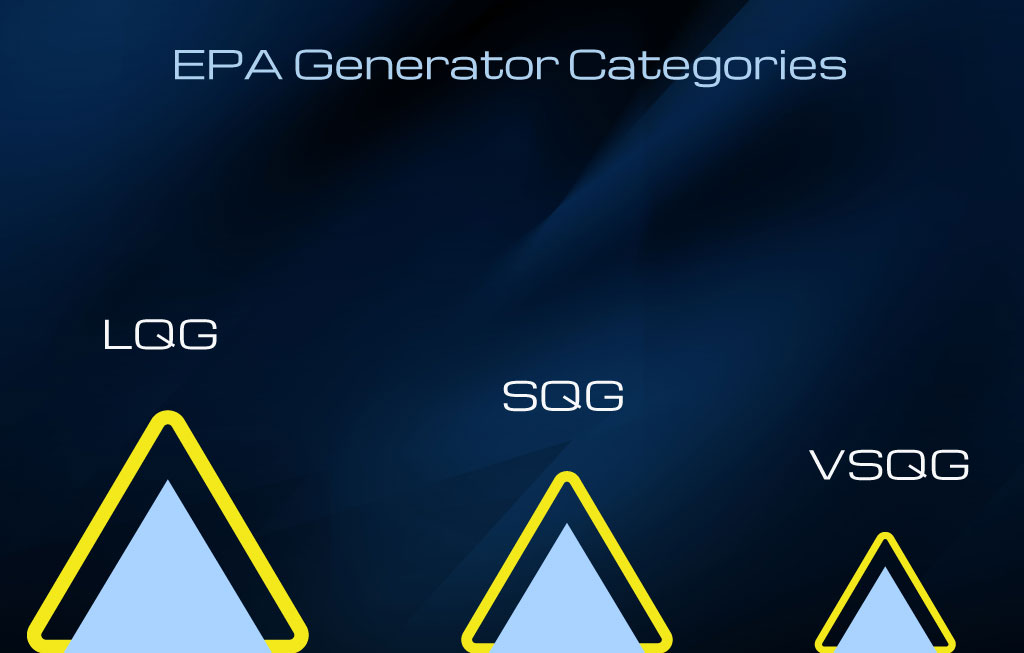
An LQG and SQG are hazardous-waste generator categories under RCRA. A Small Quantity Generator (SQG) generates more than 100 kilograms but less than 1,000 kilograms of hazardous waste in a calendar month. A Large Quantity Generator (LQG) generates 1,000 kilograms or more in a calendar month, or exceeds the federal threshold for acute hazardous waste.
Generator status is not a permanent company label. Facilities must determine their category each calendar month based on the hazardous waste they generate, including applicable acute hazardous waste and acute spill-cleanup residues. A facility may be an SQG in one month and an LQG in another.
RCRA Generator Categories at a Glance: VSQG, SQG, and LQG
| Generator Category | Monthly Generation Threshold | On-Site Accumulation Limit | Typical Accumulation Time | Core Compliance Focus |
|---|---|---|---|---|
| Very Small Quantity Generator (VSQG) | ≤100 kg (≤220 lb) of hazardous waste; ≤1 kg (≤2.2 lb) of acute hazardous waste; and ≤100 kg (≤220 lb) of acute hazardous-waste spill cleanup residue in a calendar month. | ≤1,000 kg (≤2,200 lb) of hazardous waste on site at one time. | Federal rules do not impose the same 90- or 180-day accumulation clock that applies to LQGs and SQGs, but waste must be managed within VSQG conditions and sent to an authorized destination. | Hazardous-waste identification, quantity tracking, accumulation control, and delivery to an authorized facility. |
| Small Quantity Generator (SQG) | >100 kg to <1,000 kg (>220 lb to <2,200 lb) of hazardous waste in a calendar month, while remaining within the applicable acute-waste thresholds. | ≤6,000 kg (≤13,200 lb) of hazardous waste on site. | 180 days, or 270 days if waste must be transported more than 200 miles. | Container and tank standards, labeling and marking, emergency preparedness, manifests, personnel training, inspections, and recordkeeping. |
| Large Quantity Generator (LQG) | ≥1,000 kg (≥2,200 lb) of hazardous waste; or >1 kg (>2.2 lb) of acute hazardous waste; or >100 kg (>220 lb) of acute hazardous-waste spill cleanup residue in a calendar month. | No federal quantity cap while accumulating under the LQG rules, but accumulation conditions and time limits apply. | 90 days. | More extensive contingency planning, personnel training, inspections, preparedness and prevention, reporting, recordkeeping, and hazardous-waste management controls. |
Important: This table summarizes federal generator-category thresholds. State hazardous-waste programs may be more stringent or use different terminology. Confirm requirements with the authorized state environmental agency.
How to Determine Your RCRA Generator Status
Determine generator category for each calendar month—not by annual disposal volume, the amount currently stored on site, or the amount shipped off site. Identify hazardous waste at the point of generation, count applicable hazardous waste generated during the month, separately evaluate acute hazardous waste and acute spill-cleanup residues, then apply the federal thresholds. Maintain records supporting the determination and check state-specific rules before relying on a federal category.
Large Quantity Generator (LQG) and Small Quantity Generator (SQG) are regulatory categories used under the Resource Conservation and Recovery Act (RCRA) to classify facilities that generate hazardous waste. The Environmental Protection Agency (EPA) promulgated RCRA as a “cradle to grave” regulation for hazardous wastes. These categories help determine which management, storage, contingency planning, inspection, training, and recordkeeping requirements apply to a business. Understanding whether your facility operates as an LQG or SQG is one of the most important first steps in hazardous waste compliance because generator status affects day-to-day obligations and enforcement risk.
LQG
An LQG generally generates larger volumes of hazardous waste and is subject to more comprehensive regulatory requirements. These facilities often must maintain formal contingency plans, more robust employee training programs, emergency preparedness procedures, weekly inspections in certain areas, and stricter accumulation management controls. Because LQGs manage greater quantities of hazardous waste, regulators typically expect stronger internal systems, documentation, and oversight.
SQG
An SQG generates smaller amounts of hazardous waste than an LQG but still remains subject to important RCRA obligations. SQGs commonly must properly identify hazardous waste, label containers, manage storage time limits, maintain emergency information, and ensure employees are familiar with waste handling and emergency procedures. Although requirements may be less extensive than those for LQGs, compliance is still essential.
Facilities should remember that generator status can change based on the amount of hazardous waste generated in a calendar month. A business that usually operates as an SQG may become an LQG during a busy production month or cleanup event. Because generator status affects training and operational requirements, many companies benefit from periodic waste stream reviews and employee education.
What Happens When an SQG Becomes an LQG?
An SQG does not become an LQG permanently simply because hazardous-waste generation increases. Under the federal RCRA generator rules, generator category is generally determined for each calendar month based on the quantity of hazardous waste generated during that month. If an SQG generates 1,000 kilograms (2,200 pounds) or more of hazardous waste, more than 1 kilogram (2.2 pounds) of acute hazardous waste, or more than 100 kilograms (220 pounds) of acute hazardous-waste spill cleanup residue in a calendar month, the facility is generally subject to the Large Quantity Generator requirements for that month.
When this occurs, the facility should promptly evaluate and meet the LQG requirements that apply to the higher-generation month. These may include the 90-day accumulation limit, enhanced preparedness and prevention measures, a written contingency plan, personnel training, weekly inspections, biennial reporting, and other recordkeeping and waste-management obligations. The facility should also review its EPA identification number status, state notification requirements, hazardous-waste manifests, transporter arrangements, and disposal-facility coordination.
A one-time increase in generation does not necessarily mean the facility will remain an LQG in future months. If generation returns to SQG quantities in a later calendar month, the facility may again operate as an SQG, provided it meets the applicable SQG conditions. However, facilities should not assume that a temporary increase has no compliance consequences. Generator-category requirements apply based on the waste generated during each month, and state hazardous-waste programs may impose additional or more stringent requirements.
Facilities that expect a planned, short-term increase in hazardous-waste generation may be able to use the federal episodic generation provisions. These provisions can allow eligible VSQGs and SQGs to maintain their normal generator category during a qualifying planned or unplanned episodic event, but only when the facility meets the applicable notification, quantity, labeling, accumulation, shipment, and recordkeeping conditions.
LQG vs. SQG Training Requirements
Large Quantity Generators and Small Quantity Generators must both ensure that employees who manage hazardous waste are trained to perform their assigned duties safely and in compliance with applicable RCRA requirements. The difference is primarily the scope, formality, and documentation of the training program.
An LQG must provide a formal hazardous-waste personnel training program for employees whose duties involve hazardous-waste management. Under 40 CFR 262.17(a)(7), personnel must be trained to perform their hazardous-waste duties in a way that ensures compliance with the generator regulations. Training must be directed by a person knowledgeable in hazardous-waste management procedures and must be completed within six months of an employee’s assignment to hazardous-waste duties. Until training is complete, the employee must work under the supervision of trained personnel.
LQG training must address the employee’s specific responsibilities, including hazardous-waste identification, container and tank management, labeling and marking, accumulation time limits, inspections, emergency procedures, contingency-plan implementation, use of emergency equipment, and response actions relevant to the facility. LQGs must maintain a written job title and job description for each hazardous-waste position, a written description of the training required for each position, training records, and documentation showing that personnel completed the required training. Annual review or refresher training is also required for LQG personnel.
An SQG must ensure that employees are thoroughly familiar with proper waste handling and emergency procedures relevant to their responsibilities. Under 40 CFR 262.16(b)(9)(iii), SQG personnel must be familiar with hazardous-waste handling, emergency equipment, and emergency procedures appropriate to their roles. The federal SQG rules do not require the same formal written training program, six-month completion framework, annual refresher structure, or detailed personnel-training records required for LQGs. However, SQGs should still document training as a sound compliance practice and to demonstrate that employees understand their responsibilities.
Neither LQG nor SQG status automatically determines whether employees need 24-hour or 40-hour HAZWOPER training. RCRA generator training and the Occupational Safety and Health Administration (OSHA) Hazardous Waste Operations and Emergency Response (HAZWOPER) training are separate requirements. HAZWOPER applies when employees perform covered hazardous-waste operations, work at certain treatment, storage, or disposal facilities, or respond to uncontrolled hazardous-substance releases. The correct OSHA training depends on the operation, anticipated exposure, assigned duties, and emergency-response role—not simply on whether the facility is an LQG or SQG.
For both LQGs and SQGs, training should be practical and role-specific. Employees should understand the waste streams they handle, the hazards associated with those materials, container-management requirements, labeling and inspection procedures, spill and emergency-response expectations, and when to stop work and seek qualified assistance.
Frequently Asked Questions
What is the difference between an LQG and an SQG?
An LQG is a Large Quantity Generator, while an SQG is a Small Quantity Generator. The primary difference is the amount of hazardous waste generated in a calendar month. SQGs generate more than 100 kilograms but less than 1,000 kilograms of hazardous waste per month, while LQGs generate 1,000 kilograms or more per month or exceed applicable acute hazardous-waste thresholds.
What is a VSQG?
A VSQG is a Very Small Quantity Generator. A facility generally qualifies as a VSQG when it generates no more than 100 kilograms, or 220 pounds, of hazardous waste in a calendar month and remains within the applicable acute hazardous-waste thresholds and on-site accumulation limit.
Is generator status determined annually or monthly?
Generator status is generally determined each calendar month based on the amount of hazardous waste generated during that month. It is not based on annual disposal volume, the amount currently stored on site, or the amount shipped off site.
Can a facility be an SQG one month and an LQG the next?
Yes. A facility may operate as an SQG in one month and generate enough hazardous waste in a later month to be subject to LQG requirements. If generation returns to SQG quantities in a later month, the facility may again operate as an SQG if it meets the applicable SQG conditions.
What is the federal monthly threshold for an SQG?
An SQG generally generates more than 100 kilograms but less than 1,000 kilograms, or more than 220 pounds but less than 2,200 pounds, of hazardous waste in a calendar month. The facility must also remain within the applicable acute hazardous-waste thresholds.
What is the federal monthly threshold for an LQG?
An LQG generates 1,000 kilograms, or 2,200 pounds, or more of hazardous waste in a calendar month. A facility is also generally an LQG if it generates more than 1 kilogram, or 2.2 pounds, of acute hazardous waste, or more than 100 kilograms, or 220 pounds, of acute hazardous-waste spill cleanup residue in a calendar month.
What is acute hazardous waste?
Acute hazardous waste is a category of hazardous waste that can present especially serious risks to human health or the environment. Because of its potential danger, acute hazardous waste has much lower generator-category thresholds than non-acute hazardous waste.
What counts toward a facility’s monthly hazardous-waste generation total?
Facilities must count hazardous waste generated during the calendar month, including waste that is accumulated on site, shipped off site, treated on site, or otherwise managed as hazardous waste. Certain exclusions and special counting rules may apply, so facilities should evaluate their waste streams carefully and consult applicable federal and state requirements.
What happens if an SQG exceeds the LQG threshold?
If an SQG generates 1,000 kilograms or more of hazardous waste in a calendar month, or exceeds an acute hazardous-waste threshold, the facility is generally subject to LQG requirements for that month. The facility should evaluate the applicable accumulation, training, contingency planning, inspection, reporting, recordkeeping, and state notification requirements.
Can an SQG avoid becoming an LQG during a one-time cleanup or unusual event?
Possibly. Eligible SQGs may be able to use the federal episodic generation provisions for a qualifying planned or unplanned event. These provisions have specific notification, quantity, labeling, accumulation, shipment, and recordkeeping conditions, and state requirements may differ.
How long can an SQG accumulate hazardous waste?
An SQG may generally accumulate hazardous waste on site for up to 180 days without a permit, or up to 270 days if the waste must be transported more than 200 miles. SQGs must also comply with the 6,000-kilogram on-site accumulation limit and other applicable container, tank, labeling, inspection, preparedness, and emergency requirements.
How long can an LQG accumulate hazardous waste?
An LQG may generally accumulate hazardous waste on site for up to 90 days without a permit, provided the facility meets the applicable LQG accumulation standards, including labeling, container management, inspections, preparedness and prevention, contingency planning, training, and recordkeeping requirements.
Do LQGs and SQGs have different training requirements?
Yes. LQGs must maintain a formal hazardous-waste personnel training program with role-specific training, written job descriptions, training records, and annual review or refresher training. SQGs must ensure employees are thoroughly familiar with hazardous-waste handling and emergency procedures relevant to their duties, but the federal SQG rules do not impose the same formal personnel-training documentation requirements as LQG rules.
Does LQG or SQG status determine whether employees need HAZWOPER training?
No. RCRA generator training and OSHA HAZWOPER training are separate requirements. Generator category does not automatically determine whether workers need 24-hour or 40-hour HAZWOPER training. OSHA training requirements depend on the operation, anticipated exposure, assigned duties, and emergency-response role.
Do state rules affect LQG and SQG requirements?
Yes. Many states are authorized to administer their own hazardous-waste programs and may adopt requirements that are more stringent than the federal RCRA rules. Facilities should confirm generator-category requirements with the authorized state environmental agency.
Build a Stronger Hazardous Waste Compliance Program
Understanding whether your facility operates as a Small Quantity Generator or Large Quantity Generator is an essential part of RCRA compliance. Monthly generation totals affect accumulation limits, training responsibilities, inspection requirements, emergency planning, recordkeeping, and how hazardous waste must be managed from the point of generation through final disposal.
OSHACode® RCRA Hazardous Waste Generator Training helps employees and supervisors understand hazardous-waste identification, generator categories, container management, labeling, satellite accumulation, emergency procedures, manifests, and the practical responsibilities that support safer, more consistent compliance.
Explore OSHACode® RCRA Hazardous Waste Generator Training and strengthen your facility’s hazardous-waste compliance program.
Sources
U.S. Environmental Protection Agency
https://www.epa.gov/laws-regulations/summary-resource-conservation-and-recovery-act
- EPA: Learn the Basics of Hazardous Waste — Best general source for the cradle-to-grave overview, generator responsibilities, and the relationship between EPA and DOT requirements.
- EPA: Defining Hazardous Waste—Listed, Characteristic, and Mixed Wastes — Best source for your listed-versus-characteristic table, including the F, K, P, and U lists and the four characteristics.
- EPA: Hazardous Waste Generator Regulatory Summary — Best broad compliance reference for generator obligations under 40 CFR Part 262.
- EPA: Categories of Hazardous Waste Generators — Best source for the VSQG, SQG, and LQG section, including monthly thresholds, accumulation limits, and the state-rule caveat.
- EPA: Frequent Questions About Implementing Hazardous Waste Generator Improvements —
- EPA: Introduction to Hazardous Waste Identification — A useful supporting PDF for explaining the determination process in more detail.
- EPA: RCRA Overview — Best high-level source for explaining Subtitle C and the “cradle-to-grave” regulatory system.
Related Articles
Building a HAZWOPER Safety Culture
Hands-on Training Discussions with U.S. OSHA