Summary
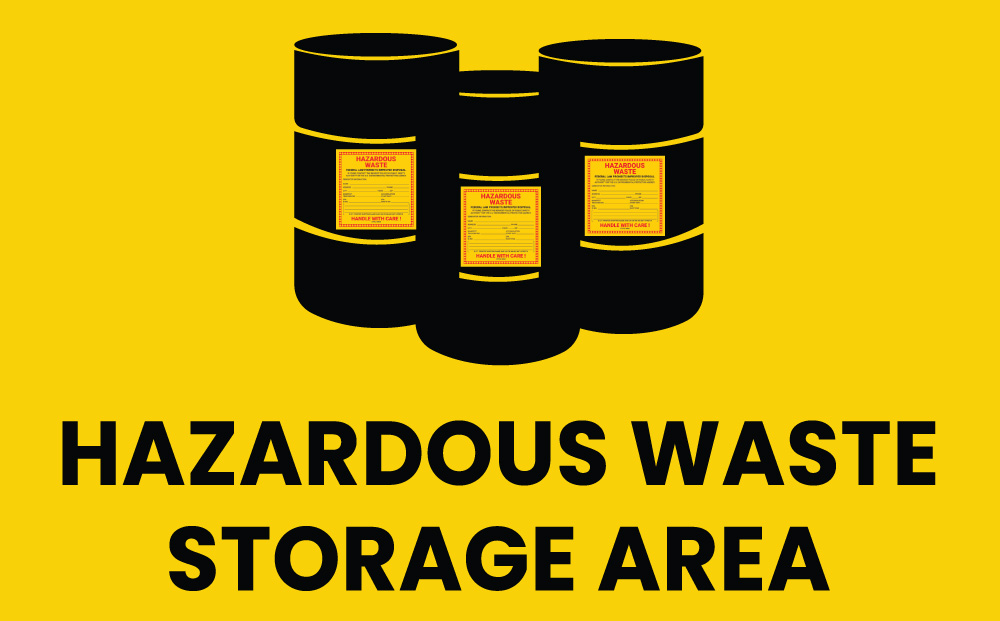
Resource Conservation and Recovery Act (RCRA) hazardous waste container labels must clearly identify the container as hazardous waste and communicate the hazards of its contents. The exact label requirements depend on where the container is accumulated. Containers in satellite accumulation areas generally require the words “Hazardous Waste” and a hazard indication. Containers in central accumulation areas (CAA) for Small Quantity Generators (SQG) and Large Quantity Generators (LQG) generally require those elements plus the accumulation start date.
A compliant label is only one part of container management. Containers must also be compatible with the waste, kept closed except when adding or removing waste, managed to prevent leaks or rupture, and inspected under the applicable generator requirements.
RCRA Container Labeling Requirements by Accumulation Area
| Container Location | Required Federal Label Elements | When the Date Is Required | Common Hazard Indications | Key Compliance Reminder |
|---|---|---|---|---|
| Satellite Accumulation Area (SAA) | The words “Hazardous Waste” and an indication of the hazards of the contents. | A routine accumulation start date is not generally required while the container remains within SAA conditions. Date the container when the applicable excess-accumulation threshold is reached, as required by the generator rules. | Hazardous-waste characteristics, DOT hazard class labels or placards, OSHA pictograms, NFPA hazard labels, or another clear hazard indication. | The SAA must be at or near the point of generation and under the control of the operator generating the waste. |
| SQG Central Accumulation Area (CAA) | The words “Hazardous Waste”, an indication of the hazards of the contents, and the accumulation start date. | Mark the date accumulation begins in the CAA. SQGs generally have up to 180 days, or 270 days when waste must be transported more than 200 miles, if all conditions are met. | Hazardous-waste characteristics, DOT hazard communication, OSHA pictograms, NFPA labels, or another clear hazard indication. | Maintain readable labels and manage the container under applicable closure, compatibility, inspection, preparedness, and emergency-procedure requirements. |
| LQG Central Accumulation Area (CAA) | The words “Hazardous Waste”, an indication of the hazards of the contents, and the accumulation start date. | Mark the date accumulation begins in the CAA. LQGs generally have up to 90 days, provided all applicable accumulation conditions are met. | Hazardous-waste characteristics, DOT hazard communication, OSHA pictograms, NFPA labels, or another clear hazard indication. | LQG requirements include broader preparedness, contingency planning, personnel-training, inspection, and recordkeeping obligations. |
| Container Prepared for Off-Site Shipment | RCRA accumulation markings may still apply, and the package must also meet applicable DOT marking and labeling requirements before transportation. | The accumulation date remains relevant while the waste is accumulated on site. Shipping documentation and package markings must be completed before transport. | DOT proper shipping name, identification number, hazard-class labels, markings, and other transportation communication required for the shipment. | RCRA labels and DOT shipping labels serve different compliance purposes; one does not automatically replace the other. |
Important: This table summarizes federal requirements. Authorized state hazardous-waste programs may impose additional or more stringent labeling, dating, inspection, or recordkeeping requirements. Verify the rules that apply at your facility.
Containers
Hazardous waste containers typically need wording that identifies the contents as hazardous waste along with other required information depending on generator category, accumulation area, and applicable rules. Many facilities also include accumulation start dates, hazard indications, waste descriptions, and internal tracking numbers to strengthen control systems. Labels should be legible, durable, and maintained in readable condition throughout storage.
Container Labels
Container labels should match the actual waste in the container. If operations change and a drum receives a different waste stream, the label should be updated immediately. Facilities should also ensure that employees understand labeling expectations so containers are marked correctly at the point of generation rather than later during inspections or waste pickups.
Good labeling practices support broader hazardous waste compliance programs that include inspections, training, compatible containers, closed container management, and storage time controls. Even where regulations vary by state implementation, accurate labeling remains a best practice and a key part of environmental stewardship.
What Counts as a Hazard Indication?
A hazard indication must communicate the hazards of the waste in the container. Federal rules allow several approaches, including identifying hazardous-waste characteristics such as ignitable, corrosive, reactive, or toxic; using applicable Department of Transportation (DOT) hazard labels or placards; using Occupational Safety and Health Administration (OSHA) hazard pictograms; using an National Fire Protection Association (NFPA) hazard label; or another clear method that communicates the hazards. The label should be readable, durable, and understandable to employees and emergency responders.
Common Labeling Mistakes
- Label says only “Waste” or “Used Solvent,” but does not say “Hazardous Waste.”
- No hazard indication appears on the container.
- The accumulation start date is missing from an SQG or LQG CAA container.
- A date is used incorrectly in an SAA, or the excess-accumulation date is not added when required.
- Labels are unreadable, damaged, covered with residue, or applied to the wrong container.
- Internal tracking codes are used without clear hazardous-waste and hazard information.
- The label is correct, but the container is open, incompatible, leaking, or managed outside the applicable accumulation-area conditions.
- DOT labels are mistaken for a complete substitute for RCRA accumulation labels.
RCRA Labels vs. DOT Shipping Labels
RCRA labels and DOT shipping labels serve different purposes, even though both may appear on the same hazardous-waste container. RCRA labeling applies while hazardous waste is accumulated and managed on site. Its purpose is to identify the container as hazardous waste, communicate the hazards of the contents, and support safe handling, inspections, emergency response, and compliance with generator accumulation requirements.
For example, a container in a satellite accumulation area (SAA) generally needs the words “Hazardous Waste” and a clear indication of the hazards of the contents. A container in a central accumulation area for an SQG or LQG generally requires those same elements plus the applicable accumulation start date.
DOT shipping labels apply when hazardous waste is prepared for transportation in commerce. Their purpose is to communicate transportation hazards to carriers, emergency responders, and receiving facilities. Depending on the material and package, DOT requirements may include the proper shipping name, UN or NA identification number, hazard-class label, packaging markings, packing group, orientation arrows, marine-pollutant marking, placards, shipping papers, and other hazard-communication elements required under the Hazardous Materials Regulations.
A container may therefore need both RCRA and DOT information. For example, a drum accumulated in a CAA may display “Hazardous Waste,” a hazard indication, and an accumulation start date while it is stored on site. Before the drum is shipped off site, the generator must also ensure that the package is properly classified, marked, labeled, documented, and offered for transportation in accordance with applicable DOT requirements.
Do not assume that a DOT hazard-class label alone satisfies RCRA accumulation-labeling requirements, or that a RCRA “Hazardous Waste” label satisfies DOT shipping requirements. The two systems overlap in their safety purpose, but each has separate requirements that must be met.
Labeling Is Not a Hazardous-Waste Determination
A label helps employees identify and manage a waste container after the generator has determined that the material is hazardous waste. It does not replace the hazardous-waste determination itself.
Under RCRA, a generator must determine whether a solid waste is hazardous at the point of generation and before the waste is diluted, mixed with other materials, or otherwise altered. The determination may involve process knowledge, safety data sheets, chemical inventory information, laboratory analysis, generator knowledge of the material, or testing methods such as the Toxicity Characteristic Leaching Procedure (TCLP).
A waste may be hazardous because it is specifically listed under RCRA or because it exhibits one or more hazardous characteristics. The four federal hazardous-waste characteristics are:
- Ignitability — wastes that can readily catch fire or support combustion.
- Corrosivity — wastes that are strongly acidic or alkaline and may corrode materials or damage tissue.
- Reactivity — wastes that may be unstable, explode, react violently, or generate toxic gases under certain conditions.
- Toxicity — wastes that may leach certain contaminants at concentrations that exceed regulatory limits.
Once the generator determines that a waste is hazardous, the container must be managed under the applicable RCRA requirements. That includes using compatible containers, keeping containers closed except when adding or removing waste, marking or labeling containers correctly, observing accumulation limits, conducting required inspections, training employees, and arranging shipment to an authorized destination.
A container labeled “Hazardous Waste” is not automatically regulated hazardous waste simply because of the label. Likewise, a container without a label may still contain hazardous waste if the material meets a listing or characteristic. The generator’s waste determination—not the wording on the container—establishes whether RCRA hazardous-waste requirements apply.
Frequently Asked Questions
What must appear on a RCRA hazardous-waste container label?
Federal RCRA rules generally require the words “Hazardous Waste” and an indication of the hazards of the contents. Containers accumulated in a central accumulation area for an SQG or LQG generally must also display the accumulation start date.
Do satellite accumulation area containers need an accumulation start date?
Not usually while the container remains within the applicable satellite accumulation area conditions. However, the container must be dated when the applicable satellite accumulation quantity limit is reached and the generator begins the required transfer process. State rules may impose additional requirements.
What is a hazard indication on a hazardous-waste label?
A hazard indication communicates the hazards of the waste in the container. It may identify hazardous-waste characteristics such as ignitable, corrosive, reactive, or toxic; use applicable DOT hazard labels or placards; use OSHA hazard pictograms; use an NFPA hazard label; or use another clear method that communicates the hazards.
Can a container be labeled only “Used Oil” or “Used Solvent”?
Not if the material is being managed as hazardous waste under RCRA. Labels such as “Used Oil” or “Used Solvent” may describe the contents, but they do not by themselves meet the federal hazardous-waste accumulation-labeling requirement to identify the container as “Hazardous Waste” and communicate its hazards.
What is the difference between a satellite accumulation area and a central accumulation area?
A satellite accumulation area is located at or near the point where hazardous waste is generated and is under the control of the operator generating the waste. A central accumulation area is the facility’s designated hazardous-waste storage area, where SQG and LQG accumulation time limits, dating, inspections, and additional management requirements apply.
Do RCRA labels and DOT shipping labels mean the same thing?
No. RCRA labels apply while hazardous waste is accumulated and managed on site. DOT shipping labels, markings, and shipping papers apply when hazardous waste is prepared for transportation in commerce. A container may need both RCRA and DOT information.
Does a DOT hazard-class label satisfy RCRA container-labeling requirements?
Not by itself. A DOT hazard-class label can help communicate the hazard of the contents, but the container must still meet applicable RCRA accumulation-labeling requirements, including the words “Hazardous Waste” and, when required, the accumulation start date.
Does a “Hazardous Waste” label prove that a material is regulated hazardous waste?
No. A label does not replace the generator’s hazardous-waste determination. The generator must determine whether a solid waste is hazardous based on applicable RCRA listings, hazardous-waste characteristics, process knowledge, testing, or other reliable information.
When must a hazardous-waste determination be made?
A generator must determine whether a solid waste is hazardous at the point of generation and before the waste is diluted, mixed with other materials, or otherwise altered. The determination should be documented and supported by process knowledge, safety data, laboratory analysis, or other reliable information.
What are the four hazardous-waste characteristics?
The four federal hazardous-waste characteristics are ignitability, corrosivity, reactivity, and toxicity. A waste that exhibits one or more of these characteristics may be regulated as hazardous waste, even if it is not specifically listed.
Must hazardous-waste containers be kept closed?
Yes. Hazardous-waste containers must generally be kept closed except when waste is being added or removed. They must also be compatible with the waste, in good condition, and managed to prevent leaks, spills, rupture, or other releases.
How long can an SQG accumulate hazardous waste?
An SQG may generally accumulate hazardous waste on site for up to 180 days without a permit, or up to 270 days if the waste must be transported more than 200 miles. The SQG must also meet the applicable accumulation quantity limits and container-management conditions.
How long can an LQG accumulate hazardous waste?
An LQG may generally accumulate hazardous waste on site for up to 90 days without a permit, provided the facility meets the applicable LQG accumulation, labeling, inspection, preparedness, contingency-planning, training, and recordkeeping requirements.
Do state rules affect RCRA container-labeling requirements?
Yes. Authorized state hazardous-waste programs may adopt requirements that are more stringent than the federal RCRA rules. Facilities should verify the labeling, dating, inspection, and accumulation requirements that apply in the state where the waste is generated.
Strengthen Your Hazardous Waste Container Management
Accurate labeling helps employees identify hazardous waste, recognize container hazards, manage accumulation areas safely, and prepare waste for compliant shipment. But labeling is only one part of a complete RCRA compliance program. Facilities must also make accurate hazardous-waste determinations, manage compatible containers, maintain required dates and hazard information, conduct inspections, train personnel, and follow applicable state and federal requirements.
OSHACode® RCRA Hazardous Waste Generator Training helps employees and supervisors understand hazardous-waste identification, container management, satellite accumulation, central accumulation, labeling, manifests, emergency procedures, and generator responsibilities.
Explore OSHACode® RCRA Hazardous Waste Generator Training and build a stronger hazardous-waste compliance program.
Sources
U.S. Environmental Protection Agency
https://www.epa.gov/laws-regulations/summary-resource-conservation-and-recovery-act
- EPA: Learn the Basics of Hazardous Waste — Best general source for the cradle-to-grave overview, generator responsibilities, and the relationship between EPA and DOT requirements.
- EPA: Defining Hazardous Waste—Listed, Characteristic, and Mixed Wastes — Best source for your listed-versus-characteristic table, including the F, K, P, and U lists and the four characteristics.
- EPA: Hazardous Waste Generator Regulatory Summary — Best broad compliance reference for generator obligations under 40 CFR Part 262.
- EPA: Categories of Hazardous Waste Generators — Best source for the VSQG, SQG, and LQG section, including monthly thresholds, accumulation limits, and the state-rule caveat.
- EPA: Frequent Questions About Implementing Hazardous Waste Generator Improvements —
- EPA: Introduction to Hazardous Waste Identification — A useful supporting PDF for explaining the determination process in more detail.
- EPA: RCRA Overview — Best high-level source for explaining Subtitle C and the “cradle-to-grave” regulatory system.
Related Articles
Building a HAZWOPER Safety Culture
Hands-on Training Discussions with U.S. OSHA