
Summary
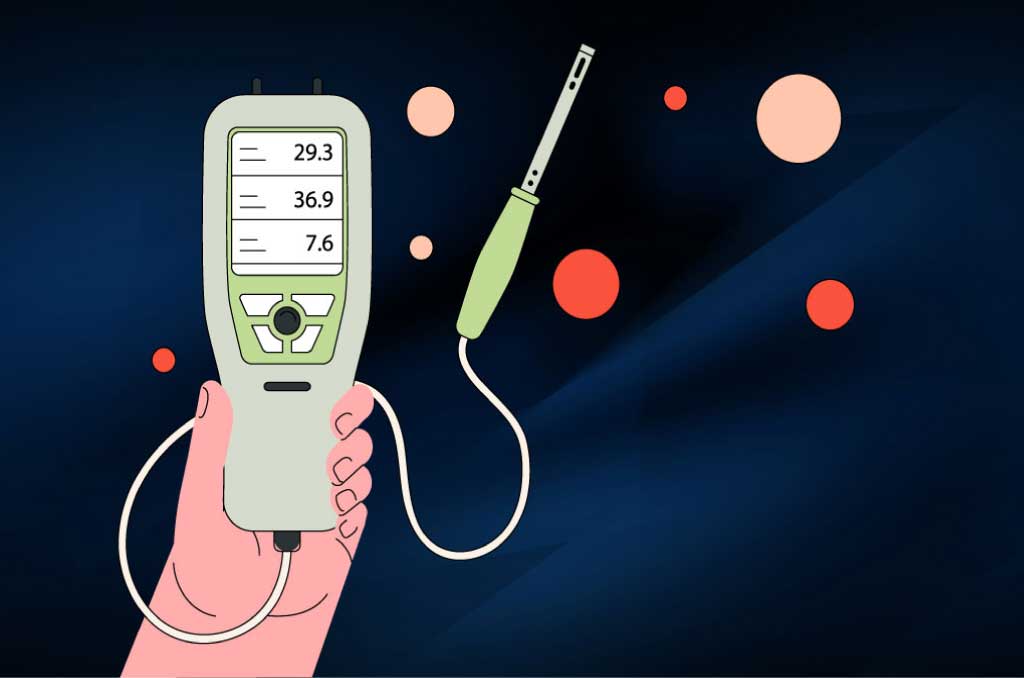
Personal air monitoring measures the concentration of hazardous airborne contaminants in a worker’s breathing zone to determine actual exposure during HAZWOPER operations. Unlike area monitoring, which evaluates general site conditions, personal monitoring focuses on the air each worker inhales while performing assigned tasks. Monitoring data helps employers evaluate compliance with OSHA exposure limits, determine the need for respiratory protection, assess engineering controls, and document worker exposure over time. Personal monitoring may involve real-time direct-reading instruments, laboratory analysis using sampling pumps and media, or a combination of both depending on the contaminants and work being performed. OSHA expects employers to establish an exposure monitoring program appropriate for site conditions and to use personal sampling for workers expected to receive the highest exposures.
Key Takeaways
- Personal air monitoring measures contaminants in a worker’s breathing zone rather than general site conditions.
- OSHA requires exposure monitoring whenever hazardous airborne contaminants may threaten worker health during HAZWOPER operations.
- Real-time instruments provide immediate information, while laboratory sampling documents long-term exposure for regulatory compliance.
- Personal sampling is often performed on workers expected to have the highest exposures.
- Monitoring results should be compared with OSHA PELs, NIOSH RELs, ACGIH TLVs, and IDLH values when appropriate.
- Air monitoring data helps determine PPE selection, respirator requirements, engineering controls, and safe work practices.
- Monitoring should continue whenever work conditions, weather, chemicals, or operations change.
- Proper calibration, documentation, chain of custody, and recordkeeping are essential parts of a successful monitoring program. OSHA’s Technical Manual contains updated guidance on preparing equipment, sampling strategy, and documentation.
Personal Monitoring vs. Area Monitoring
| Feature | Personal Air Monitoring | Area Monitoring |
|---|---|---|
| Measures | Worker breathing-zone exposure | General workplace atmosphere |
| Sampling Location | Attached to the employee | Fixed work locations |
| Purpose | Determine individual exposure | Characterize site conditions |
| Best Used For | PEL, REL, TLV compliance | Hazard identification and work planning |
| Typical Equipment | Sampling pump, sorbent tube, passive badge, filter cassette | PID, FID, CGI, multi-gas meter, fixed monitors |
Choosing the Right Sampling Method
| Sampling Method | Best For | Advantages | Limitations |
|---|---|---|---|
| PID | VOC screening | Immediate readings | Cannot identify specific chemicals |
| Multi-Gas Meter | O₂, LEL, CO, H₂S | Multiple hazards simultaneously | Limited sensor selection |
| Sorbent Tube | Organic vapors | Laboratory accuracy | Delayed results |
| Filter Cassette | Dust, metals, asbestos, silica | Excellent compliance sampling | Requires laboratory analysis |
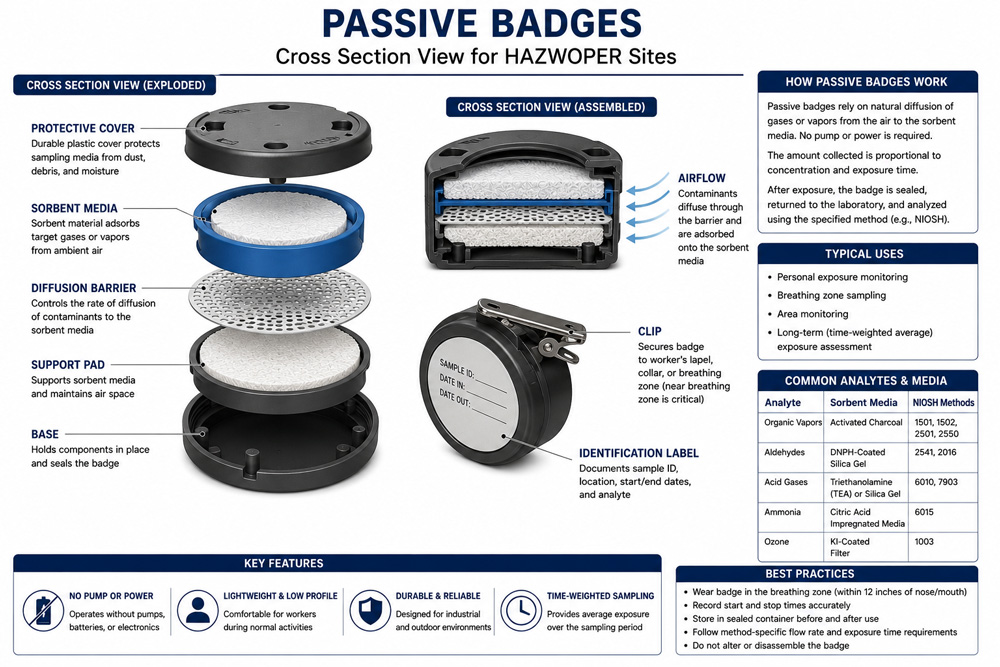
| Passive Badge | Long-term vapor exposure | Lightweight, no pump required | Not suitable for every contaminant |


Comprehensive Guide to Personal Air Monitoring at HAZWOPER Sites
Personal air monitoring is a critical component of worker safety at Hazardous Waste Operations and Emergency Response (HAZWOPER) sites. It ensures compliance with the Occupational Safety and Health Administration (OSHA) regulations, prevents harmful exposure, and helps determine the need for personal protective equipment (PPE). This guide explores why, how, and when personal air monitoring should be conducted.
1. Purpose of Personal Air Monitoring
Personal air monitoring is conducted to:
- Measure Worker Exposure: It assesses airborne contaminants in the breathing zone of workers to ensure exposures remain within safe limits.
- Comply with OSHA Regulations: OSHA’s 29 CFR 1910.120 and 29 CFR 1910.134 require air monitoring in hazardous environments.
- Determine PPE Requirements: If air contaminants exceed permissible exposure limits (PELs), respiratory protection and other PPE must be provided.
- Evaluate Worksite Conditions: Monitoring data helps characterize site hazards, ensuring proper engineering and administrative controls.
- Respond to Emergencies: Air monitoring is vital during chemical spills, confined space entry, and high-risk cleanup operations.
2. When is Personal Air Monitoring Required?
OSHA requires personal air monitoring in situations where hazardous substances could pose a risk. This includes:
✅ Initial Site Characterization – To assess unknown hazards before work begins.
✅ During Work Operations – Particularly when working with contaminated soil, unknown chemicals, or enclosed spaces.
✅ Emergency Situations – Such as chemical spills or sudden increases in toxic gas levels.
✅ When Using Respirators – To ensure that chosen respirators provide adequate protection.
✅ Exposure Limit Concerns – If workers report symptoms like dizziness, headaches, or irritation, air monitoring must be conducted.
3. Types of Personal Air Monitoring
Air monitoring can be real-time (instant readings) or integrated sampling (collection over time with lab analysis). The type of monitoring depends on the contaminants and work conditions.
A. Real-Time Direct Reading Instruments
Used for immediate detection of hazardous substances.
| Instrument | Used For | Example Contaminants |
|---|---|---|
| Photoionization Detector (PID) | Organic vapor detection | Benzene, Toluene, VOCs |
| Flame Ionization Detector (FID) | Hydrocarbon measurement | Petroleum-based chemicals |
| Combustible Gas Indicator (CGI) | Detects explosive atmospheres | Methane, Propane |
| Oxygen Monitor | Ensures safe O₂ levels | Oxygen-deficient atmospheres |
| Multi-Gas Meter | Simultaneous gas detection | CO, H₂S, LEL, O₂ |
Limitations: Real-time instruments do not provide long-term exposure averages.
B. Personal Sampling with Laboratory Analysis
Workers wear air sampling pumps that collect contaminants for lab analysis.
| Sampling Method | Used For | Example Contaminants |
|---|---|---|
| Sorbent Tubes (NIOSH Methods) | Volatile Organic Compounds (VOCs) | Benzene, Acetone |
| Filter Cassettes | Airborne particulates | Lead, Asbestos, Silica |
| Impingers | Gaseous sampling in liquid medium | Acid vapors |
| Passive Badges | Long-term exposure assessment | Formaldehyde, Solvents |
Benefits: Provides more accurate exposure data over time, essential for compliance and legal documentation.


4. Interpreting Air Monitoring Resultst
After collecting data, results must be compared to established safety limits:
- OSHA Permissible Exposure Limits (PELs) – Legally enforceable exposure limits.
- NIOSH Recommended Exposure Limits (RELs) – More protective but not legally binding.
- ACGIH Threshold Limit Values (TLVs) – Industry-recognized exposure guidelines.
- IDLH (Immediately Dangerous to Life and Health) Levels – Indicates conditions requiring immediate evacuation.
If exposure levels exceed regulatory limits:
✔ Implement Engineering Controls – Ventilation, air filtration, and process changes.
✔ Upgrade PPE – Use respirators, protective suits, and gloves as needed.
✔ Adjust Work Practices – Limit exposure time, increase worker rotation.
5. Special Considerations for High-Risk Environments
A. Confined Spaces
- Air monitoring must be conducted before entry and continuously during work.
- Oxygen must remain above 19.5%; flammable gases must be below 10% of the lower explosive limit (LEL).
B. Chemical Spills & Emergency Response
- Use photoionization detectors (PIDs) and gas meters for real-time detection.
- Monitor for IDLH conditions and evacuate if necessary.
C. Excavation & Drilling
- Sampling should occur at various depths to detect subsurface hazards.
- Real-time and long-term sampling are both necessary to protect workers.
6. Documentation and Compliance
Proper recordkeeping is essential for OSHA compliance. Employers must:
📌 Maintain air monitoring records for at least 30 years.
📌 Provide employees with access to exposure data.
📌 Implement corrective actions when exposure limits are exceeded.
7. Conclusion
Personal air monitoring at HAZWOPER sites is not optional—it is a legal and ethical necessity to protect workers from hazardous exposures. By using real-time detection, air sampling, and proper analysis, safety professionals can ensure compliance and maintain a safe working environment.
Measure Exposure—Don't Guess
Personal air monitoring provides the data needed to protect workers, select the correct respiratory protection, evaluate engineering controls, and demonstrate compliance with OSHA exposure requirements. Whether using real-time instruments or laboratory sampling methods, accurate exposure assessment is one of the most important responsibilities at any HAZWOPER site.
OSHACode® HAZWOPER training teaches workers and supervisors how to select appropriate air-monitoring equipment, understand sampling methods, interpret monitoring results, recognize IDLH conditions, and choose the proper PPE based on actual exposure data. Employers then reinforce that knowledge through site-specific monitoring procedures, equipment calibration, and hands-on field training using the instruments deployed at their facilities.
Build the knowledge to collect accurate exposure data—and use it to make safer decisions before, during, and after every HAZWOPER operation.
Frequently Asked Questions
What is personal air monitoring?
Personal air monitoring measures contaminants in a worker’s breathing zone to determine the concentration of hazardous substances actually being inhaled during work activities.
How is personal monitoring different from area monitoring?
Personal monitoring evaluates an individual worker’s exposure, while area monitoring measures airborne contaminants at fixed locations to characterize site conditions.
When is personal air monitoring required during HAZWOPER operations?
Monitoring is required during initial site characterization, whenever hazardous airborne contaminants may be present, when conditions change, and whenever exposures could exceed occupational exposure limits. Employers should establish a monitoring program appropriate for site conditions.
What contaminants are commonly monitored?
Common contaminants include oxygen deficiency, combustible gases, volatile organic compounds (VOCs), hydrogen sulfide, carbon monoxide, asbestos, silica, lead, acid gases, and other toxic vapors or particulates depending on site conditions.
What equipment is used for personal monitoring?
Workers may use personal sampling pumps with sorbent tubes or filter cassettes, passive badges, or direct-reading instruments such as PIDs, FIDs, CGI meters, oxygen monitors, and multi-gas meters.
Why is calibration important?
Improperly calibrated instruments may produce inaccurate readings, resulting in poor exposure decisions and inadequate worker protection.
What happens if exposure limits are exceeded?
Employers should evaluate engineering controls, administrative controls, respiratory protection, work practices, and other corrective actions before work continues.
How long must exposure monitoring records be maintained?
OSHA’s employee exposure records regulation generally requires exposure monitoring records to be retained for at least 30 years.
Sources
Emergency Response and Preparedness
OSHA HAZWOPER Hands-on Training Requirement
Medical Surveillance Requirements
U.S. Occupational Safety and Health Administration
https://www.osha.gov/laws-regs/standardinterpretations/1992-08-27-1
U.S. Environmental Protection Agency
https://www.epa.gov/laws-regulations/summary-resource-conservation-and-recovery-act
Related Articles
Building a HAZWOPER Safety Culture
Hands-on Training Discussions with U.S. OSHA